
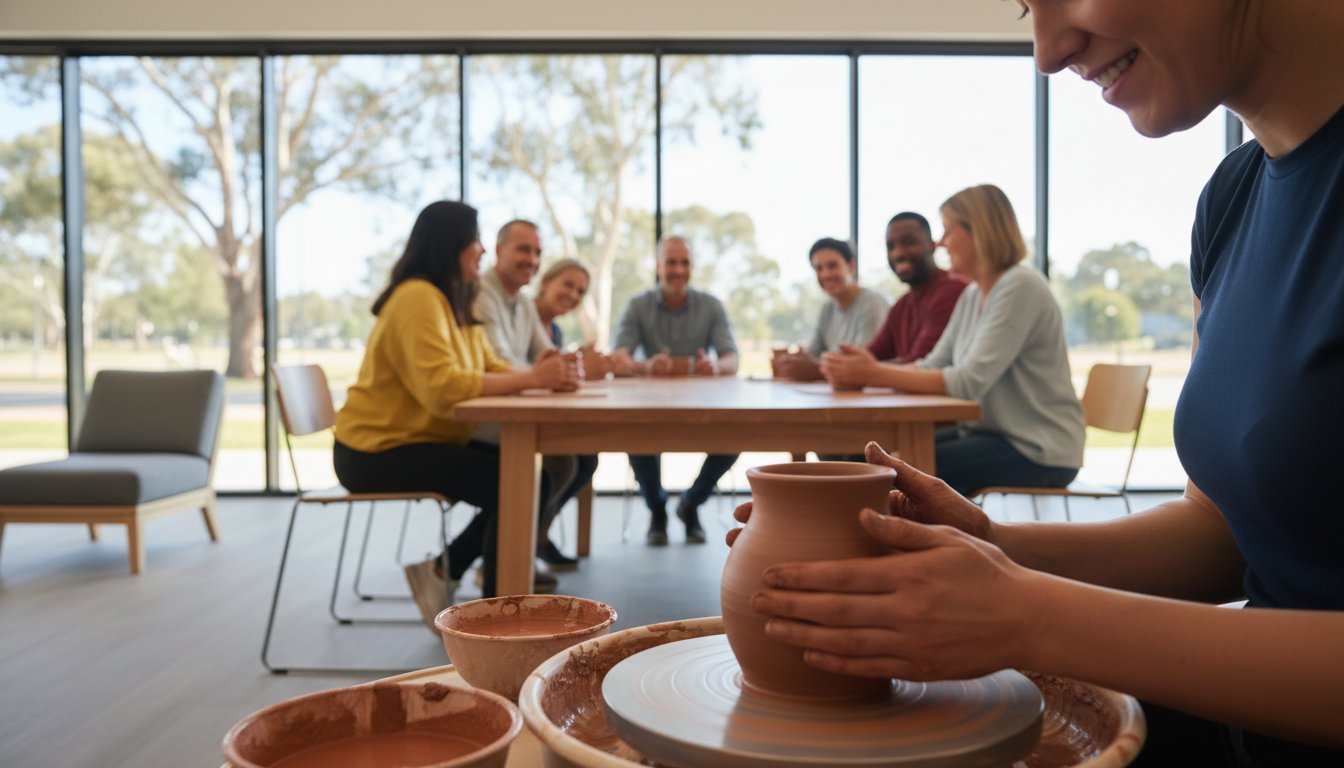
In a world that can often feel busy and disconnected, the idea of “leisure” might seem like a distant luxury. Perhaps you feel isolated, or you’re unsure how pursuing a passion or a simple joy could possibly fit into the structure of your NDIS plan. If you’ve found yourself wondering, what are leisure activities and are they truly for me, we want you to know that you are not alone in asking. We believe that joy, connection, and personal growth are not luxuries-they are essential parts of a full and meaningful life.
We’re here to walk this path with you. In this guide, we’ll gently unpack the true meaning of leisure and explore how finding the right activities can profoundly boost your wellbeing and help you build lasting community connections. Together, we will look at how your NDIS plan can empower you with the choice and control to pursue your interests, transforming your goals for 2026 into a vibrant reality.
Key Takeaways
- Understand that genuine leisure is defined by your personal choice and control, empowering you to find activities that truly bring you joy.
- Discover how engaging in meaningful hobbies can boost your mental wellbeing by reducing stress and helping you achieve a state of “flow.”
- Explore the main categories to understand what are leisure activities and find options that perfectly match your energy levels and interests.
- Learn how your NDIS funding for Social and Community Participation can be used to overcome barriers, making a fulfilling social life an accessible part of your journey.
Beyond Free Time: Defining Leisure Activities in 2026
When we ask, “what are leisure activities?”, the answer goes far deeper than simply “time off.” Leisure is not just the absence of work; it’s the presence of joy, chosen by you and for you. It’s about engaging in something purely for the intrinsic satisfaction it brings, not because of an external demand or obligation. This is where the NDIS principle of Choice and Control truly comes to life-leisure is an expression of your independence and a vital part of a holistic, healthy life. We are with you on this journey to rediscover what brings you light.
To help you explore this idea further, this short video offers some wonderful clarity:
The Three Pillars of True Leisure
Understanding what makes an activity true leisure can empower you to seek it out. It rests on three core feelings that we can explore together:
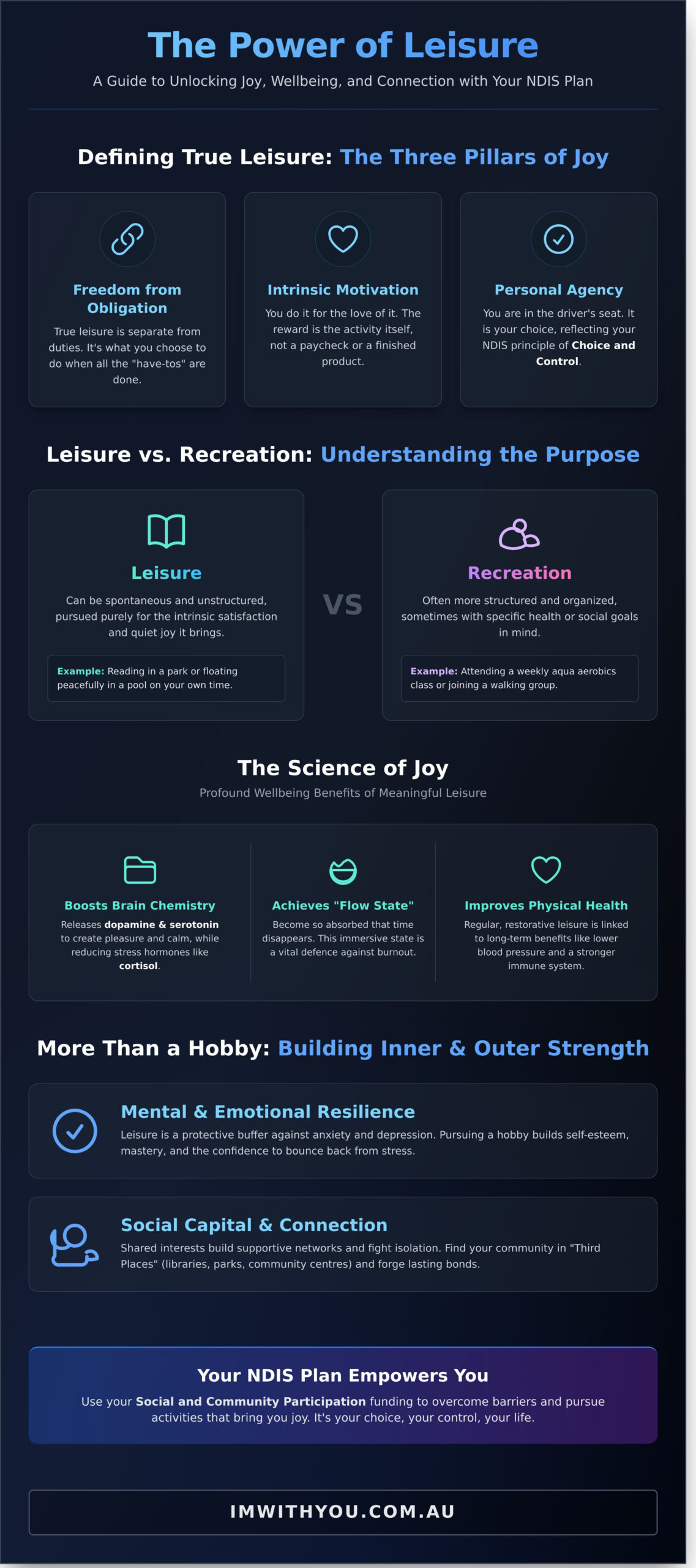
- Freedom from obligation: True leisure is separate from duties. Mowing the lawn or doing household chores, even if you find them satisfying, are obligations. Leisure is what you do when all the “have-tos” are done.
- Intrinsic motivation: You do it for the love of it. Whether it’s painting, gardening, or listening to music, the reward is the activity itself, not a paycheck or a finished product.
- Personal agency: You are in the driver’s seat. It is your choice, reflecting your passions and interests. This is your time to connect with what feels right for you.
Leisure vs. Recreation: Understanding the Difference
It’s also helpful to see how leisure differs from recreation. While the academic act of Defining Leisure can be complex, the main distinction for your journey is purpose. Recreation is often more structured and organised, sometimes with specific health or social goals in mind, like joining a weekly walking group for fitness and connection. Leisure, on the other hand, can be as spontaneous as spending an afternoon reading in the park. Both are essential for a balanced NDIS plan, supporting your capacity building and community participation goals. For example, swimming can be recreation when you attend a structured aqua aerobics class, but it becomes leisure when you float peacefully on your own time, just for the quiet joy of it.
The Science of Joy: Why Leisure is Essential for Wellbeing
Leisure is so much more than just “time off.” We see it as a fundamental part of your holistic wellbeing-a powerful tool for building resilience and rediscovering joy. When you engage in activities you truly love, your brain chemistry changes in wonderful ways. Feel-good neurochemicals like dopamine and serotonin are released, creating feelings of pleasure and calm while actively reducing stress hormones like cortisol. It’s your body’s natural way of healing and recharging.
Many people find this deep sense of engagement through a “flow state”-that magical feeling of being so absorbed in an activity that time seems to disappear. This immersive experience is at the heart of what makes meaningful leisure, play, and recreation so powerful. It’s a vital defence against burnout, not just for you, but for the carers and family who walk this journey beside you. This regular restoration is also linked to better long-term physical health, from lower blood pressure to a stronger immune system.
Mental Health and Emotional Resilience
Leisure acts as a protective buffer against the weight of anxiety and depression. Pursuing a hobby, whether it’s painting, gardening, or learning an instrument, builds a profound sense of mastery and self-esteem. It’s a space where you have complete choice and control, allowing you to grow your skills and confidence. Emotional resilience is the ability to bounce back from stress through restorative activities, and leisure provides the perfect opportunity to build this essential strength.
Social Capital and the Power of Connection
When we ask, “what are leisure activities?”, we are often searching for connection. Shared interests help us build social capital-the supportive networks of friends and community that enrich our lives. These activities bridge the gap between isolation and a true sense of belonging. They often happen in “Third Places,” which are welcoming social spaces outside of home and work, like a local library, a community centre, or a park. It’s here that we find our people and strengthen the bonds that hold us up.
Exploring the 4 Main Categories of Leisure Activities
When we think about what are leisure activities, the answer is as unique as you are. There is no single right way to find joy and rest; it’s about discovering what recharges your spirit. To help you on this journey, we can explore leisure through four main categories. Understanding them gives you the power of choice and control to build a life rich with meaning and enjoyment, and we are right here with you as you explore.
- Active Leisure: This is all about movement. It’s not just about high-intensity sport; it’s any activity that gets your body moving in a way that feels good for you.
- Passive Leisure: These are restorative activities that allow your mind and body to rest, like listening to music, reading a book, or simply practising mindfulness.
- Social Leisure: Centred on connection, these activities involve engaging with others. Think of joining a local club, volunteering, or sharing a meal with friends.
- Cognitive/Creative Leisure: These pursuits engage your mind and creativity, from learning a new language to painting, gardening, or solving puzzles.
Active and Physical Pursuits for Every Ability
Movement is a powerful source of joy, and it’s accessible to everyone, regardless of physical ability. Your journey might include adaptive sports, gentle chair yoga, or the soothing support of hydrotherapy. We also see incredible benefits from “green leisure”-spending time in nature, whether it’s a walk in a local park or tending to a small garden. As you look ahead to 2026, remember that starting small is the key. A simple, five-minute stretch can be the first step toward building a fulfilling routine.
Creative and Intellectual Engagement
Engaging your mind is a profound form of self-care. Today, digital leisure offers amazing new worlds through accessible online gaming and communities that connect people with shared interests. For those who love a hands-on approach, the tactile joy of traditional arts like pottery or painting provides a powerful outlet. The beautiful thing about these activities is that they support lifelong learning. Picking up a new skill isn’t just a hobby; it’s a way to keep your mind sharp and build new neural pathways. This direct link between engagement and wellbeing is explored deeply in The Science of Joy, showing how these pursuits are essential for a holistic life.
Navigating Barriers: Making Leisure Accessible for Everyone
We often hear the words, “I can’t do that because of my disability.” It’s a feeling that can stop the journey toward joy before it even begins. The path to rediscovering leisure can seem filled with hurdles-from physical accessibility and financial constraints to the deep-seated psychological barriers of anxiety and self-doubt. But we believe that your right to enjoyment is non-negotiable, and together, we can navigate these challenges.
The question of what are leisure activities becomes so much more meaningful when we focus not on limitations, but on possibilities. By 2026, we anticipate assistive technology will open even more doors, with advancements in virtual reality experiences for travel, AI-powered apps connecting you to inclusive local groups, and smarter mobility aids for sports and outdoor adventures. The future is becoming more accessible every day.
Identifying and Removing Physical Hurdles
Finding a place that welcomes you shouldn’t be a struggle. Modern tools like Google Maps now include detailed accessibility information, helping you identify wheelchair-friendly venues before you leave home. A dedicated support worker can be an incredible ally, assisting not just with transport but with building confidence in community settings. Remember, you have the right to participate, and we are here to help you advocate for your needs in local groups and community spaces.
Building the Confidence to Step Out
The thought of joining a new group can bring on feelings of social anxiety, and that’s completely understandable. This is where our “Side-by-Side” approach truly shines. Having a trusted companion-whether a friend, family member, or one of our team-can make that first step feel less daunting. We encourage starting with small wins in low-pressure environments, like a quiet local library or a familiar park, to build momentum on your own terms.
At I’m With You, we see leisure not as a task, but as a vital part of your holistic well-being. It’s about your Choice and Control to pursue what brings you happiness, in a way that feels safe and supported. If you’re ready to explore what leisure activities can look like for you, we’re ready to walk that path beside you. Learn more about our approach to community participation at imwithyou.com.au.
How the NDIS and “I’m With You” Support Your Leisure Journey
Rediscovering joy through leisure is a beautiful and essential part of life, but figuring out how to make it happen can feel overwhelming. We want you to know that your happiness is a priority, not an afterthought. The NDIS is designed to support your whole life-including your hobbies and passions-and at “I’m With You,” we are here to walk that path beside you, every step of the way.
Funding Your Hobbies: NDIS Categories Explained
Your NDIS plan can be a powerful tool for unlocking new experiences. Leisure activities typically fall under the Social and Community Participation category in your plan. Funding can often be used from either your Core Supports or Capacity Building budgets, depending on your goals. For example, you could use your funding for:
- Transport to get to a weekly pottery class or a local sports club.
- A support worker to accompany you to the movies, a concert, or a community garden.
- Fees for a class or program that helps you build skills and connect with others.
- Specialised equipment that allows you to participate in an adaptive sport.
When preparing for your plan review, think about what are leisure activities that genuinely excite you. Clearly explaining how a hobby supports your goals for independence and well-being is key to getting the support you need.
The “I’m With You” Commitment
Navigating the NDIS shouldn’t be a journey you take alone. Our commitment is right there in our name-we are with you. We start by listening, taking the time to understand what truly brings you joy. Instead of focusing on limitations, we create personalised support plans that celebrate your strengths and explore the incredible possibilities ahead.
Whether you want to join a choir, learn to code, or simply spend more time in nature, our dedicated support coordinators help you connect the dots between your passions and your NDIS plan. Your choice and control are at the heart of everything we do. Let’s explore your leisure goals together-contact I’m With You today.
Embracing Leisure: We’re With You on the Journey
As we’ve explored, understanding what are leisure activities is the first step toward a richer, more fulfilling life. They are not just ways to pass the time, but essential pathways to joy, mental wellness, and deep community connection. Every person has the right to discover and enjoy these pursuits, and support is available to help navigate any barriers that may stand in the way.
At I’m With You, we believe deeply in the power of leisure to transform lives. We walk side-by-side with you, offering expert NDIS Support Coordination to ensure your plan truly reflects your passions and goals. Our person-centered approach, recognised by our 2026 Award for Excellence in Disability Support, puts your Choice and Control at the heart of everything we do. You are not alone on this path.
Ready to explore what brings you happiness? Start your journey toward a more joyful, connected life with I’m With You. Let’s unlock the possibilities together.
Frequently Asked Questions About Leisure Activities
What are the best leisure activities for people with limited mobility?
You have so many wonderful options to explore, even with limited mobility. Gentle activities like chair yoga or hydrotherapy can be fantastic for your body and mind. You could also discover a creative spark with watercolour painting or accessible gardening in raised beds. Don’t forget the digital world-online book clubs, virtual museum tours, and gaming communities offer vibrant social connections right from your home. We’re here to help you find what lights you up.
Can I use my NDIS funding for hobby classes or gym memberships?
This is a great question that touches on your ‘Choice and Control.’ You may be able to use your NDIS funding for these activities if they are considered ‘reasonable and necessary’ to help you achieve your plan goals. For example, a gym membership could be funded to improve mobility, or a pottery class could support your goal of community participation. It’s all about linking the activity to your specific NDIS goals. We can walk beside you to explore this.
How do I find local community groups that are truly inclusive?
Finding a space where you feel you truly belong is so important. We recommend starting with your local council’s website, as they often list community groups and accessibility details. Disability-specific organisations are another wonderful resource. Don’t hesitate to call a group beforehand to chat about your needs. Asking about physical access, sensory-friendly options, or staff training can help you feel confident and welcome from day one. We’re with you in this search.
What is the difference between leisure and recreation in the NDIS?
Within the NDIS, the terms ‘leisure’ and ‘recreation’ are often used interchangeably because the focus is on the outcome, not the label. The most important factor is how an activity helps you work towards your goals, like building social skills or improving your wellbeing. So, whether it’s a relaxed painting class (leisure) or joining a wheelchair basketball team (recreation), the NDIS looks at how it supports your journey towards greater independence and community connection.
Why is social leisure more difficult for some people, and how can I help?
Engaging in social leisure can feel overwhelming for many reasons, including social anxiety, sensory sensitivities, or a fear of not being understood. It’s a journey that requires patience and kindness. If you’re supporting a loved one, the best thing you can do is listen. Start small with low-pressure activities, offer gentle encouragement without expectation, and simply be a calm, reliable presence. Your steady companionship can make all the difference in building their confidence.
What happens if I don’t have any hobbies or interests yet?
Please know that this is completely okay and a very common starting point. Think of it as a wonderful journey of discovery! The first step is simply exploring what are leisure activities that spark a little curiosity. You could try borrowing different books from the library, watching online tutorials for new skills, or visiting a local community centre. We can support you in trying a ‘tasting plate’ of different hobbies to see what brings you joy, with no pressure at all.
How much time should I spend on leisure activities each week for my health?
There is no single ‘right’ answer, as the ideal amount of time is deeply personal. Instead of aiming for a specific number of hours, we encourage you to focus on consistency. Even 15 to 20 minutes a day dedicated to something you enjoy can significantly boost your mental and emotional wellbeing. The goal is to weave leisure activities into your life in a way that feels restorative and joyful, not like another task on your to-do list.