
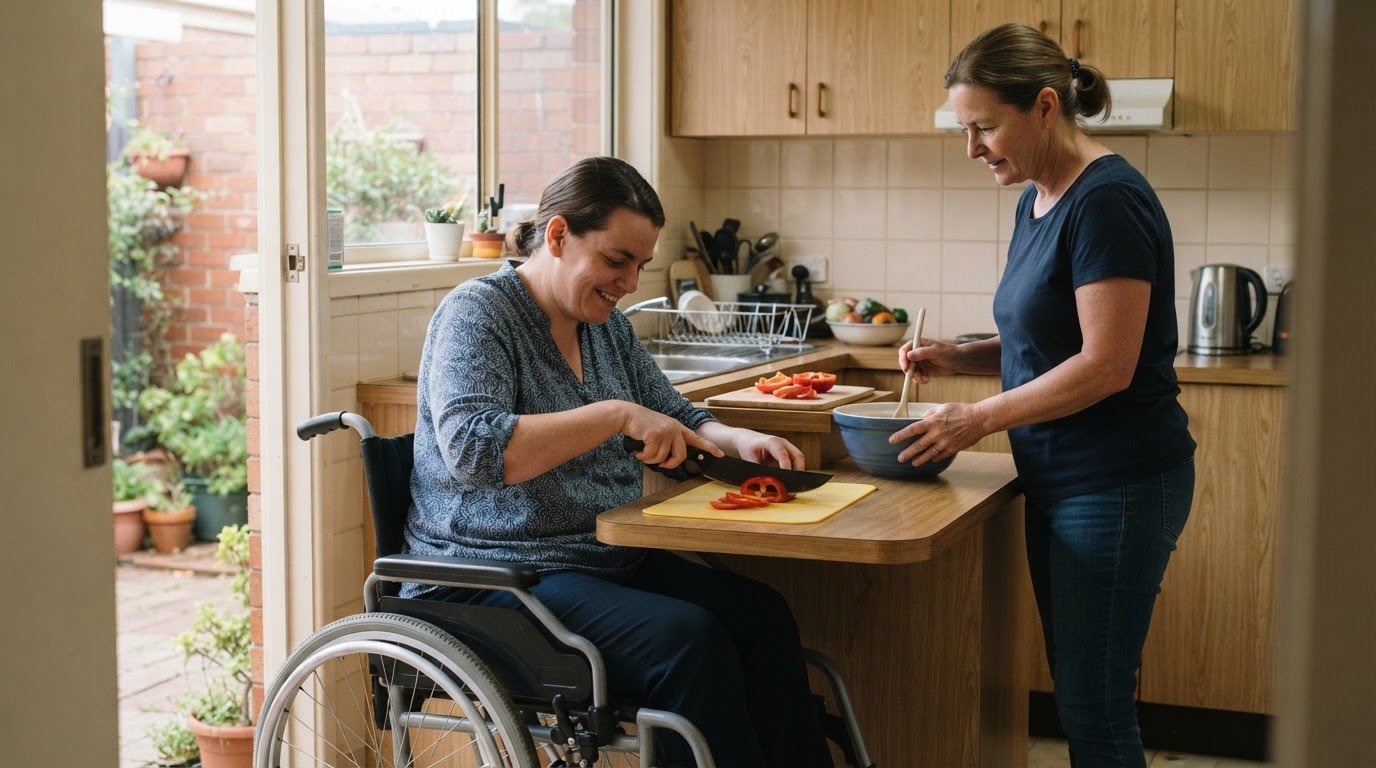
Support at home should make everyday life more manageable and give you more choice beyond your front door. Across Australia, in-home disability support services can include assistance with daily activities and support to participate in social and community life.
It’s understandable to want clear answers about what support can cover and how NDIS funding may apply. Depending on your goals and needs, support can help with tasks at home, building everyday skills or accessing activities in your community.
This guide explains what in-home support can include, how NDIS Core Supports may fund assistance with daily life and community participation, and what to consider when arranging support around Australia. You’ll have a clearer picture of the options and how they may fit into your life.
Key Takeaways
- Explore how support with daily routines and personal care can be shaped around a person’s needs, preferences and independence.
- Understand how NDIS Core Supports may relate to help at home and participation in the community.
- See how meal preparation and eating assistance can support everyday routines while respecting individual choices.
- Learn how therapeutic supports and in-home assistance can contribute to goals for life in Melbourne.
Do you provide support for individuals with physical disabilities?
Yes, in-home disability support services can be tailored to physical access needs, daily routines and personal preferences. This personalised support can help you stay connected with home life and participate in your community.
Daily Living Assistance
Daily living assistance can include help getting dressed, preparing for the day, moving around the home or following a routine. For example, a support worker might help organise clothing and reach items safely, while encouraging the person to do the parts they manage independently. Look for a provider who listens to the person’s preferences and respects their choices. The Department of Human Services, South Australia, says assistive technology can make activities easier or safer.
Personal Care and Self-Care
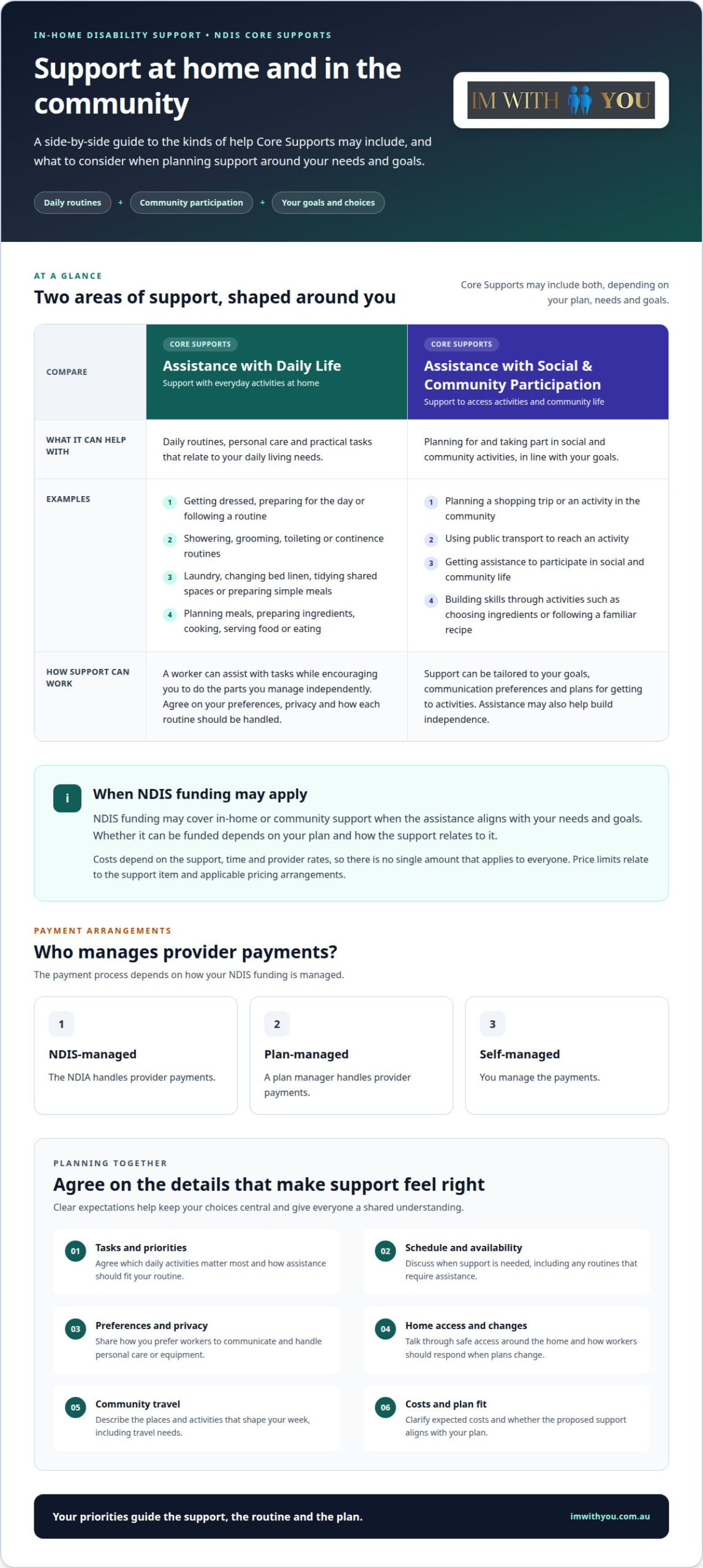
Personal care may include assistance with showering, dressing, grooming, toileting or continence routines. Agree on how you want each task handled, including privacy, communication and any equipment used. This helps ensure respectful, consistent support. If you need round-the-clock in-home care, a clear schedule should show when help is needed and which routines require assistance.
Household Tasks at Home
In-home disability support services may also include practical household help, such as laundry, changing bed linen, tidying shared spaces or preparing simple meals. The tasks should relate to your daily living needs. For instance, laundry assistance may help you maintain clean clothes if reaching or carrying items is difficult. Agree on priorities so the support fits your routine.
Home Support Safeguards and Risks
Before support begins, agree on the tasks, schedule, communication preferences and how changes will be handled. Consider privacy, safe access around the home and how support workers should respond if a routine changes. With NDIS-managed funding, the NDIA handles provider payments. Plan-managed funding uses a plan manager, while self-management means you manage payments. A clear support plan helps everyone understand their role and keeps your choices central.
Can I use NDIS funding for home and community support?
NDIS funding may cover in-home disability support services when the assistance aligns with your needs and goals. Core Supports can include Assistance with Daily Life and Assistance with Social and Community Participation, depending on your plan.
Meal Preparation and Eating Assistance
Support may help you plan meals, prepare ingredients, cook, serve food or eat. For example, a worker could help organise ingredients and prepare lunch while supporting you to practise manageable steps. Agree on your food preferences, routines and the type of assistance that suits you. Shopping and meal planning can also build skills, from choosing ingredients to following a familiar recipe.
Domestic and Household Assistance
In-home domestic assistance can help with household activities related to disability support needs, such as laundry, cleaning or changing bed linen. Community access may include help planning a shopping trip or using public transport to reach an activity. A support worker can tailor assistance to your goals and help build independence. Funding for in-home disability support services depends on your plan and how the support relates to your goals.
Funding Costs and Price Limits
NDIS access depends on meeting the scheme’s eligibility requirements, and funded assistance must relate to the participant’s plan. NDIS funding is organised across three main budgets. Costs depend on the support, time and provider rates, so no single amount applies to everyone. NDIS support worker price limits relate to the support item and applicable pricing arrangements, rather than one universal rate. A provider can help describe daily needs and connect them with plan goals. Planning your support needs can help clarify which activities matter most when considering in home disability support services.
In-home disability support in Melbourne
In Melbourne, suitable home care should fit your daily routines, access needs and local community connections. The right support can help you build independence and feel more comfortable at home.
Finding Nearby Support Providers
Start with the locations and activities that shape your week, such as home, work, appointments or a regular community program. A nearby provider may make it easier to coordinate support around those routines. Describe the assistance you need, including help at home or travelling to activities. This gives a provider a practical picture of how support could empower your everyday choices.
Comparing Provider Options
Discuss how support will be organised around your goals, communication preferences and home environment. For example, talk about how workers will learn your routines, provide consistent support and adapt when plans change. Ask how the service manages scheduling, travel to community activities and feedback about disability support. These details help you understand whether the approach respects your comfort and independence.
Clarify the expected costs before support begins, including how charges relate to the agreed tasks and schedule. Also discuss availability for the times you need help; don’t assume every provider offers the same arrangements. If you have NDIS funding, consider whether the proposed support aligns with your plan. Government programs and funding arrangements can shape what support is available, so clear planning matters.
Use these points to describe what a good fit means for you: the tasks, locations and routines that matter most. Explore in-home support options with Im with you and take the next step towards support that fits your life in Melbourne.
Im with you: Therapeutic Supports
Im with you provides Therapeutic Supports to help you work towards personal goals. These supports can sit alongside Disability Support Services or Community Participation Support, connecting goal-focused work with everyday routines and community life. If coordinating different supports feels difficult, NDIS Support Coordination can help you understand and organise the supports in your plan.
Your priorities guide the conversation. You might want to build confidence with daily activities, strengthen skills for greater independence or participate more comfortably in your community. Together, you can discuss what matters to you and consider which support best fits your goals and NDIS plan.
If you would like to talk through your support needs, contact Im with you.
Take the next step at your pace
Choosing in-home disability support services is about finding an arrangement that fits your priorities, routines and goals. You don’t need to have every detail worked out before starting a conversation. Share what you’d like support to make easier, then explore options together.
I’m With You offers Disability Support Services and Community Participation Support to help with everyday life and taking part in the community. NDIS Support Coordination can also help you understand and organise supports in your plan. The right starting point depends on what you want to work towards and which support feels relevant to you.
If you’re ready to talk through your needs and possible next steps, contact Im with you. You can take things one conversation at a time, with support alongside you.
Frequently Asked Questions
What is included?
Support can be shaped around agreed tasks and your preferred routines. For example, a support plan might note how you like to prepare for an appointment, what assistance helps you feel comfortable and which tasks you want to do independently. Clear preferences help support workers provide consistent assistance without taking over choices you can make.
Are there any other support options available?
Yes. Depending on your goals, other options may include Therapeutic Supports, Occupational Therapy, Capacity Building Skills, Disability Advocacy Services or NDIS Support Coordination. These services can address different needs, such as developing skills or organising supports. I’m With You offers these options alongside Disability Support Services and Community Participation Support, so you can focus on what fits your priorities.
Can I choose what kind of NDIS support at home I receive?
You can express your preferences and goals when planning support. For example, you might want a worker to prompt you through a task rather than complete it for you, or prefer assistance at a particular point in your daily routine. Support must fit your plan and available funding, and the agreed approach should reflect your choices and what you want to work towards.
Can family members or carers be involved in planning my support?
Yes, you can invite family members or carers to contribute if you want their input. They may help describe routines, communication preferences or changes they’ve noticed. Your views should guide the discussion. For instance, you could ask someone you trust to help explain what makes appointments easier, while you decide which preferences belong in your support plan.
How flexible is scheduling?
Scheduling depends on the support arrangement and when you need assistance. Share recurring commitments, such as work, appointments or community activities, so your provider can discuss a practical schedule with you. If your routine changes, raise it as early as possible. Agreeing how schedule updates will be communicated can help everyone stay informed and reduce confusion.