

What if your NDIS plan felt less like a stack of confusing paperwork and more like a roadmap to the life you actually want to live? You likely know the heavy feeling of staring at a budget while wondering if you’re missing out on the services you truly need. It’s common to feel overwhelmed by the jargon or the pressure of managing multiple providers without a clear guide by your side. We understand that you want to be treated as a person with dreams, not just a case number in a complex system.
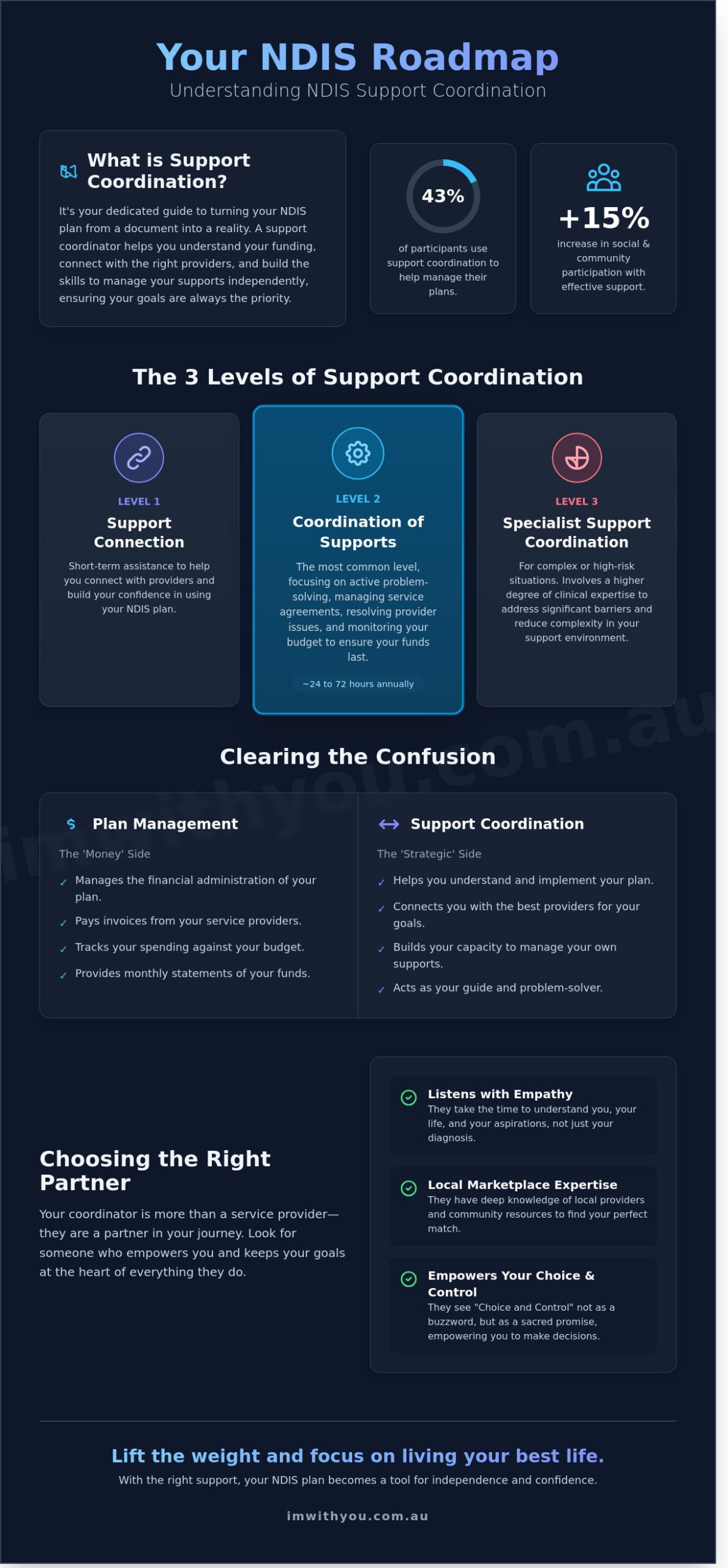
We’re here to show you how a compassionate approach to support coordination can change everything. Data from the NDIS 2023-24 Annual Report shows that participants who engage effectively with their supports see a 15% increase in their social and community participation. This article will help you turn your funding into a tool for independence and confidence. We’ll walk through the steps to implement your plan fully, connect with high quality providers, and finally lift the weight of administrative stress off your shoulders so you can focus on living your best life.
Key Takeaways
- Discover how to move from simply “having a plan” to truly living your life with expert, capacity-building guidance tailored to your goals.
- Learn to identify the right level of assistance for your unique situation, ensuring you have the specific help required to navigate complex challenges.
- Clear the confusion between financial administration and the strategic side of support coordination to ensure every part of your plan is working for you.
- Gain a guide for evaluating potential partners based on their local NDIS marketplace expertise and their ability to listen with genuine empathy.
- Understand how a side-by-side partnership transforms “Choice and Control” into a sacred promise that empowers your journey toward independence.
What is Support Coordination? Understanding the Heart of Your NDIS Plan
Receiving your plan from the National Disability Insurance Scheme (NDIS) is a significant milestone. It marks the start of a new chapter filled with potential. However, a plan is just a document until you put it into action. This is where support coordination becomes your most valuable tool. It’s a capacity-building support designed to help you understand the technical details of your funding while turning those numbers into real-world services that mean something to you.
We understand that the NDIS marketplace can feel like a maze. The mental load of researching providers, checking availability, and managing service agreements is heavy. According to the NDIS Quarterly Report for December 2023, approximately 43 percent of participants utilize these services to help manage their plans. A coordinator takes that weight off your shoulders. They act as a professional guide who ensures your voice is heard clearly by both the NDIA and your service providers, keeping your goals at the center of every conversation.
To help you visualize how this partnership works, watch this helpful video:
Beyond Plan Implementation: The Human Element
A coordinator does more than just tick boxes on a spreadsheet. They act as a vital bridge between your personal goals and the resources available in your local community. Whether you’re looking for a specific therapist or a social group that respects your cultural background, your coordinator focuses on your unique identity. They ensure your supports are person-centered and holistic. Support coordination is a collaborative partnership that empowers you with the choice and control needed to lead an independent and dignified life.
Who is Eligible for Support Coordination Funding?
The NDIA allocates funding for this service when they decide it’s “reasonable and necessary” for your situation. Usually, this happens if you have complex support needs or you’re going through a major life transition. For example, a young person leaving school at age 18 or someone moving into specialist disability accommodation often receives this funding. You can request support coordination during your initial planning meeting or at a scheduled plan review. Be prepared to explain how a professional guide will help you build the skills to manage your plan independently in the future. We can stand beside you during this process to ensure your needs are clearly articulated to the agency.
The Three Levels of Support Coordination: Finding Your Right Fit
Your NDIS plan acts as a roadmap for your future, but every journey requires a different level of guidance. The NDIA recognizes that every person’s situation is unique, which is why they fund three specific tiers of assistance. These levels differ in their intensity, the time allocated to you, and the professional qualifications of the person walking beside you. Understanding What is Support Coordination? helps you identify which level aligns with your current life stage.
Level 1, known as Support Connection, focuses on short term assistance to increase your confidence in managing your plan. Level 2, or Coordination of Supports, is the most frequent allocation, often providing between 24 and 72 hours of support annually. Finally, Level 3 is Specialist Support Coordination, which involves a higher degree of clinical expertise for complex or high risk situations. We believe that regardless of the level in your plan, the goal remains the same: empowering you to lead the life you choose.
Level 1 and 2: Building Your Capacity
The transition from Level 1 to Level 2 represents a shift from simple connections to active problem solving. In Level 1, we help you identify providers and get your initial services started. As you move into Level 2, our role deepens. We help you manage service agreements, resolve conflict with providers, and monitor your budget so your funds last the full 12 months of your plan. This level is designed to handle the “bumps in the road” that often occur in a complex service system.
- Service Agreements: We ensure the terms are fair and protect your rights.
- Provider Research: We find the right match for your personality and goals.
- Plan Monitoring: We track your spending to prevent gaps in your care.
Finding the right team is vital for your long term success. If you’re currently looking for direct support workers or therapists, you might find our guide on How to Choose an NDIS Provider a helpful resource for your next steps.
Level 3: Specialist Support for Complex Journeys
Sometimes, life presents challenges that require a more intensive, therapeutic approach. Level 3 coordination is specifically for participants who face high risk environments or have complex needs, such as a primary psychosocial disability. At this level, your coordinator is typically a qualified social worker or occupational therapist. They bring a clinical lens to your support coordination, ensuring that every service works together in a holistic way.
Specialist coordinators focus on reducing barriers in your support environment and managing crisis situations. They collaborate closely with your treating doctors and therapists to ensure your plan is safe and sustainable. If you feel overwhelmed by the complexity of your current situation, remember that you don’t have to carry that weight alone. You can reach out to us at I’m With You to discuss how a dedicated partner can simplify your path forward.
Support Coordination vs. Plan Management: Clearing the Confusion
It’s natural to feel a bit lost when your NDIS plan arrives with various categories and terms. You might see both Plan Management and support coordination listed in your budget, and it’s common to wonder why you need two different people helping you. While these roles work closely together, they serve very different purposes in your journey toward independence. We want you to feel confident knowing exactly who to call when you need help.
Plan Management acts as your financial safety net. These professionals take care of the A$ invoices and the heavy lifting of record-keeping. They ensure your providers get paid on time and help you track your spending so you don’t run out of funds unexpectedly. Our approach to coordination, however, is your strategic partnership. We focus on the human side of your plan, helping you find the right therapists and community activities that actually align with your personal dreams. While plan managers handle the “how much,” coordinators handle the “who and how.”
Roles and Responsibilities: A Side-by-Side View
Your plan manager handles the paperwork, but your coordinator handles the people and connections. These two roles collaborate to ensure your funding lasts the full duration of your plan, which is often 12 or 24 months. For example, if a plan manager notices you’re spending your budget too quickly, they’ll alert your coordinator. We then work with you to adjust your services so you aren’t left without support at the end of the year. You can find more detail on these distinctions in the official NDIS guide to support coordination.
- Plan Management: Pays invoices, claims from the NDIS portal, and provides monthly budget statements to keep you on track.
- Support Coordination: Interviews providers, negotiates service agreements, and builds your capacity to eventually manage your own supports.
The Ethics of Choice: Selecting a Multi-Service Provider
Sometimes, one organization offers both coordination and direct services like cleaning or therapy. This “one-stop-shop” approach can offer consistency and easier communication for some families. However, it’s vital to know that you always have the right to switch providers if you feel your choice is being limited. Under the NDIS Code of Conduct, which applies to all providers as of 1 July 2024, every organization must act with integrity and honesty.
At I’m With You, we maintain a strict wall between our coordination and service delivery. This ensures we always put your needs first, rather than just suggesting our own internal services. We believe your agency is sacred. We’re here to protect your right to choose what’s best for your life, standing beside you as you navigate these options with clarity and dignity.
Choosing the Right Partner: A Guide to Evaluating Coordinators
Finding the right person to help manage your NDIS plan is a deeply personal step. It’s about more than just checking boxes on a form. You need someone who views your life with the same value you do. A truly effective partner in support coordination prioritises empathy above all else. They should spend your first meeting listening to your story rather than reciting a list of services. If a coordinator talks more than they listen, they might be trying to fit you into a pre-made box instead of building a plan around your unique dreams.
Local knowledge of the NDIS marketplace is a non-negotiable asset. While an expert might know the NDIS legislation, an experienced local coordinator knows which therapist in your specific suburb has a three-month waiting list and which one is accepting new participants today. This ground-level insight saves you time and prevents the exhaustion of calling providers who can’t help. We believe in a “Standing Beside” philosophy. Your coordinator should act as a guide who empowers you, not a director who makes decisions for you. They handle the complex logistics so you can focus on living your life with confidence.
Essential Qualities of a Trusted Coordinator
Patience and reliability are the foundation of a safe partnership. You deserve a coordinator who responds to your calls and follows through on promises without being chased. They must demonstrate a deep commitment to Person-First Language, ensuring every conversation respects your dignity and agency. A proactive partner anticipates challenges before they become crises. For example, if a provider’s A$193.99 hourly rate is set to change in the new financial year, they’ll discuss the impact on your budget weeks in advance.
5 Questions to Ask During Your First Meeting
Interviewing a potential coordinator helps you feel secure in your choice. It’s your right to ensure they align with your values. Use these questions to gauge their fit during your initial chat:
- Question 1: How do you handle emergencies or unexpected plan changes if my circumstances shift suddenly?
- Question 2: What is your specific experience supporting people with my disability or similar needs?
- Question 3: How often will we communicate, and do you prefer phone, email, or face-to-face meetings?
- Question 4: How do you ensure I maintain total choice and control over which service providers I use?
- Question 5: Are you a registered or unregistered provider, and how does that status impact my specific plan management type?
Choosing a partner is the first step toward a more manageable journey. We’re here to provide the steady, expert hand you need to navigate these decisions. Connect with our compassionate team to find a coordinator who will truly stand beside you.
Walking Side-by-Side: The ‘I’m With You’ Approach to Coordination
Receiving the 2026 Excellence Award for Disability Service Delivery reflects our deep commitment to every person we support. This recognition isn’t about our success; it’s about the quality of care and the peace of mind you experience when you partner with us. We believe that support coordination works best when it’s built on a foundation of genuine human connection. Our team doesn’t just manage files. We walk beside you through the complexities of the NDIS, ensuring you never feel like just another number in the system.
Many providers view “Choice and Control” as a standard policy to follow. At I’m With You, we treat it as a sacred promise. This means your voice is the most important one in the room. Whether we’re discussing your budget or selecting a new therapist, you lead the way. We provide the professional expertise and the gentle encouragement needed to make those decisions with confidence. Our approach lowers the barriers of stress, replacing anxiety with a sense of security and partnership.
The “I’m With You” difference is found in the small details. It’s the way we answer your calls with patience, the way we explain complex NDIS rules in plain English, and the way we celebrate your wins, no matter how small they might seem to others. We’ve seen how a human touch can transform a confusing government process into a path toward a better life. You aren’t just finding a service provider; you’re gaining a dedicated ally who truly sees your potential.
Our Commitment to Your Independence
We focus on your long-term growth by helping you build the skills to eventually manage your own supports, if that’s what you want. Our view of care is holistic. We understand the specific nuances of Intellectual Disability and psychosocial needs, ensuring your plan reflects your whole self. You won’t face plan reviews or provider meetings alone. We promise to be there, acting as your steady companion and advocate during every interaction with the NDIA.
Taking the Next Step Together
Connecting with our team is a simple, pressure-free process. Your journey begins with a “get to know you” session where we listen more than we talk. In this first meeting, we’ll explore your dreams, identify immediate needs, and explain how we can help you reach your NDIS goals. There are no high-pressure tactics here, just a calm conversation about your future. Reach out to I’m With You today for a gentle conversation about your NDIS goals.
Empowering Your NDIS Journey
Navigating the NDIS shouldn’t feel like a solo trek through a complex wilderness. You’ve now seen how the right support coordination simplifies your life, specifically by identifying which of the three levels of assistance fits your unique needs. It’s about more than paperwork; it’s about securing your sacred promise of choice and control. Our team brings expert national NDIS knowledge to every conversation, ensuring your plan reflects your actual life goals rather than just a list of services.
We’re proud to carry the 2026 Award for Excellence in Care, a recognition that reflects our commitment to standing beside you. We don’t just manage cases; we support lives. You deserve a partner who listens deeply and acts with professional precision. We provide a gentle, human touch that makes the complex feel simple and safe for every participant we serve.
Let’s walk this path together: connect with our Support Coordination team
You have the strength to reach your goals. We’re here to make sure you have the tools to get there. Your next chapter begins with a single, supported step.
Frequently Asked Questions
What exactly does a support coordinator do on a daily basis?
A support coordinator acts as your personal navigator, spending their day researching local providers and negotiating service agreements that respect your budget. They might spend two hours calling specialist therapists to check waitlists or thirty minutes explaining a complex NDIS letter to you over tea. Their primary goal is to build your confidence so you eventually feel empowered to manage your own supports independently.
Can I change my support coordinator if we aren’t a good match?
You have the absolute right to change your coordinator at any time if the relationship doesn’t feel like a supportive partnership. Under NDIS guidelines, choice and control mean you can provide a notice period, which is typically 14 to 28 days, to your current provider before switching. We believe you deserve a companion who truly understands your vision for a good life and stands beside you.
Is support coordination the same as a case manager?
Support coordination is different from traditional case management because it focuses on empowering you to lead your own life rather than managing it for you. While a case manager might make decisions on your behalf, a coordinator works side-by-side with you to build your skills. They help you navigate the system while ensuring you remain the primary decision-maker in every step of your journey.
How many hours of support coordination will I get in my NDIS plan?
The NDIS typically allocates between 12 and 72 hours of support coordination per year depending on the complexity of your specific situation. For example, a standard Level 2 allocation often starts at 24 hours to cover plan implementation and connecting you with providers. Your NDIA planner determines this specific amount based on the “reasonable and necessary” criteria during your planning meeting.
Do I have to pay for support coordination out of my own pocket?
You don’t pay for support coordination with your personal savings if the funding is included in your NDIS plan. The NDIS pays providers directly according to the NDIS Pricing Arrangements, which sets the rate for Level 2 Support Coordination at A$100.14 per hour as of late 2023. These funds are specifically set aside in your Capacity Building budget, so your daily living money remains untouched.
What happens if my NDIS plan doesn’t include funding for coordination?
If your plan lacks coordination funding, you can request a plan reassessment or use a Local Area Coordinator for basic guidance. In 2023, the NDIA reported that roughly 45 percent of participants receive funded coordination. If your circumstances change and you need more intensive help, we can help you gather evidence to show the NDIA why this support is essential for your safety.
Can a family member be my paid support coordinator under the NDIS?
The NDIS generally prohibits family members from being paid as your support coordinator to avoid potential conflicts of interest. National guidelines state that providers must remain independent to ensure you receive unbiased advice. While your family stays your primary emotional support, a professional coordinator brings technical expertise and an objective perspective to help you achieve your goals effectively and safely.
How do I know if my support coordinator is doing a good job?
You’ll know your coordinator is succeeding when you feel less stressed and more in control of your services. A good partner communicates within two business days, helps you meet at least two of your plan goals within the first six months, and ensures your service agreements are fair. They should feel like a steady guide who stands beside you, making the complex feel simple.