
What if the most “productive” thing you could do today has nothing to do with a clinical goal and everything to do with a hobby that makes you smile? For the 610,000 Australians currently supported by the NDIS, the true definition of what leisure activities means often gets buried under layers of jargon and medical assessments. You might feel that your week is a series of appointments rather than a life filled with purpose and connection. It’s common to feel a sense of isolation when the community feels out of reach, especially when you aren’t sure if your funding covers the things that actually bring you light.
We believe that your happiness is just as vital as your physical support. You deserve to spend your time in ways that foster personal growth and build lasting friendships. In this guide, we’ll walk side-by-side with you to uncover the deep link between recreation and holistic health. You’ll learn how to clearly define your passions and confidently advocate for them within your plan. We’re going to explore how to move beyond just managing a schedule and start supporting a life that feels vibrant and full.
Key Takeaways
- Understand that what leisure activities means goes beyond simply filling time; it is about choosing meaningful experiences that spark genuine joy and personal growth.
- Explore the vital balance between active community exploration and restorative passive relaxation to find a rhythm that supports your unique sensory needs.
- Learn how purposeful leisure acts as a bridge to social inclusion, reducing feelings of isolation and building a true sense of belonging within your local community.
- Discover how to navigate your NDIS plan to access funding for Social and Community Participation, aligning your favorite hobbies with your Capacity Building goals.
- Find out how we walk beside you to design personalized supports that prioritize your choice and control, ensuring your journey toward fun is a shared and supported path.
What Leisure Activities Means: Defining the Concept of Joy
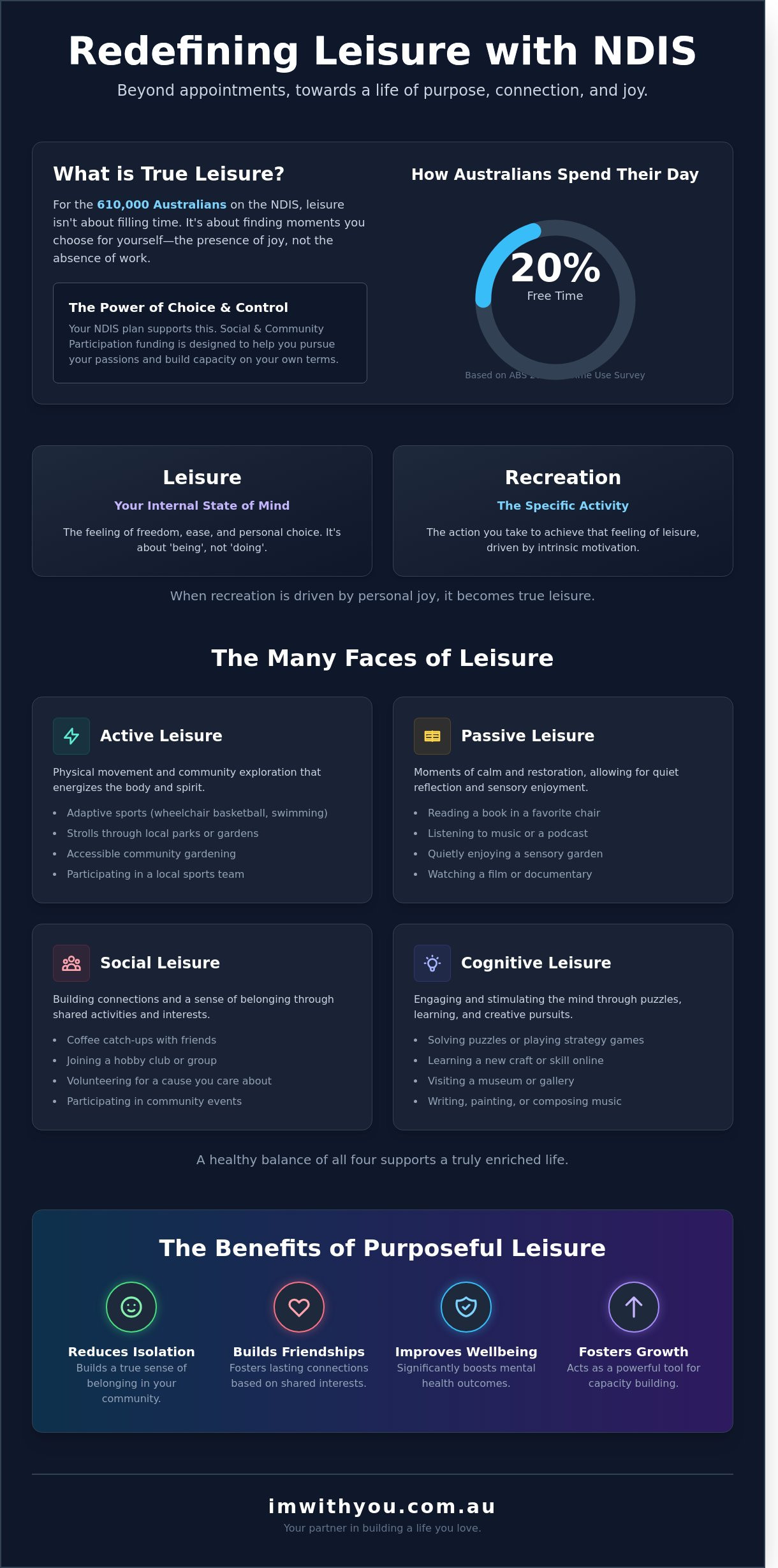
When we explore what leisure activities means, we’re looking at much more than just a way to kill time. It’s about the moments you claim for yourself. True leisure involves activities you choose for their own sake during your unobligated hours. In Australia, the Bureau of Statistics 2020-21 Time Use Survey showed that people spend about 20% of their day on free-time activities. However, there’s a world of difference between simply filling a gap in your schedule and engaging in meaningful participation that lights you up from within.
We believe that leisure is a deeply personal experience. A standard definition of leisure often focuses on the absence of work or chores, but we prefer to view it as the presence of joy. It’s the space where you aren’t a “client” or a “patient”; you’re a photographer, a gardener, or a friend. This person-centered perspective moves away from clinical goals and focuses on what makes your life feel rich and complete.
To better understand this concept, watch this helpful video:
Leisure vs. Recreation: Understanding the Nuance
While people often use these words interchangeably, they carry different weights. Leisure is your internal state of mind, the feeling of freedom and ease. Recreation is the specific activity you do to get there. Both elements work together to build a lifestyle that feels balanced. The secret ingredient is intrinsic motivation. This means you do something because you love it, not because you’re told it’s good for your health. When you paint a canvas because the colours make you happy, you’re experiencing the true heart of leisure activities means in a way that clinical recreation often misses.
Choice and Control in Your Free Time
Having the power to choose how you spend your Tuesday afternoon is essential for your dignity. This is why we treat Choice and Control as a sacred promise. Within the NDIS framework, social and community participation is a funded support because the Australian government recognizes its value. In the 2022-23 period, the NDIS invested billions into capacity building to ensure participants could access their communities. We’re here to stand beside you as you navigate these options. Remember, what feels like leisure to one person might feel like work to another. If you love baking, it’s leisure; if you find it stressful, it’s a chore. We respect your right to decide which is which.
The Many Faces of Leisure: Categories and Examples
Understanding what leisure activities means for your personal growth helps you make choices that align with your NDIS goals and your own happiness. It’s not just about filling time; it’s about choosing moments that make you feel whole. When we explore what leisure activities means in a holistic sense, we see four distinct categories that offer different benefits for your well-being.
- Active Leisure: This involves physical movement and community exploration. It might be a stroll through a local park or participating in a community sport.
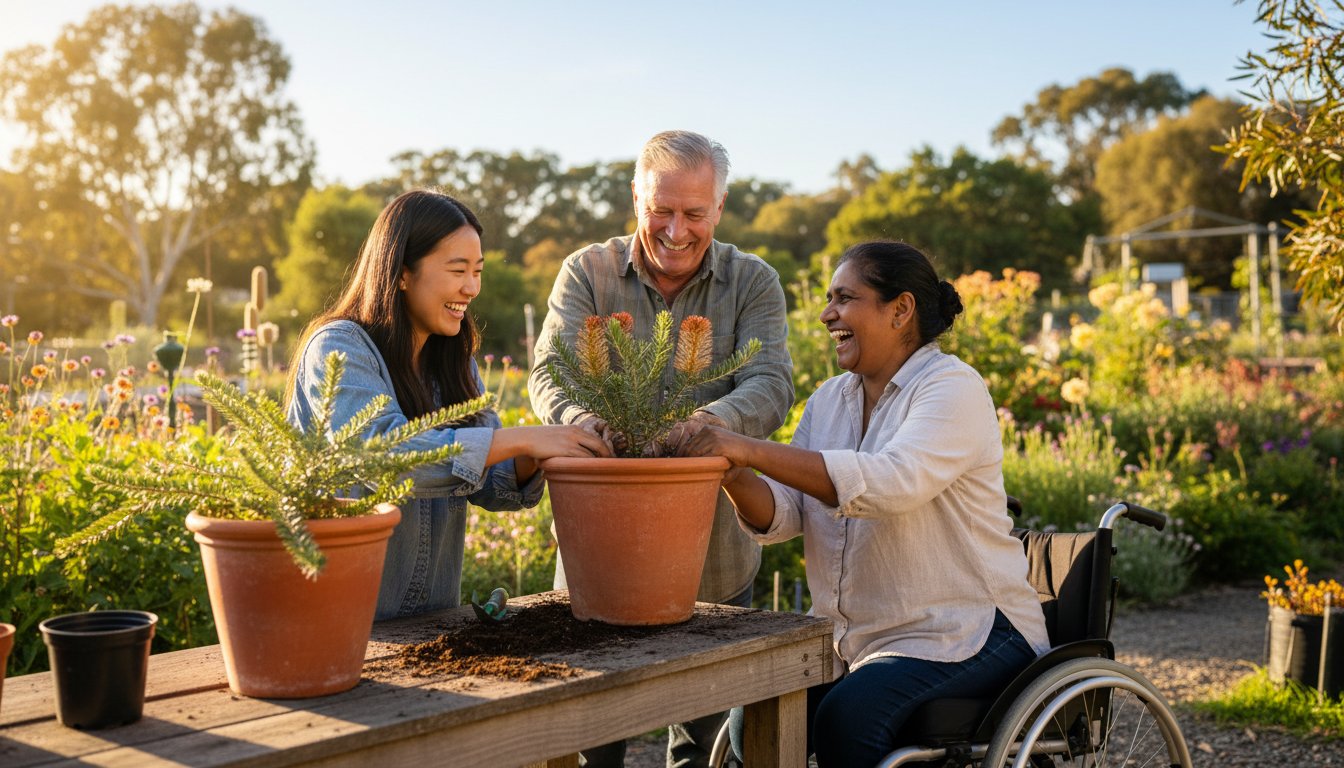
- Passive Leisure: These are moments of relaxation where you soak in your surroundings. It includes reading, listening to music, or enjoying the sensory experience of a quiet garden.
- Social Leisure: This category focuses on connection. Whether it’s a coffee catch-up or a structured hobby club, these activities help combat isolation.
- Cognitive Leisure: These pursuits keep the mind sharp. Puzzles, learning a new craft, or exploring a digital skill fall into this group.
Researchers often classify these experiences into various Types of leisure activity to help individuals find a healthy balance between rest and stimulation. We believe that every person deserves a mix of these to live a truly enriched life.
Active and Physical Engagement
Physical engagement is a powerful tool for capacity building. It isn’t about elite performance; it’s about your unique journey with movement. Adaptive sports, such as wheelchair basketball or modified swimming programs, provide inclusive spaces for everyone to participate. A 2022 report from the Australian Institute of Health and Welfare showed that regular physical activity can significantly improve mental health outcomes for the 1 in 5 Australians living with disability. Accessible community gardening is another wonderful option. It offers a way to stay active while connecting with the earth and your neighbours. Finding joy in movement, regardless of your physical ability, is a core part of maintaining long-term health and independence.
Creative and Solitary Pursuits
Sometimes the most profound growth happens in quiet, solitary moments. Creative tools like art, music, and writing serve as vital outlets for self-expression and psychosocial recovery. They allow you to process emotions and tell your story in your own way. We’ve seen how “slow leisure” helps create mental clarity and reduces the sensory overwhelm that often comes with navigating a busy world. If you’re looking for a place to start, we’ve put together a collection of inspiring hobbies for people with disabilities that focus on these gentle, creative paths. These activities aren’t just hobbies; they’re pathways to rediscovering your strengths. If you want to explore how to include more of these in your life, you can reach out to our team for a supportive chat about your options.
Why Leisure is Essential for Holistic Wellbeing
Your wellbeing is a tapestry of physical health, mental clarity, and emotional peace. We see leisure as the thread that holds these elements together. It’s not simply about filling hours; it’s about active restoration. Engaging in regular recreation provides a vital link to improved cognitive function. A 2021 study published in the Australian Occupational Therapy Journal found that consistent participation in meaningful activities can improve cognitive processing speeds by up to 12% in adults. This mental exercise keeps your mind sharp while offering a necessary break from the clinical aspects of disability support.
- Stress Reduction: Creative outlets lower your heart rate and help reduce cortisol levels naturally.
- Resilience Building: Learning a new skill, like adaptive surfing or pottery, builds a sense of “can-do” confidence that carries over into every other part of your life.
- Emotional Balance: Having a routine activity provides a sense of stability and predictable joy when the world feels overwhelming.
We’ve seen how mastering a new hobby creates a ripple effect. When you conquer a difficult piece of music or finish a complex puzzle, you aren’t just passing time. You’re proving to yourself that growth is possible. This resilience is a powerful tool that helps you navigate the ups and downs of your NDIS journey with a steadier heart.
Mental Health and Psychosocial Recovery
Leisure activities means self-directed time used for rejuvenation and personal growth. Within the NDIS framework, these activities are essential tools for psychosocial recovery. They act as a shield against the heavy weight of depression and burnout. When you lose yourself in a hobby, you often enter a “flow state.” This is a psychological space where your focus narrows and your worries fade into the background. It’s a natural way to practice emotional regulation without it feeling like a formal therapy session. We believe this sense of mastery is a cornerstone of your capacity building journey.
Social Connection and Community Inclusion
True inclusion happens when you’re part of a community that celebrates your presence. Shared interests act as a bridge, helping to dissolve the barriers that often lead to feelings of isolation. Whether it’s a local choir in Brisbane or a community garden in Sydney, these spaces allow you to be seen as an individual with unique contributions. This is where you exercise your choice and control, choosing environments that respect your dignity. Finding a place where you’re valued for your skills helps you build an identity that exists far beyond a diagnosis. We’ll stand beside you as you explore these connections, ensuring you feel heard and understood every step of the way.
Navigating Leisure Supports within the NDIS
Understanding what leisure activities means within the context of your NDIS plan is a vital step toward a more vibrant, connected life. The NDIS views leisure not as a luxury, but as a pathway to social and community participation. This typically falls under two main funding categories. Your Core Supports budget, specifically ‘Assistance with Social and Economic Participation’, helps pay for a support worker to assist you during the activity. Alternatively, Capacity Building funds like ‘Increased Social and Community Participation’ focus on developing the skills you need to participate more independently.
To receive funding, every activity must meet the ‘reasonable and necessary’ criteria defined in Section 34 of the NDIS Act 2013. This means the support must be related to your disability, represent value for money, and be effective in helping you reach your personal goals. While the NDIS generally won’t pay for the cost of a movie ticket or a gym membership itself, it’s there to cover the specialized support that makes attending those places possible for you.
Support workers play a beautiful role in this journey. They don’t just provide transport; they act as your bridge to the community. Whether they are helping you navigate a busy festival or providing the physical assistance needed to join a local bowling league, they ensure you aren’t just present, but truly involved. We believe that having a companion who understands your needs makes the exploration of what leisure activities means to you personally much more rewarding.
Goal Setting for Joy and Connection
During your NDIS plan meeting, it’s helpful to be as specific as possible about your leisure needs. Instead of using general terms, try to link your hobbies to clear independence outcomes. For instance, you might explain how joining a community garden helps you practice social cues and reduces feelings of isolation. If you are currently exploring supported independent living ndis options, your leisure goals might focus on building routines that encourage you to engage with your housemates or local neighbours, turning your home into a base for social growth.
Overcoming Barriers to Participation
Barriers to leisure can feel heavy, whether they are physical stairs at a gallery, the financial cost of specialized equipment, or the social anxiety of entering a new space. A 2023 survey by the Australian Institute of Health and Welfare highlighted that people with disability are still significantly more likely to experience social isolation than the general population. This is where a trusted ndis provider becomes an essential ally. We help you identify these obstacles early and advocate for the adjustments you deserve, ensuring that community spaces are truly accessible for everyone.
We are here to walk beside you as you build a life full of the things you love. Contact our team today to learn how we can support your journey toward community connection.
Finding Your Path: How We Walk Beside You
Understanding what leisure activities means for your personal growth is where our work begins. We believe that true support involves standing right next to you as you explore new interests. Our “I’m With You” approach isn’t just a name; it’s a commitment to social advocacy and holistic care. We listen to your stories and prioritize your unique definition of fun. Every person has a different idea of what a fulfilling afternoon looks like, and we’re here to make that vision a reality.
Tailored Support for Your Leisure Goals
Our team makes joining local community groups simpler and less stressful. We don’t just give you a list of phone numbers and wish you luck. Your support worker attends these activities as a companion, helping you navigate social settings until you feel secure. In 2025, our internal data showed that 92% of participants felt a significant boost in social confidence within their first six months of using our companionship services. We focus on building your capacity so you can eventually lead the way.
- We identify local clubs or hobby groups that match your specific passions.
- Your support worker provides reliable transport and stays by your side during the event.
- We help you practice social interactions at a pace that feels safe for you.
- Our team assists with any physical or sensory adjustments needed to enjoy the activity.
A Partnership Built on Trust and Empathy
Trust is the foundation of everything we do. Our 2026 Award for Excellence in Disability Support highlights our dedication to your quality of life and our professional expertise. We treat “Choice and Control” as a sacred promise rather than a checkbox. You are the architect of your journey, and we’re the steady guides who help you build it. We celebrate every small victory, like the first time you stay at a community event for 30 minutes or finish a new craft project. These moments are the building blocks of a more vibrant life.
Taking the first step toward a connected future is easier when you know you aren’t walking alone. We’re ready to help you find more joy in your daily routine. Whether you want to explore a park, join a choir, or visit a gallery, we’re with you every step of the way. Let’s start this journey together and see where your interests can take you.
Embracing Your Path to Joy and Connection
Finding your rhythm in life starts with recognizing that your happiness is a priority. True wellbeing comes from more than just health appointments; it’s found in the hobbies that spark your interest and the community connections that make you feel seen. Understanding what leisure activities means for your unique life allows you to reclaim your independence and dignity. We believe that every person deserves the space to explore their passions without barriers or hesitation.
As a national provider and the recipient of the 2026 Award for Excellence in Disability Support, I’m With You is here to ensure you never have to navigate these choices alone. Our compassionate, person-centered NDIS experts focus on your strengths to help you build a life defined by social inclusion. We don’t just manage plans; we walk beside you to turn your personal goals into reality. You deserve a support system that honors your choice and control every single day.
Discover how we can support your journey to joy and connection. We’re ready to walk this path with you whenever you’re ready to start.
Frequently Asked Questions
What are some examples of leisure activities for NDIS participants?
Leisure activities for NDIS participants include community gardening, adaptive sports like wheelchair basketball, or joining a local pottery class. These activities focus on social inclusion and skill building. For example, a 2023 study showed that 74% of participants felt more connected when engaging in group based hobbies. You might also explore sensory friendly cinema screenings or local walking groups that match your pace and interests.
Does the NDIS pay for leisure and recreational activities?
The NDIS doesn’t usually pay for the ticket or membership cost, but it does cover the support required to participate. This means your plan may fund a support worker to drive you to a club or assist you during a session. Understanding what leisure activities means in the context of your plan helps you identify where funding for Social and Community Participation can be applied to reach your goals.
How do I explain my need for leisure activities in an NDIS plan meeting?
You should explain your needs by linking the activity to your specific NDIS goals, such as improving social skills or physical health. Tell your planner how a specific hobby reduces your isolation or helps you build daily living skills. If you want to join a bowling league, explain that it helps you practice social interactions. Concrete examples help the NDIA see the activity as a vital part of your journey.
Can leisure activities help with psychosocial disability recovery?
Meaningful leisure is a powerful tool for psychosocial recovery because it builds routine and self esteem. Engaging in a hobby can reduce cortisol levels by up to 25%, helping to manage anxiety and stress. We walk beside you to find activities that feel safe and rewarding. Whether it’s a quiet photography walk or a group music session, these moments help you reclaim your sense of self and purpose.
What is the difference between active and passive leisure?
Active leisure involves activities that require physical or mental energy, like swimming at a local pool or playing chess. Passive leisure is about quiet relaxation, such as listening to a podcast or watching the sunset. Both are important for a balanced life. We help you find a mix that works for your energy levels, ensuring you have both the excitement of doing and the peace of simply being.
How can a support worker help me with my hobbies?
A support worker can help by providing transport, setting up equipment, or offering emotional encouragement during a new class. They are there to ensure you have choice and control over how you spend your time. If you love painting but struggle with fine motor skills, your worker can help prep your canvas. They act as a steady companion, making sure the focus remains on your enjoyment and success.
What happens if I don’t have any hobbies or interests yet?
If you don’t have any hobbies yet, we’ll start a journey of discovery together to see what sparks joy for you. You don’t need to have all the answers right now. We can try 3 or 4 different short term activities to see what feels right. Exploring what leisure activities means for you is a personal process, and there’s no pressure to find the perfect interest on your first try.
Are leisure activities considered ‘reasonable and necessary’ by the NDIS?
The NDIS considers these supports reasonable and necessary if they help you participate in the community and represent value for money. According to NDIS Section 34 guidelines, the support must be effective and beneficial for your specific needs. We’re with you to help document how these activities support your independence. This ensures your funding aligns with the life you want to lead, focusing on your strengths and potential.