

Imagine waking up in a home that feels truly yours, where the morning coffee is made exactly how you like it and your support team feels like a natural extension of your day. For Sarah, a 24-year-old NDIS participant we met in Brisbane last October, finding the right sil (Supported Independent Living) arrangement was the key to this new chapter, but the initial search felt tangled in red tape. You might feel that same tug toward independence while simultaneously worrying if the system can actually provide the quality of care you deserve. It’s exhausting to feel like you’re just another case number when you’re simply looking for a place to belong.
We’re here to walk beside you through this journey and show you how these supports can empower you to live more independently while receiving the compassionate, person-centered care you deserve. This guide will help you distinguish between housing and daily assistance, simplify the funding steps, and give you the confidence to claim your right to choice and control. By the time you finish reading, you’ll have a clear roadmap for your transition to a home where you aren’t just living, but truly thriving.
Key Takeaways
- Learn how Supported Independent Living empowers you to build capacity and embrace independence within the comfort of your own home.
- Explore the “with you” model of care, which provides compassionate assistance with daily tasks like personal hygiene while always respecting your agency.
- Gain clarity on your NDIS journey by understanding the vital difference between sil support services and Specialist Disability Accommodation (SDA).
- Navigate the funding process with a jargon-free guide to NDIS assessments and how a Roster of Care is designed to support your unique daily rhythm.
- Discover how to exercise your choice and control to find a dedicated partner who stands beside you and prioritizes your long-term well-being.
What is Supported Independent Living (SIL)?
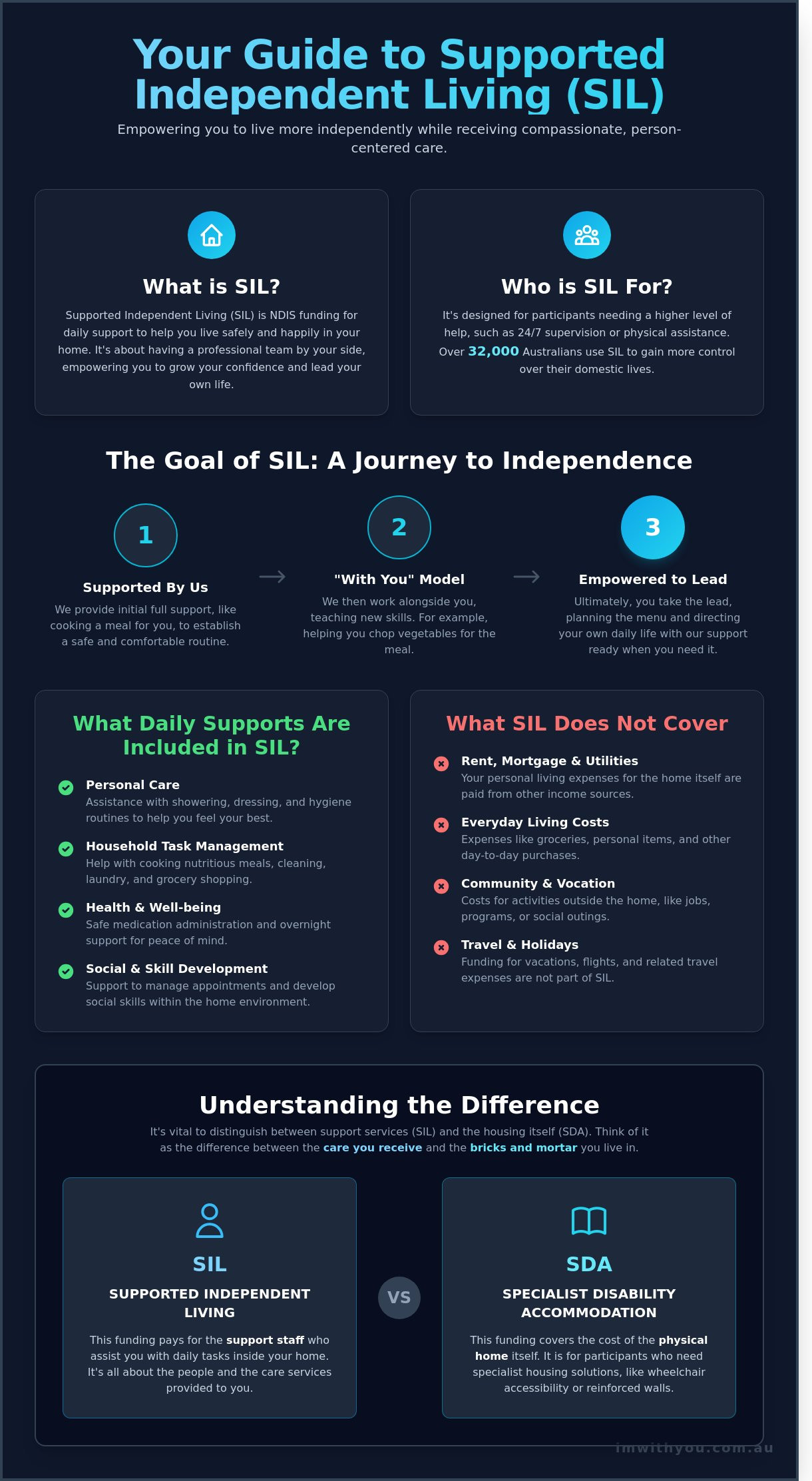
Living on your terms is at the heart of a fulfilling life. Supported Independent Living, or sil, is a specific type of NDIS funding that provides you with the daily help you need to live safely and happily in your home. This support isn’t about someone taking over your life. Instead, it’s about having a friendly, professional team by your side to assist with tasks like meal preparation, personal care, or managing your household budget. We focus on supporting a life rather than managing a case. This means we look at your dreams and daily rhythms, ensuring the help you receive feels natural and empowering.
While you can receive these supports in various settings, they’re most common in shared living environments. Sharing a home with others often makes it easier to provide help around the clock while helping you build a social circle. It’s a collaborative way to live where you have the security of constant support without losing your sense of self. We believe that your home should be a sanctuary, and sil provides the framework to make that possible while you grow your confidence.
Who is SIL Designed For?
This funding is typically for participants who need a higher level of help at home. If you require supervision or physical assistance 24 hours a day, this might be the right path for you. It’s a popular choice for people looking to move out of their family home for the first time or those transitioning from more restrictive settings. We often walk this path with people living with intellectual disabilities or psychosocial needs. According to NDIS data from June 2023, over 32,000 Australians use this support to gain more control over their domestic lives. It provides a safety net that allows you to explore what you’re capable of in a secure environment.
The Goal of Independent Living
The true purpose of these supports is capacity building. We don’t want to just do things for you; we want to help you learn to do for yourself. This might mean moving from having a meal cooked for you to helping chop vegetables, and eventually, planning the whole menu. We value a steady, unhurried transition. There’s no rush to master everything at once. By following your lead, we help you establish a routine that reflects your personal choices. This empowerment ensures you aren’t just a resident in a house, but the leader of your own daily life.
What Daily Supports are Included in SIL?
Choosing SIL means you’re never navigating your home life alone. We focus on a “with you” model, where support workers don’t just do things for you; they walk beside you as you master new skills. This might include help with personal care like showering and dressing, or hygiene routines that help you feel your best every morning. It’s about maintaining dignity and choice in the most private parts of your day.
Your home is your sanctuary, and we help you manage it by teaching you how to cook nutritious meals and keep your space clean. According to NDIS data from the 2023-24 period, capacity building is a core goal for a vast majority of participants in shared living. We focus on developing your social skills and helping you manage your own appointments, ensuring you feel confident both inside your home and out in the community. This holistic approach ensures that sil is about more than just supervision; it’s about empowerment.
Assistance with Daily Life
Daily life involves many moving parts that keep a household running smoothly. Our team helps with grocery shopping and planning healthy menus that suit your specific tastes and dietary needs. We also provide vital support for safe medication administration, ensuring your health remains a top priority. For many families, overnight support provides the peace of mind needed to sleep soundly, knowing a trained professional is there if a need arises at 2:00 AM.
What SIL Does Not Cover
Understanding the boundaries of sil funding helps you plan your personal budget effectively. SIL covers the support staff who assist you, but it doesn’t pay for your everyday living expenses. You’ll still need to cover costs like your weekly rent, groceries, and utility bills. These are usually paid from your Disability Support Pension (DSP) or other personal income sources.
There’s also a clear line between SIL and community participation funding. While your SIL team supports you within your home environment, other funding categories cover your time spent at a job, a vocational program, or out with friends. Holiday costs, flights, and travel insurance also remain separate expenses. If you’re feeling unsure about how these different funding buckets work, you can reach out to us for a chat about how these pieces fit together in your specific NDIS plan.
Understanding the Difference: SIL vs. SDA
One of the most frequent questions we hear from families is about the difference between SIL and SDA. It’s easy to see why these terms get tangled. While they both relate to your home life, they fund completely different things. We like to think of it this way: sil is the heartbeat of your home, while SDA is the physical shell that protects it.
To keep it simple, SIL refers to the “service” or the team of people who support you with daily tasks like cooking, personal care, or medication. SDA, or Specialist Disability Accommodation, is the “structure” or the physical building itself. These two funding streams work side-by-side to ensure you have a safe place to live and the right people to help you thrive within it. According to NDIA data from June 2023, while over 30,000 participants receive SIL funding, only a fraction of those also require SDA. You can have one without the other; we’re here to help you figure out which combination fits your life.
Specialist Disability Accommodation (SDA) Explained
SDA is specialized housing designed for people with very high functional impairment or high support needs. It includes physical features that help you live more independently. The NDIS classifies these homes into four specific design categories: Improved Liveability, Robust, Fully Accessible, and High Physical Support. It’s a common misconception that you must have an SDA-approved home to receive sil support. In reality, many people receive their daily care in standard private rentals, family homes, or community housing that doesn’t meet the technical SDA criteria.
The development of such accessible properties requires careful planning that extends beyond the building itself, including considerations for vehicle access and parking. For a deeper look into the complexities of development regulations, you can visit ML Traffic Engineers Pty Ltd to understand how challenges like new car parking rules are managed.
Choosing Your Home and Your Team
We believe your home should truly feel like yours. This is where your right to Choice and Control becomes a sacred promise. You aren’t required to use the same provider for your housing and your support services. In fact, separating these two can give you more flexibility. If you love your home but want to change your support team, you can do that without having to move out.
We walk beside you to ensure you find a living setup that respects your dignity. Whether you’re looking for a house with specific ceiling hoists or simply a team that understands your morning routine, we focus on your agency. Finding the right fit involves looking at a few key factors:
- Separating your tenancy agreement from your service agreement for more independence.
- Checking if a home meets the NDIS SDA Price Guide 2023-24 standards if you have SDA funding.
- Ensuring the support team aligns with your personal goals and culture.
- Confirming the physical environment supports your long-term safety.
The goal is always to create a space where you feel secure and empowered. You deserve a home that reflects who you are, supported by a team that feels like a natural extension of your life.
Navigating the Path to SIL Funding and Approval
We know that looking at NDIS paperwork can feel like trying to read a map in a storm. The path to securing sil funding is a journey we take together, step by step. It begins with a clear understanding of your daily life and the specific moments where a helping hand makes the most difference. We start by looking at your current situation and identifying the gaps between where you are and where you want to be. This process isn’t just about ticking boxes; it’s about making sure your voice is heard by the NDIS planners.
Your NDIS provider acts as your advocate during this stage, helping you translate your daily needs into the language the Agency requires. We stand beside you to ensure no detail is missed, from the way you like your morning coffee to the support you need for community outings.
Gathering the Right Evidence
A Functional Capacity Assessment (FCA) serves as the heart of your application. This detailed report, often spanning 10 to 15 pages, is usually completed by an Occupational Therapist to provide a professional look at your strengths and the areas where you need support. We also gather reports from your GP or allied health specialists, such as psychologists or physiotherapists, to provide a holistic view of your wellbeing. Every piece of evidence you collect should focus on your goals for independence.
The Roster of Care Process
Think of the Roster of Care, or RoC, as a simple snapshot of your ideal week. It maps out all 168 hours from Monday to Sunday to show exactly when support is needed. We help you detail when you need one-on-one help, such as during complex morning routines, and when shared support with housemates is more appropriate. Most shared living arrangements operate on a 1:2 or 1:3 ratio, meaning one support worker assists two or three residents. This document is a living thing; if your life changes, we can work with you to update the roster so your support remains fair and effective.
Preparing for your planning meeting requires a mix of organisation and confidence. You don’t have to do this alone. Bring a trusted friend, a family member, or your provider to the meeting to ensure you feel supported. When you speak with the planner, focus on how sil will help you live a bigger, more autonomous life. Clear communication about your needs today helps secure the right level of funding for your tomorrow.
If you’re ready to start building your evidence for a more independent future, reach out to our team today for a supportive chat.
Your Choice, Your Control: Finding the Right SIL Partner
Selecting a provider for sil isn’t a simple business transaction. It’s one of the most personal decisions you’ll ever make. We believe the relationship between you and your support team is the heartbeat of a successful home. It isn’t about filling a room vacancy; it’s about finding a place where you feel seen, heard, and truly understood. We don’t just provide a service. We make a commitment to stand beside you, ensuring your home remains a sanctuary of safety and growth.
We view “Choice and Control” as a sacred promise rather than a regulatory requirement. This means you hold the keys to your life. You decide who enters your home, how you spend your weekends, and which goals take priority. Finding a cultural fit requires looking beyond the building and into the heart of the organization. You deserve a partner who values your agency and treats your independence with the respect it deserves.
Questions to Ask a Potential Provider
When you interview a potential provider, focus on the human element. Ask them specifically how they match support workers to your unique personality and interests. It’s okay to be specific. If you love quiet mornings and gardening, you shouldn’t be matched with someone who prefers loud environments. Inquire about their commitment to person-first language and how they uphold your dignity during private moments. Finally, ensure they have a clear policy on family involvement. Your loved ones are a vital part of your story, and a good sil partner should welcome them with open arms.
The I’m With You Difference
At I’m With You, we’re proud of our 2026 award for excellence in care, a recognition that reflects our dedication to holistic wellbeing. We don’t just focus on the basics of daily living. We prioritize social inclusion and mental health, evidenced by the 94% participant satisfaction rate recorded in our 2025 community review. We believe in supporting a life, not just managing a case. Our team is ready to walk with you through every step of this transition. Taking that first step toward a new home can feel overwhelming, but you don’t have to do it alone. We’re here to turn your vision of independence into a lived reality, starting today.
Embracing Your Future With Confidence
Navigating the NDIS doesn’t have to feel like a solo trek. You’ve now explored how sil provides the essential daily supports needed to live life on your own terms. We’ve looked at the vital differences between living supports and specialist housing, ensuring you have the clarity to make informed decisions for your household. At I’m With You, we believe your journey is defined by your personal goals and your sacred right to Choice and Control. Our team was honored to receive the Awarded for Excellence in Disability Care 2026, reflecting our commitment to a truly person-centered approach. With the guidance of our experienced NDIS Support Coordination team, you can move past the stress of funding hurdles and focus on what really matters: your independence. We’re here to walk beside you, providing the professional expertise and gentle care you deserve. Every step you take brings you closer to a home that feels like your own, supported by people who truly care about your success.
Start your journey toward independence with our gentle SIL support team today
You have the strength to lead your own life, and we’re honored to be the companion by your side as you do.
Frequently Asked Questions
Is SIL funding part of my Core Supports in my NDIS plan?
Yes, your sil funding is located within your Core Supports budget under the category Assistance with Daily Life. We understand how confusing plan categories can be, but it’s important to know that this funding is usually “stated.” This means the money is set aside specifically for your SIL provider and you can’t spend it on other items like transport or equipment. We’ll walk with you through your plan to make sure you understand exactly how these funds empower your daily routine.
Can I choose my own housemates in a SIL property?
You absolutely have the right to choose who you live with, as this is a vital part of your choice and control. We work side by side with you to ensure you feel safe and happy in your home environment. Many providers facilitate meet and greets where 100% of current residents must agree on a new housemate before they move in. It’s your life, and your comfort is our priority as we help you find the right social fit.
Do I have to move out of my family home to get SIL funding?
You don’t have to leave your family home to access sil supports if that is where you feel most secure and happy. While SIL is often used in shared living environments, the NDIS can fund these supports in your family home if it’s the most “reasonable and necessary” way to support your independence. We’ll help you explore these options so you can stay connected to your loved ones while gaining the skills you need to lead a more independent life.
What happens if I don’t get along with my SIL support workers?
If you don’t feel a connection with your support workers, you have the power to request a change immediately. Your comfort is the foundation of our partnership, and we believe you should always feel heard and respected in your own home. You can speak with your provider’s manager to request a different staff member who better suits your personality. If things still don’t feel right, you can choose a new provider entirely by providing the standard 28 days’ notice.
How is SIL different from Personal Care support?
SIL focuses on 24/7 supervision and building your independence, while Personal Care is usually for specific, time-limited tasks. Think of SIL as a holistic support system that’s with you throughout the day and night to help with cooking, cleaning, and safety. Personal Care supports are often shorter visits, perhaps 1 or 2 hours, specifically for hygiene or dressing. Both aim to empower your daily life, but SIL provides a more consistent, wrap-around level of care.
Can I get SIL funding if I live in a private rental?
You can definitely receive SIL funding while living in a private rental property. SIL covers the people who support you, not the rent or the physical building itself. In 2023, many participants successfully used their funding in private rentals with 1 or 2 other housemates to share the cost of support. We’ll stand beside you to ensure your support team fits perfectly into your chosen home, regardless of the type of lease you have signed.
How long does the NDIS take to approve a SIL application?
The NDIS typically takes about 28 to 50 days to review and approve a SIL submission once they have all the required evidence. This process involves a detailed look at your Roster of Care to ensure the funding meets your specific needs. We know waiting can be stressful, so we stay in constant contact with you during these weeks. We provide updates and reassurance as your journey toward independent living progresses toward a decision.
What is an “irregular support” in a SIL budget?
Irregular supports are extra funds set aside for those unexpected moments when you need more help than your usual daily routine provides. This includes times when you’re unwell and stay home from work, or during the 10 to 12 public holidays each year when your regular community activities might be closed. These funds ensure you’re never left without help. They provide a safety net that keeps you secure and supported every single day of the year.