

The NDIS journey can feel overwhelming, a landscape of new terms, endless choices, and important decisions. Choosing a Support Coordinator is one of the most significant steps you’ll take, and it’s completely natural to worry about finding someone who truly listens and understands your vision for your life. You might be asking yourself, how can I be sure I’m not wasting my funds on the wrong person?
That’s why understanding what makes a good ndis support coordinator is so crucial. It’s about more than just ticking boxes; it’s about finding a genuine partner who will stand with you, champion your goals, and help you unlock the full potential of your plan. This guide is here to give you that clarity and confidence.
We’ll walk you through the key qualities to look for, the right questions to ask, and the signs of a truly supportive professional relationship. Our promise is to help you feel empowered to exercise your choice and control, so you can confidently find the perfect advocate for your journey.
Key Takeaways
- A great Support Coordinator does more than just manage your plan; they are a true partner dedicated to building your capacity and empowering your independence.
- Understanding what makes a good NDIS support coordinator means looking for a balance of genuine empathy and practical, real-world NDIS knowledge.
- Learning to spot the red flags of a poor-fit coordinator is just as important as knowing the positive qualities to seek out on your journey.
- You have the right to interview potential coordinators to ensure they are the right person to stand with you and champion your goals.
Beyond the Checklist: The True Role of a Great NDIS Support Coordinator
When you first think of an NDIS Support Coordinator, it’s easy to picture someone who simply ticks boxes, books appointments, or manages a budget. But their true value goes far deeper than a to-do list. A great coordinator’s purpose is not just to organise your services, but to help you build your skills, confidence, and independence for the long term. This focus on capacity building is fundamental to what makes a good ndis support coordinator stand out.
They are your personal NDIS navigator, your steadfast advocate, and your strategic partner. Their most important mission is to ensure the core NDIS principle of ‘Choice and Control’ isn’t just an official phrase, but your lived reality. The goal is to move beyond a transactional relationship and build a genuine partnership founded on trust, transparency, and mutual respect, where you always feel heard and empowered.
The NDIS Definition vs. The Human Reality
On paper, the role of a Support Coordinator within the National Disability Insurance Scheme (NDIS) is to help you understand your plan and connect you with the right supports. But in reality, their role is deeply human and far more personal. A great coordinator is a trusted guide who takes the time to listen to your hopes, acknowledge your fears, and understand your unique vision for a good life. They patiently translate complex NDIS jargon and confusing processes into clear, simple language you can feel confident acting on. They don’t just manage services from a distance; they stand beside you, ensuring your voice is always the most important one in the room.
More Than a Planner, They Are Your Advocate
This is where a coordinator’s true commitment shines. Moving beyond planning, they step into the crucial role of being your advocate-a powerful ally who ensures your needs are met and your rights are upheld. This is advocacy in action, and it’s a non-negotiable quality. They are there to champion your goals at every turn, especially when you face challenges. This means they will:
- Confidently and respectfully speak up for you in meetings with providers or the NDIA.
- Proactively help you navigate and resolve any issues or conflicts that may arise with your services.
- Rigorously check that the supports you receive are high-quality, person-centered, and a perfect fit for your needs.
- Actively work to protect your rights and ensure every decision aligns with your personal goals.
The Core Qualities: What to Look for in Their Character
While NDIS knowledge is essential, it’s the human qualities of a support coordinator that truly shape your experience. These are the ‘soft skills’ that transform a professional service into a genuine partnership. It’s less about what they know and more about who they are. The right person will make you feel heard, respected, and completely safe. These personal traits are the bedrock of a trusting relationship, and they are central to understanding what makes a good NDIS support coordinator.
Deep Empathy and Active Listening
A great support coordinator listens to understand your journey, not just to tick a box or formulate a reply. They have a natural ability to see the world from your perspective and sit with you in your experiences without judgment. This isn’t just about hearing words; it’s about connecting with the meaning behind them. You’ll know you’ve found this when you walk away from a conversation feeling truly seen and validated, confident that they are standing right there with you.
Unwavering Patience and Resilience
The NDIS pathway can sometimes be slow and frustrating. A truly supportive coordinator acts as a calm and steady anchor during these challenging moments. They possess a deep well of patience, refusing to get flustered by bureaucracy or setbacks. Their resilience means they are persistent, continuing to advocate for you and problem-solve creatively until your goals are met. They provide a reassuring presence that reminds you that you’re not facing the hurdles alone.
A Genuine Passion for Empowerment
The best support coordinators are driven by your success. Their ultimate goal is to build your skills and confidence so that, one day, you may not need them as much. This passion for empowerment shines through in how they:
- Celebrate every success with you, no matter how small.
- Focus on your strengths and what you can do, not on limitations.
- Actively work to increase your capacity for self-advocacy and independence.
This genuine commitment to your growth and your right to Choice and Control is a core part of what makes a good NDIS support coordinator truly transformative.
The Essential Skills: Practical Abilities a Great Coordinator Must Have
While a warm and empathetic nature is the heart of great support, practical skills are the hands that get things done. A key part of what makes a good NDIS support coordinator is their ability to balance this heartfelt compassion with sharp, real-world efficiency. These are the abilities that turn your NDIS goals into a tangible, actionable plan, ensuring your vision for your life is implemented effectively and with purpose.
Expert NDIS Knowledge and Navigation
A great coordinator moves with confidence through the complexities of the NDIS. They don’t just read the NDIS Price Guide; they understand its nuances and how to apply different funding categories to your unique situation. This expertise means they can:
- Clearly explain how your Core, Capital, and Capacity Building funds can be used.
- Effectively prepare you for plan reviews by gathering the right evidence.
- Stay updated on the latest NDIS rules and changes, so you are always well-informed.
Creative Thinking and Resourcefulness
Sometimes, the best solutions aren’t the most obvious. A resourceful coordinator thinks outside the box, connecting you to a wide network of quality providers and services. They look beyond just NDIS-funded supports, helping you tap into valuable community and mainstream resources you may not have known existed. This creative approach ensures you get the most value from your plan and discover new pathways to achieving your goals.
Strong Communication and Problem-Solving
Clear, respectful, and timely communication is non-negotiable. Your coordinator is your strongest advocate, confidently negotiating with providers and proactively solving issues before they escalate. Understanding what makes a good NDIS support coordinator often comes down to this skill; they anticipate challenges, keep you informed every step of the way, and ensure you always feel heard and in control. This builds trust and keeps your plan moving forward smoothly. Our team combines expertise with heartfelt support.
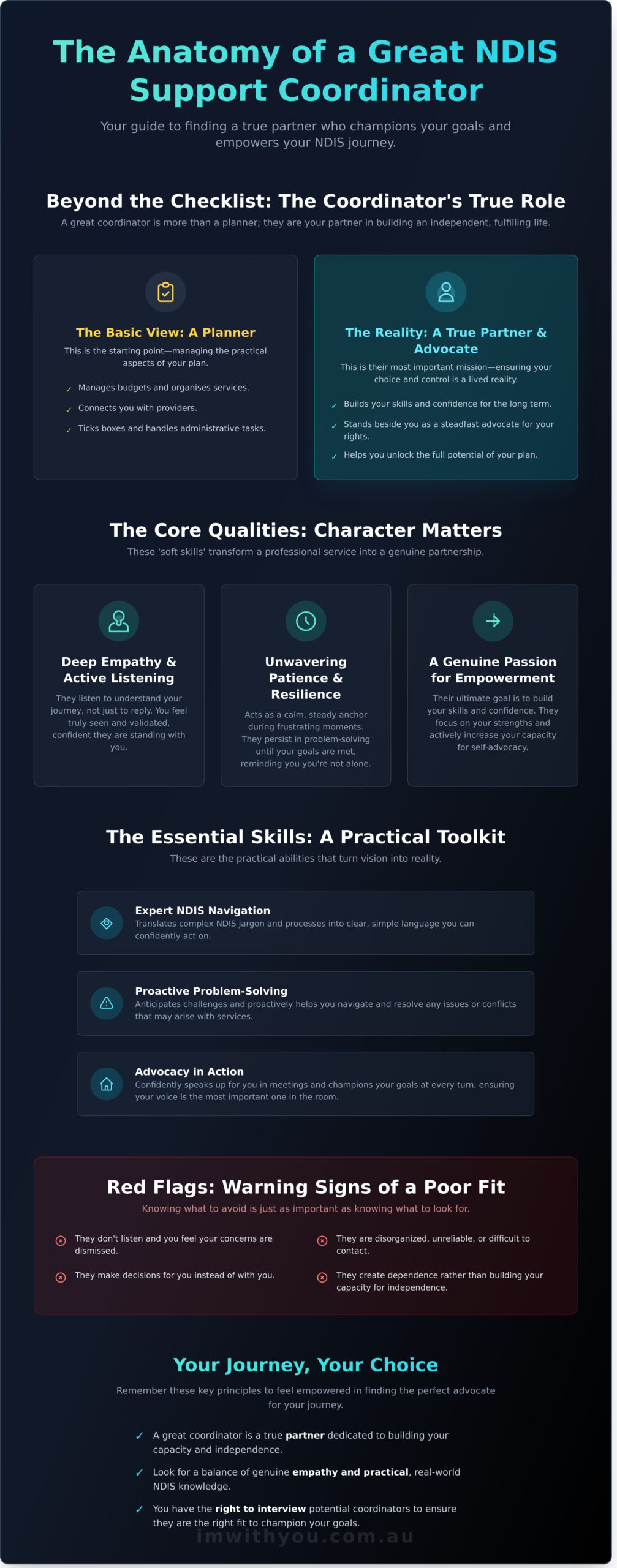
Red Flags: Warning Signs of an Ineffective Support Coordinator
Just as it’s important to know the positive signs, understanding the red flags is a key part of figuring out what makes a good NDIS support coordinator. Your relationship with your coordinator should feel supportive and empowering. If something feels off, it’s vital to trust that instinct. Remember, you always have Choice and Control, and that includes the right to find a coordinator who is a better fit for your journey.
Poor Communication and Unresponsiveness
A support coordinator should be your most reliable point of contact, not a source of frustration. If you constantly feel like you’re being left in the dark, it can hinder your progress and add unnecessary stress. Watch for signs like:
- They don’t return your calls or emails within a reasonable timeframe.
- They fail to keep you updated on progress with providers or your plan.
- You feel like you are always the one chasing them for information.
- Their communication is unclear, confusing, or worse, dismissive of your concerns.
A ‘One-Size-Fits-All’ Approach
Your NDIS journey is unique to you. A great coordinator celebrates this, but an ineffective one might try to fit you into a pre-made box. This can look like them suggesting the same few providers to all their clients, regardless of individual needs. If it feels like they are following a script instead of genuinely listening to your goals, and your support plan feels generic, they are not honouring your personal path or your right to true choice.
Lack of Transparency or Conflicts of Interest
Trust is the foundation of this partnership. A lack of honesty about their processes or recommendations can seriously undermine that trust and your control over your plan. Be cautious if:
- They can’t or won’t explain why they are recommending a specific provider.
- They push you towards services their own company provides without offering other options.
- They are vague about how your NDIS funds are being used.
- You feel pressured or rushed to make decisions you’re not comfortable with.
Recognising these warning signs is not about finding fault; it’s about protecting your well-being and ensuring you have the best possible support. A coordinator’s role is to stand beside you, not in your way. Understanding what makes a good NDIS support coordinator means you are empowered to find a partnership built on respect, transparency, and genuine care. If you feel your current support isn’t right, we are here to help you explore your options.
How to Find and Choose Your Ideal Support Coordinator
Finding the right person to walk alongside you on your NDIS journey is one of the most important decisions you’ll make. This isn’t just about hiring a service; it’s about choosing a partner and an advocate who will be a key part of your life. Preparing for your initial meetings helps you step into this choice with confidence, ensuring you find a professional you genuinely connect with. Understanding what makes a good NDIS support coordinator is about finding a balance of skill, experience, and a personality that feels right for you.
Key Questions to Ask in an Initial Meeting
Your first conversation is an opportunity to see how a potential coordinator listens, responds, and makes you feel. To help guide the discussion, consider asking a few thoughtful questions:
- How do you help the people you support prepare for their NDIS plan reviews?
- Can you share an example of a time you successfully advocated for a participant?
- What is your communication style, and what is your typical response time?
- How do you measure success and celebrate achievements with your clients?
Where to Look and What to Check
Your search can start in a few trusted places. These practical steps can help you create a shortlist of potential coordinators who are a good fit for your unique needs.
- Use the official NDIS Provider Finder tool, filtering for ‘Support Coordination’.
- Ask for personal recommendations from friends, family, or in trusted community groups.
- Look for online reviews and testimonials on provider websites or social media.
- Check if they have specific experience supporting people with disabilities similar to yours.
Trusting Your Gut: The Importance of Personal Connection
After you’ve had a meeting, take a moment to reflect. How did the conversation leave you feeling-empowered and heard, or rushed and anxious? Ultimately, what makes a good NDIS support coordinator for you comes down to the relationship. Do you feel you could build a foundation of trust with this person? This decision is deeply personal, not just practical. You deserve someone who champions your choice and control because they genuinely care.
Talk to a team that puts connection first. We’re with you.
Your Journey, Your Partner: Choosing a Coordinator Who Walks With You
Choosing the right support coordinator is one of the most empowering steps you can take on your NDIS journey. It goes far beyond ticking boxes; it’s about finding a true advocate who listens to your goals and champions your vision. Ultimately, the answer to what makes a good ndis support coordinator lies not in a list of qualifications, but in their unwavering commitment to your choice and control and their ability to build a partnership based on genuine trust and respect.
At Im with you, we are a dedicated team that walks beside you. Our compassionate, person-centered approach is at the heart of our work, a standard of support that has been awarded for excellence in quality care. We don’t just manage plans; we support lives, ensuring you feel heard, understood, and confident every step of the way. Ready to find a Support Coordinator who truly partners with you? Let’s talk.
Your NDIS journey is yours to lead, and with the right partner by your side, the possibilities are endless. You don’t have to walk it alone.
Your Questions About NDIS Support Coordination, Answered
What is the difference between an NDIS Support Coordinator and a Plan Manager?
Think of your Support Coordinator as your trusted guide, walking beside you to bring your NDIS plan to life. We help you understand your funding, connect with the right services, and build your confidence on your journey. A Plan Manager, on the other hand, focuses on the financial side of your plan. They take care of paying your invoices and tracking your budget, freeing you up to focus on your goals and live a fuller life.
Can I change my NDIS Support Coordinator if I’m not happy with them?
Yes, absolutely. The NDIS is built on the promise of Choice and Control, and that sacred promise extends to who supports you. If your relationship isn’t the right fit, you have every right to find a new Support Coordinator who understands your needs and vision. The process simply involves finding a new provider you connect with and then providing notice to end your current service agreement. You are always in the driver’s seat of your journey.
What are the different levels of Support Coordination (Level 1, 2, and 3)?
The NDIS offers three levels to match your unique needs. Level 1, Support Connection, helps you connect with local services. Level 2, Coordination of Supports, is the most common and involves a dedicated coordinator helping you implement your plan and build your capacity. Level 3, Specialist Support Coordination, is for those with more complex needs, providing expert guidance through challenging situations. We can help you understand which level is right for you.
How many hours of Support Coordination can I get in my NDIS plan?
There isn’t a set number of hours; it’s tailored to your personal situation and goals. The NDIS will consider factors like the complexity of your circumstances and how much support you need to activate your plan and connect with services. A great coordinator will work efficiently to make the most of the hours you have, always focusing on empowering you to manage your own supports over time. Your plan should reflect what you need to thrive.
Does my Support Coordinator need to be located in my city or can they be remote?
This really comes down to your personal preference and what feels most supportive for you. A local coordinator has great on-the-ground knowledge of community services. However, remote support via phone or video call offers you a wider choice of providers across Australia. Ultimately, what makes a good NDIS support coordinator is their ability to connect with you and understand your needs, regardless of their location. We are with you, wherever you are.
What should I do if I have a conflict or disagreement with my Support Coordinator?
Your voice and feelings are always valid. We encourage you to first raise your concerns directly with your Support Coordinator, as open communication can often resolve misunderstandings. If you don’t feel comfortable or the issue isn’t resolved, you can speak with their manager or team leader. For more serious concerns, you always have the right to contact the NDIS Quality and Safeguards Commission. Your peace of mind is the top priority.