

Imagine sitting in your favorite chair, tea in hand, looking at a person who might soon be helping you start your day. It’s more than a meeting; it’s the beginning of a potential partnership in your own home. You likely feel a mix of hope and hesitation right now. Inviting a stranger into your private space is a significant step, and it’s completely normal to feel overwhelmed by the NDIS system or unsure about how to interview a support worker to find a “good” connection beyond their resume.
We believe you deserve to feel safe and empowered in your own home. This guide will show you how to conduct a person-centered conversation that prioritizes your values and life goals rather than just checking boxes. We’ll walk through a clear framework to help you vet candidates for both their technical skills and their unique personality. By the end, you’ll have the confidence to choose a companion who truly fits your life, ensuring you remain the lead architect of your own care journey.
Key Takeaways
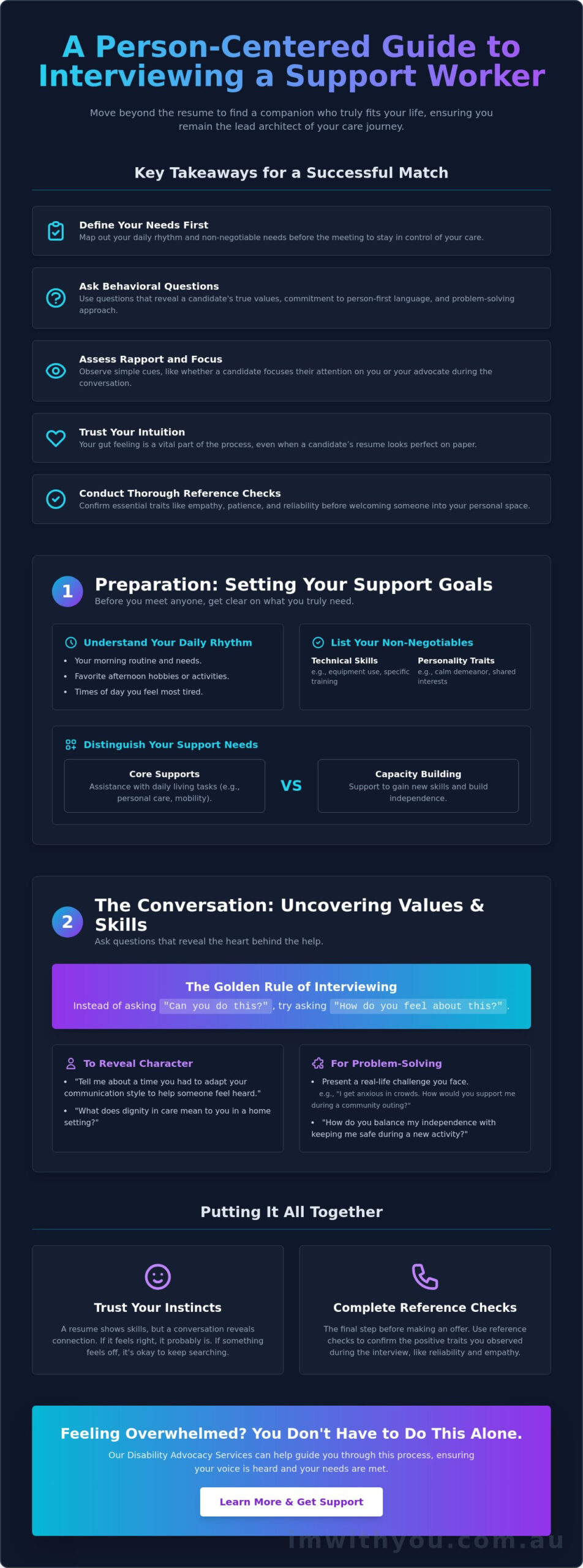
- Define your daily rhythm and non-negotiable needs before the meeting to ensure you stay in the driver’s seat of your care.
- Learn how to interview a support worker using behavioral questions that reveal their true values and commitment to person-first language.
- Discover how to assess rapport by observing simple cues, like whether a candidate focuses on you or your advocate during the conversation.
- Understand why trusting your intuition is a vital part of the process, even when a candidate’s resume looks perfect on paper.
- Use thorough reference checks to confirm essential traits like empathy and reliability before welcoming someone into your home.
Preparing for the Conversation: Setting Your Support Goals
Before you begin the search, take a quiet moment to look at your own day. Think about your morning routine, your favorite afternoon hobbies, and those times when you feel most tired. Understanding your daily rhythm helps you see exactly where a new person fits into your life. It’s helpful to understand What is a Support Worker? in a broad sense, but your focus should be on how they will specifically walk alongside you.
When you start thinking about how to interview a support worker, clarity is your best friend. You aren’t just hiring for a set of tasks; you’re inviting someone into your personal space. Start by listing your “non-negotiables.” These might be technical skills, like knowing how to use specific equipment, or personality traits, like a calm demeanor or a shared love for gardening. Setting these goals early keeps you in control of the process.
To better understand this concept, watch this helpful video:
It’s also vital to distinguish between your different types of needs. Are you looking for “core supports” to assist with daily living tasks, or are you focused on “capacity building” to help you gain new skills and independence? Defining this distinction helps you guide the conversation toward the outcomes that matter most to you.
Defining Your Perfect Match
Consider the balance you want between professional boundaries and warm companionship. Some people prefer a worker who is strictly focused on tasks, while others look for a friend to share interests with. Think about your hobbies. If you love the outdoors, a worker who enjoys nature will be a much better fit than someone who prefers quiet, indoor activities. Try to write down one sentence that describes the “feeling” you want to have when your support worker arrives at your home. This simple exercise can be a powerful compass during the interview.
The Logistics of the Interview
Decide where you feel most comfortable meeting. A video call is often a gentle way to start, but a face-to-face meeting in your home can help you see how they interact with your environment. You don’t have to do this alone. Inviting a trusted advocate or family member can provide a second perspective and help you feel more secure. Prepare a simple “Support Profile” to share with the candidate. This isn’t a formal contract; it’s a friendly snapshot of who you are and how you like to be supported.
Essential Interview Questions to Uncover Values and Skills
Once you’ve finished Preparing for the Conversation, it’s time to meet. Knowing how to interview a support worker effectively requires a shift in focus. Instead of only asking “Can you do this task?”, we want to understand “How do you feel about this task?”. This approach helps us find someone who doesn’t just perform duties but truly connects with us as individuals. It’s about uncovering the heart behind the help.
One of the first things I like to ask about is person-first language. It isn’t just about using the right words; it’s about whether the candidate sees the person before the diagnosis. If you’re looking for someone with experience in intellectual disability or mobility support, ask for specific stories of how they’ve supported others in those areas. Their answers will tell you if they prioritize your agency and dignity.
Questions that Reveal Character
Character is often more important than a certificate. These questions help you see the person behind the professional:
- “Tell me about a time you had to adapt your communication style to help someone feel heard.” Look for answers that show patience and a willingness to try different approaches until you feel understood.
- “What does dignity in care mean to you in a home setting?” This reveals if they respect your space and your right to make your own choices, even in small ways.
Scenario-Based Problem Solving
I find it helpful to present a real challenge you face and ask how they would support you through it. For example, if you often feel anxious in crowded places, ask how they would help you manage that stress during a community outing. Focus on their ability to remain calm and patient. You want to hear an answer that sounds like a partnership, not a directive. If you’re feeling a bit stuck on how to frame these questions, our team can help you through our Disability Advocacy Services to ensure your voice is heard.
Finally, evaluate their approach to safety without making it feel like an interrogation. You might ask, “How do you balance my independence with keeping me safe during a new activity?”. This shows you their mindset regarding risk and your right to live an adventurous life. A good worker will prioritize your safety while still championing your freedom.
The “Vibe Check”: Assessing Rapport and Professionalism
While the right questions are essential, the “vibe check” is where you truly discover if someone belongs in your home. This part of the process is about observing the unspoken energy between you. When you’re learning how to interview a support worker, remember that their presence should feel like a relief, not a burden. You aren’t just looking for a technician; you’re looking for a companion who respects your space and your autonomy.
Watch how they engage with you during the meeting. Do they maintain eye contact, or do they focus on their phone and notes? A vital green flag is whether they speak to you directly. Notice if they speak to you personally or look to your advocate or family member instead; a person-centered worker will always prioritize your voice. They should show up on time, offer a genuine smile, and bring a sense of curiosity about your life. Pay attention to these small moments as you learn how to interview a support worker for your unique needs.
Communication and Connection
Does their tone feel supportive and non-judgmental? You’re looking for a balance of specialized industry expertise and a gentle, human touch. A candidate who asks follow-up questions about your long-term goals shows they’re thinking about a partnership, not just a single shift. This level of connection is what transforms standard care into meaningful support that helps you thrive.
Respecting Boundaries
Privacy is a core promise of any good relationship. Discuss their approach to confidentiality within your home early on. It’s also worth considering how their values align with the wider organization they represent. This is why choosing an NDIS provider that prioritizes your agency is so important. If you’re looking for a team that values this human connection as much as you do, we invite you to explore our Disability Support Services today.
Making the Choice: From Interview to Partnership
After the “vibe check” and the questions are done, you’re left with a significant choice. Knowing how to interview a support worker means trusting your own wisdom as much as the candidate’s answers. If someone has the right certificates but your intuition says “no,” listen to that feeling. Your home is your sanctuary; you deserve to feel completely at ease with the person standing next to you. It’s okay to wait for the connection that feels right.
Reference checks are a vital next step in this journey. Instead of just verifying employment dates, ask previous families about the worker’s empathy and reliability. Did they show up on time? How did they react when things didn’t go as planned? You might also consider a trial shift. This allows you to see how the support works in practice before you make a long-term commitment. It’s a gentle way to test the waters and see if the rhythm of your day remains comfortable and supportive.
The Final Checklist
Before you finalize your choice, ensure the practical details are in order. Verify their NDIS Worker Screening Checks and ensure their certifications, like First Aid, are current. If your care involves medication, confirm they understand the six rights of medication administration. These safety checks aren’t just paperwork; they’re core promises of a safe and professional partnership that protects your well-being.
Starting the Journey Together
The first week is often a time of adjustment for both of you. Set clear expectations early to reduce anxiety and ensure everyone is on the same page. Remember that your needs may change as you grow, and a truly great worker will evolve with you. At “Im with you,” we’re here to walk alongside you through every step of this process. Whether you need NDIS Support Coordination to help find the right team or Disability Advocacy Services to ensure your voice remains central, you don’t have to do this alone. We’re committed to helping you build a life full of connection, agency, and dignity.
Embracing a Future of Support That Fits Your Life
Finding the right person to enter your home is a journey that requires both patience and clarity. You’ve now gained the tools to set intentional goals, ask questions that reveal a candidate’s true heart, and trust your intuition during the essential “vibe check.” By mastering how to interview a support worker through a person-centered lens, you’re ensuring that your care is built on mutual respect and shared values rather than just a checklist of tasks.
At Im with you, we’re proud to have been awarded for excellence in disability support in 2026. We bring national expertise to our work, yet we never lose that gentle, human touch that makes you feel safe and heard. Our compassionate, person-centered approach ensures that you remain the architect of your own life. Discover how our team walks alongside you in your NDIS journey as your trusted advocate and steady companion.
You’ve already taken the most important step by deciding to prioritize your own comfort and agency. We’re here to support you in building a life filled with independence, dignity, and genuine connection. You don’t have to walk this path alone.
Frequently Asked Questions
What are the most important questions to ask a disability support worker?
The most important questions focus on values, adaptability, and respect for your personal boundaries. Ask how they handle stressful situations or how they ensure your dignity is maintained during personal tasks. These behavioral questions reveal more about their character than a simple list of past jobs. It’s also vital to ask about their understanding of person-first language to ensure they see you as an individual first.
How do I know if a support worker is a good fit for my child?
You’ll know a worker is a good fit for your child by observing their natural engagement and shared interests during the meeting. Look for a person who speaks directly to your child rather than over them. A good connection often starts with a shared hobby or a similar sense of humor. Trust your child’s reactions; their comfort is the most reliable indicator of a successful partnership.
Should I ask for an NDIS Worker Screening Check during the interview?
Yes, you should always verify the NDIS Worker Screening Check as it is a fundamental safety requirement for all support staff. This check ensures the person has been cleared to work with people with disabilities across Australia. When learning how to interview a support worker, checking these credentials early gives you peace of mind. It ensures that the person entering your home meets national safety standards.
What are some red flags to look for when interviewing a carer?
Significant red flags include a lack of punctuality, poor active listening, or a dismissive attitude toward your specific preferences. If a candidate spends the interview looking at their phone or fails to ask about your goals, they may not be fully committed to your care. Another warning sign is if they speak about previous clients in a disrespectful or clinical way. Trust your intuition if something feels off.
Can I use my NDIS funding to pay for a support worker trial shift?
You can typically use your NDIS funding to pay for a trial shift as long as the worker is providing actual support during that time. This is often claimed under your Core Supports budget. It’s a practical way to see how a worker fits into your daily routine before making a long-term commitment. Always check with your support coordinator to ensure the claim aligns with your specific plan goals and funding categories.