

Did you know that the Stroke Foundation estimates over 80% of strokes in Australia are actually preventable? It’s a startling figure that often brings a mix of hope and anxiety. You likely feel a deep desire to protect your independence and stay active, yet the clinical checklists provided by many medical professionals can feel cold and impossible to manage on your own. It’s completely normal to feel overwhelmed when you’re told to change your entire life at once, especially when you value your choice and control over your daily routine.
We believe that health is a journey you shouldn’t have to travel alone. In this guide, we’ll show you how to prevent strokes using gentle, evidence-based steps that fit naturally into your lifestyle. You’ll discover how professional support and capacity building can make these changes feel like a shared victory rather than a lonely chore. We will walk through the essential risk factors and practical strategies that empower you to live a vibrant, supported life while keeping your long-term health goals within reach.
Key Takeaways
- Learn how up to 80% of strokes are preventable, giving you the power and confidence to take charge of your long-term health.
- Identify the “Big 4” medical risks and understand why managing blood pressure is your most effective tool for protection.
- Discover gentle, evidence-based strategies for how to prevent strokes using simple habit stacking and nutrition designed for our Australian way of life.
- Uncover the vital link between mental wellbeing and cardiovascular health, learning how to lower stress to protect your body from inflammation.
- Explore how dedicated NDIS professional support can walk beside you, making it easier to manage health goals and medical appointments with ease.
Understanding Stroke: Why Prevention is Your Most Powerful Tool
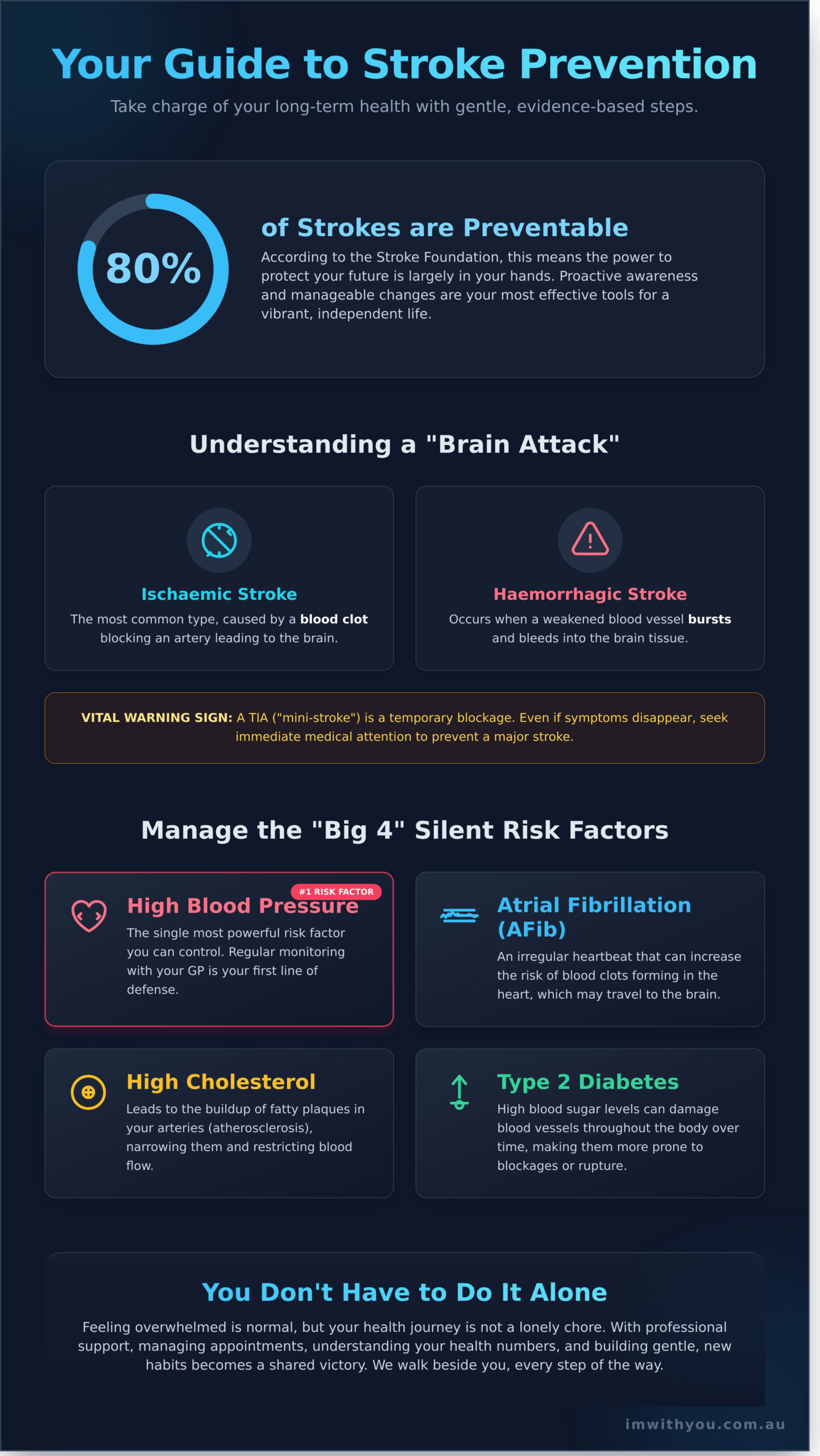
We understand that thinking about your long-term health can sometimes feel overwhelming. It’s a journey we want to walk with you, side-by-side, ensuring you feel supported every step of the way. A stroke happens when the blood supply to part of your brain is suddenly interrupted, which is why many Australian doctors refer to it as a “brain attack.” This term is used to highlight that a stroke is just as urgent as a heart attack. While the topic is serious, there is an incredible amount of hope found in modern medical data. The Stroke Foundation of Australia reports that 80% of strokes are actually preventable through manageable lifestyle changes. This means that by learning how to prevent strokes, you are reclaiming your sense of choice and control over your own future wellbeing.
This is why we focus on empowerment rather than fear. When you have the right information, you aren’t just a passive observer of your health; you’re the lead advocate for your own life. You can learn more about stroke from Wikipedia to understand the various biological risk factors, but our focus here is on the practical, gentle steps you can take today. We believe that small, consistent actions lead to the most significant outcomes for your independence and dignity.
To better understand this concept, watch this helpful video:
The Different Faces of Stroke
Most strokes fall into two main categories, and understanding them helps demystify the recovery process. An ischaemic stroke is the most common type, occurring when a blood clot blocks an artery leading to the brain. Think of it as a temporary blockage in a garden hose that stops the water from flowing. On the other hand, a haemorrhagic stroke happens when a weakened blood vessel bursts and bleeds into the surrounding brain tissue. While these sound technical, the core message remains the same: your brain needs a steady, uninterrupted flow of oxygen to function at its best.
You might also hear people talk about a TIA, or a “mini-stroke.” These are vital warning signs that your body is sending you. A TIA is a temporary blockage that requires immediate medical attention. Even if the symptoms disappear within minutes, it’s a signal that your system needs a check-up. Taking these signs seriously is a key part of how to prevent strokes from occurring in the future. We are here to help you navigate these signals with confidence and calm.
Why Your Journey Starts with Awareness
Your path to a healthier future begins with the simple act of awareness. It’s completely normal to feel a bit of anxiety when discussing health risks, but we want you to know that you don’t have to carry that weight alone. We see health checks as a collaborative partnership between you and your GP. In Australia, approximately 27,000 people experience a stroke for the first time every year, but many of these individuals didn’t know their blood pressure or cholesterol numbers until it was too late.
We encourage you to view every medical appointment as a form of self-advocacy. By asking questions and seeking clarity, you’re building your personal capacity to live a full and vibrant life. Health professionals are there to guide you, but you’re the one in the driver’s seat. When we work together to monitor these vital signs, we’re not just managing a medical condition; we’re supporting a life filled with possibility. This proactive approach ensures that your journey remains one of growth, strength, and lasting peace of mind.
Managing the Silent Risk Factors: Blood Pressure, Cholesterol, and Beyond
Understanding your health numbers is a powerful way to take control of your future. We look at the “Big 4” medical risks, high blood pressure, Atrial Fibrillation (AFib), Type 2 Diabetes, and high cholesterol, not as scary labels, but as areas where we can offer you steady support. These factors often work quietly in the background. By the time symptoms appear, the risk has already grown. Managing these is a marathon, not a sprint; it requires a consistent, gentle approach rather than a sudden burst of effort. Knowing how to prevent strokes starts with these clinical foundations, and we are here to walk that path with you.
High blood pressure remains the most significant controllable factor, contributing to approximately 50% of all strokes. When your blood pressure is high, it puts constant, unnecessary pressure on your artery walls, making them weaker and more likely to clog or burst. Learning about Stroke risk factors helps you and your medical team build a personalized plan to keep these numbers in a safe range. In Australia, the Heart Foundation and Stroke Foundation provide clear benchmarks for what healthy looks like:
- Blood Pressure: Generally below 140/90 mmHg, though your doctor may aim for 130/80 mmHg if you have other risks.
- Cholesterol (LDL): For those at high risk, the target is often below 2.0 mmol/L.
- Blood Glucose (HbA1c): A common target for adults with diabetes is 7% (53 mmol/mol) or less.
- Heart Rhythm: A steady, regular pulse is the goal to rule out AFib.
The Importance of Regular Health Checks
Regular check-ups are the cornerstone of your independence. AFib is an irregular heartbeat that can cause blood to pool and form clots; it increases stroke risk by 5 times, yet many people don’t feel the “flutter.” Similarly, Type 2 Diabetes can damage blood vessels over time, making it easier for blockages to form. Use this checklist at your next 15-minute GP consultation to stay informed:
- Ask for a manual pulse check to screen for AFib.
- Request a full lipid profile to see your “good” and “bad” cholesterol.
- Check your blood pressure on both arms for accuracy.
- Discuss your HbA1c levels if you have a family history of diabetes.
Working Side-by-Side with Your Medical Team
You are the expert on your own life, and your doctor is your technical partner. When discussing how to prevent strokes, don’t hesitate to ask: “What does this number mean for my daily routine?” or “Are there gentler ways to reach this goal?” Medication adherence is often misunderstood; taking a daily tablet is a sign of strength and a commitment to your long-term autonomy, not a sign of weakness. It’s a tool that helps you maintain the lifestyle you love. We encourage you to involve a support person or a professional advocate in your appointments. Having a second pair of ears ensures you feel heard and helps clarify complex information, ensuring your choice and control remain at the center of every medical decision.
Small Steps, Big Impact: Simple Lifestyle Changes for Long-Term Health
We believe that lasting change doesn’t require a sudden, stressful overhaul of your daily life. Instead, we focus on the power of gentle shifts and habit stacking. This method involves adding a small, positive action to a routine you already have, like doing a few stretches while the kettle boils. Research from the National Heart Foundation of Australia in 2023 indicates that small, consistent lifestyle adjustments are often more effective for long-term health than intense, short-term efforts. We want to help you understand how to prevent strokes by making these manageable choices part of your natural rhythm.
Nourishing Your Body for Brain Health
Eating well in Australia means making the most of our incredible local produce to support your vascular system. We often recommend a Mediterranean-style approach, adapted for our unique lifestyle. This includes plenty of leafy greens, legumes, and healthy fats like those found in Tasmanian salmon or Australian avocados. These foods are high in fiber, which helps manage cholesterol levels. Reducing your sodium intake is another vital step, as the Australian Bureau of Statistics reported in 2022 that many adults consume nearly double the recommended daily salt limit of 5 grams.
You can make a “Salt Swap” to protect your heart without losing the flavors you love. Try these simple alternatives:
- Swap table salt for a squeeze of fresh lemon or lime to brighten your meals.
- Use dried herbs like oregano or fresh garlic to add depth to roasted vegetables.
- Choose “no added salt” canned beans and rinse them thoroughly before cooking.
- Experiment with Australian bush spices like lemon myrtle for a unique, salt-free kick.
Potassium-rich foods like bananas and spinach help your body flush out excess sodium, which naturally helps balance your salt levels and supports healthy blood pressure.
Accessible Movement for Every Body
We prefer the term “joyful movement” over “exercise” because your physical activity should feel like a celebration of what your body can do today. Whether you prefer chair yoga, water aerobics, or a gentle stroll through your neighborhood, the goal is to find something that brings you a sense of accomplishment. The Australian Physical Activity Guidelines suggest that just 30 minutes of moderate activity on most days can reduce your risk of cardiovascular events by 25 percent. We focus on consistency rather than intensity, ensuring you don’t put unnecessary strain on your heart while you build your capacity.
If you feel overwhelmed by the idea of getting active, remember that you don’t have to do it alone. Community participation supports can connect you with local walking groups or specialized classes tailored to your specific ability level. This social connection makes movement more enjoyable and helps you stay committed to your goals. We see every step you take as a victory for your independence and long-term wellbeing, and we’re here to help you find the right path for your journey.
We also recognize that addressing habits like smoking or alcohol consumption can feel daunting. Our approach is always supportive and non-judgmental. Reducing your alcohol intake to no more than 10 standard drinks a week, as recommended by the NHMRC in 2020, can significantly lower your blood pressure. If you’re looking to quit smoking, your body begins to repair itself almost immediately, improving blood flow and reducing the risk of clots. We are here to stand beside you as you learn how to prevent strokes, providing the encouragement and resources you need to make the choices that feel right for your future.
The Overlooked Connection: Mental Wellbeing and Stroke Prevention
Your mind and body aren’t separate systems; they’re deeply intertwined. When we discuss how to prevent strokes, we must look beyond physical symptoms and address the quiet impact of stress and loneliness. Chronic stress isn’t just a feeling of being busy. It’s a physiological state that taxes your heart and brain every single minute. When you feel overwhelmed, your body releases cortisol, a hormone designed for short term emergencies. However, when cortisol stays high for weeks or months, it triggers systemic inflammation and causes your blood pressure to spike. These factors directly damage your arterial walls, making it easier for blockages to form.
A 2021 study published in The Lancet highlighted that high levels of perceived stress are associated with a 30% increased risk of cardiovascular events. This isn’t a small statistic. It shows that your emotional health is just as vital as your cholesterol numbers. Social isolation acts in a similar way. Humans are biologically wired for connection. Without it, our bodies enter a state of “social threat” which raises heart rates and weakens the immune system. We believe that staying connected isn’t just a lifestyle choice; it’s a biological necessity for a healthy life. Im with you acts as a partner in this journey, helping you reduce the friction of daily life so your body has the chance to heal and thrive.
Reducing Stress Through Support
Practical tools can shift your body out of “fight or flight” mode instantly. You can practice box breathing anywhere; simply inhale for four seconds, hold for four, exhale for four, and hold again. This simple rhythm signals your nervous system to relax. We also place a high value on “Choice and Control” because feeling powerless is a major source of anxiety. When you have a steady advocate to handle the mental load of NDIS planning and service coordination, your stress levels drop. Having a companion who understands the system means you don’t have to carry the weight of every decision alone. This sense of security is a powerful tool in how to prevent strokes, as it keeps your blood pressure stable and your mind at ease.
The Power of Social Inclusion
Being part of a community is a protective shield for your brain. According to the Australian Institute of Health and Welfare, social isolation can increase the risk of heart disease by 29% and stroke by 32%. Depression-related health decline often starts when someone feels they no longer have a role to play in their community. We focus on helping you find accessible leisure activities that bring genuine joy; whether that is a local gardening group, an art class, or a simple coffee catch-up. These moments of inclusion lower cortisol and foster a sense of belonging. You can find inspiration for these moments in our article on Rediscovering Joy: Leisure Activities. When you feel seen and valued, your body responds with better health outcomes. We are here to ensure you never have to face these challenges in isolation.
If the weight of managing your daily supports is causing you unnecessary stress, we are ready to stand by your side. You can reach out to our compassionate team today to find out how we can lighten your load together.
Walking the Path Together: How Professional Support Enhances Your Health
Taking the first steps toward a healthier lifestyle feels much lighter when someone walks beside you. At I’m with you, we believe that health management is a collaborative journey rather than a solo mission. Understanding how to prevent strokes is the first part of the process, but implementing those changes requires consistent, empathetic support. Data from the Stroke Foundation indicates that 80% of strokes are preventable through lifestyle modifications. We’re here to help you turn those statistics into your personal reality.
Support Coordination serves as the bridge between your health goals and the services you need to achieve them. Our team helps you manage medical appointments, ensuring you never miss a check-up or a specialist consultation. We simplify the complexities of the NDIS, allowing you to focus on your recovery and wellbeing. By coordinating with your GP and allied health professionals, we create a unified front for your health. This structured approach reduces the stress that often leads to high blood pressure, a primary risk factor for stroke.
Community participation is another vital piece of the puzzle. We encourage joyful movement by connecting you with local groups and activities that keep you active. Whether it’s a gentle walking group in a local park or an adaptive exercise class, staying mobile is crucial. Movement shouldn’t feel like a chore; it should be a celebrated part of your day. We help you find the activities that bring you a sense of belonging and physical vitality.
How NDIS Supports Facilitate Healthy Living
Capacity building is at the heart of our service. We help you develop the skills needed to maintain a healthy home environment. This might include learning to cook nutritious, low-sodium meals or using digital tools to track your health metrics. Under the NDIS Price Guide for 2024/2025, these supports often fall under Category 15, focusing on your long-term independence and health literacy.
- Direct support: A dedicated support worker can accompany you to the gym, the pool, or your GP visits. This physical presence provides the safety and confidence needed to stay consistent with your health routine.
- Advocacy: We ensure your health needs are heard. Your Choice and Control are sacred to us, and we stand by you to ensure medical providers respect your preferences and dignity.
- Scheduling: We assist in organizing a balanced week that prioritizes rest, exercise, and social connection to keep your stress levels manageable.
Your Journey, Our Commitment
Your health journey is unique, and it deserves a personalized approach. We make a “with you” promise that extends to every aspect of your care. You don’t have to manage the complexities of health management or NDIS navigation on your own. We’re here to provide the steady, professional guidance you need to feel secure and empowered. Our team views your health milestones as our shared successes, and we’re committed to your long-term wellbeing.
The 445,000 Australians living with the effects of stroke remind us why proactive support is so important. Knowing how to prevent strokes is just the beginning; having a dedicated partner makes the daily practice of health much easier. We invite you to have a conversation with us about your specific needs and aspirations. Together, we can build a plan that prioritizes your health while honoring your individual lifestyle. Reach out to our team to find out how we can walk this path alongside you.
Embracing Your Journey Toward Lasting Health
Taking charge of your health doesn’t mean you have to change everything overnight. By focusing on small, manageable steps like monitoring your blood pressure and nurturing your mental wellbeing, you’re building a stronger foundation for the future. Learning how to prevent strokes is a powerful way to protect your independence and ensure you continue living life on your own terms. It’s about making choices today that honor the person you want to be tomorrow.
Navigating health challenges and NDIS requirements can feel complex, but you don’t have to manage it alone. At I’m With You, we’re proud of our 2026 Award for Excellence in NDIS Service Provision, which reflects our deep commitment to compassionate, person-centered advocacy. Our team offers expert guidance in NDIS Support Coordination to help you maintain choice and control while building your capacity for a fulfilling life. We’re ready to walk this path side-by-side with you, providing the professional expertise and human warmth you deserve.
Discover how our award-winning support can help you live a healthier, more independent life
Your health journey is unique, and you deserve a partner who truly listens and understands. We’re here to provide the steady, gentle support you need to thrive every single day.
Frequently Asked Questions
Can strokes be prevented even if they run in my family?
Yes, you can still lower your risk significantly even with a family history. The Stroke Foundation Australia reports that up to 80% of strokes are preventable through lifestyle adjustments and medical management. While genetics are a factor, controlling your blood pressure and cholesterol levels helps protect your health. We’re here to walk beside you as you navigate these choices, ensuring you feel empowered to manage your unique risks.
What are the early warning signs of a stroke I should look for?
You should use the F.A.S.T. test to identify early warning signs immediately. This acronym stands for Face (has their mouth dropped?), Arms (can they lift both?), Speech (is it slurred?), and Time (act quickly). Every minute matters because 1.9 million brain cells die every 60 seconds during a stroke. Recognizing these signs early allows for faster medical intervention and better recovery outcomes for your loved ones.
How much exercise do I really need to lower my stroke risk?
You need at least 150 minutes of moderate intensity physical activity each week to effectively reduce your risk. This usually looks like 30 minutes of brisk walking on five separate days. Research from the Heart Foundation shows that regular movement reduces your stroke risk by 25% to 30%. We can help you find gentle, accessible ways to move your body that fit comfortably into your daily routine.
Is there a specific diet that is best for stroke prevention?
The Mediterranean diet is widely considered the gold standard for learning how to prevent strokes through nutrition. This eating pattern focuses on high intake of vegetables, fruits, and healthy fats like olive oil. A 2018 study in the New England Journal of Medicine found that this diet reduced the risk of major cardiovascular events by 30% compared to standard low-fat diets. It’s a delicious way to support your long-term health.
How does stress contribute to the risk of having a stroke?
Chronic stress increases your risk by raising blood pressure and heart rate, which puts constant strain on your arteries. A study published in The Lancet involving 24,000 participants found that high stress levels at work or home can more than double your stroke risk. We believe in a holistic approach that prioritises your mental well-being. Taking time for self-care isn’t just a luxury; it’s a vital part of your prevention journey.
Can NDIS funding be used for activities that help prevent strokes?
NDIS funding can be used for stroke prevention activities if they relate to your disability and help build your functional capacity. You might use your capacity building budget for exercise physiology or dietetics, which often cost between A$160 and A$190 per hour. We’ll stand with you to ensure your plan reflects your choice and control. This empowers you to access the professional supports needed to maintain your independence and health.
What should I do if I think someone is having a stroke right now?
Call 000 immediately if you suspect someone is experiencing a stroke. Do not wait to see if symptoms improve, as prompt hospital treatment is the only way to reduce permanent brain damage. Australian clinical guidelines state that receiving treatment within 4.5 hours of the first symptom significantly improves the chances of a full recovery. We’re committed to ensuring you feel prepared to act bravely and quickly in these critical moments.