

What if speaking up about your care wasn’t a source of conflict, but a courageous step toward the quality of life you deserve? It’s natural to feel a sense of hesitation when you’re considering how to make a complaint about ndis service. You might worry about how it will affect your relationship with a provider, or perhaps you’re simply exhausted from the weight of managing your supports. We know that the fear of retaliation and the confusion between different government bodies can make staying silent feel like the only safe option.
We’re here to walk alongside you as a steady companion, turning that uncertainty into a sense of confidence. You deserve to feel safe and empowered throughout this journey. This guide provides a clear path through the latest 2026 regulations and service timeframes. We’ll help you understand the difference between the NDIA and the NDIS Commission, ensuring your voice reaches the right people for a gentle, effective resolution. Together, we can make sure your feedback leads to the high-quality care you’ve always been promised.
Key Takeaways
- Learn how to make a complaint about ndis service using a clear, step-by-step process that prioritizes your safety and dignity.
- Discover how the NDIS Code of Conduct protects you from retaliation, ensuring you feel secure when speaking up about the quality of your care.
- Identify the right pathway for your concern by understanding the unique roles of your provider, the NDIS Commission, and the Commonwealth Ombudsman.
- Master a simple documentation strategy to help you clearly communicate what happened and define the specific resolution you’re looking for.
- See how advocacy services and transparent partnerships can provide the steady support you need to navigate the system without feeling overwhelmed.
Understanding Your Right to Speak Up and Be Heard
Your voice is the most powerful tool you have. When you share your experiences, you aren’t just making a request for yourself; you’re ensuring the National Disability Insurance Scheme (NDIS) works exactly as it should. Knowing how to make a complaint about ndis service is a vital skill that helps you secure the “reasonable and necessary” support you’re entitled to. It moves the conversation from simply receiving care to actively shaping a life of dignity and independence.
We believe your perspective is the ultimate measure of quality. Every time you speak up, you help providers understand how to better serve the whole community. It’s a gift of insight that allows services to grow more compassionate and effective. You aren’t being “difficult” by raising a concern; you’re being a partner in progress. Your feedback is the catalyst for the systemic changes that make the disability sector safer for everyone.
To help you feel more comfortable with this process, watch this gentle video on managing concerns:
The NDIS Code of Conduct: Your Safety Net
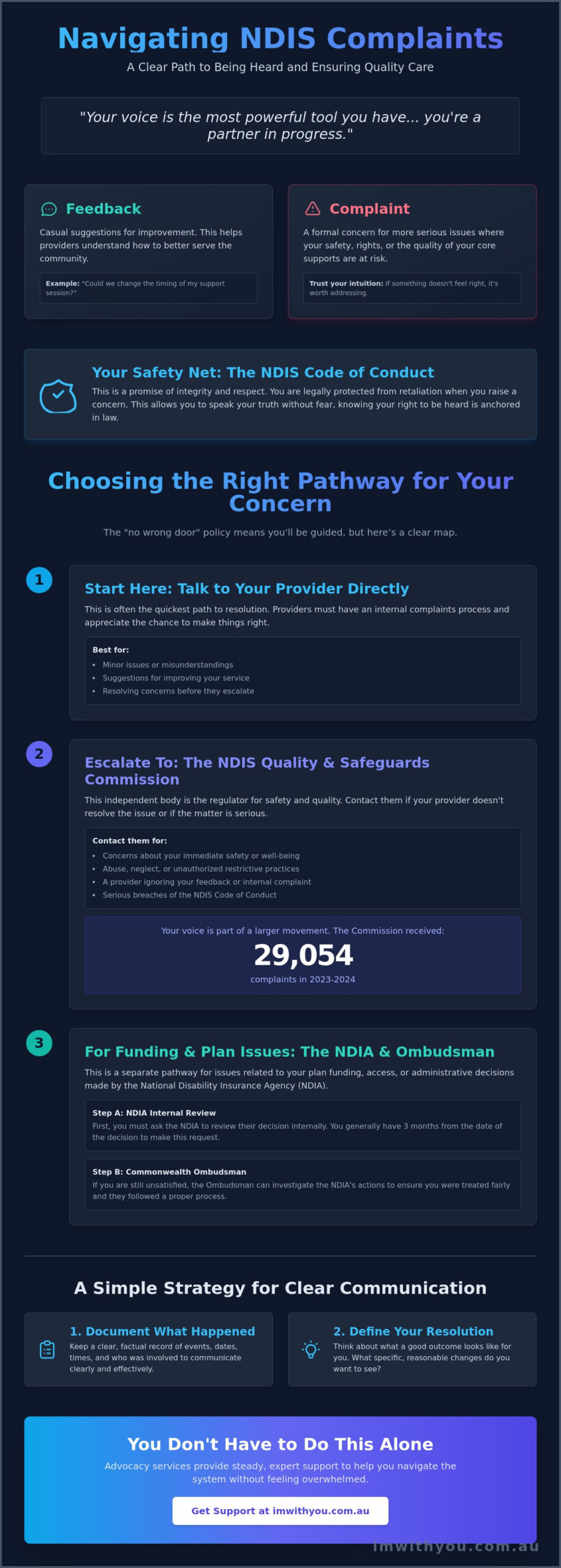
Every provider you work with is bound by a strict set of standards designed to keep you safe. The NDIS Code of Conduct isn’t just a list of rules; it’s a promise of integrity and respect. You’re legally protected from any form of retaliation when you raise a concern. Providers must have a clear, accessible internal process to hear you out. This safety net exists so you can speak your truth without fear, knowing that your right to be heard is anchored in Australian law.
Feedback vs. Complaint: Which One Are You Making?
Sometimes, you might just want to offer a suggestion for improvement, like a change in the timing of a support session. This is casual feedback. A formal complaint is usually for more serious issues where your safety, rights, or the quality of your core supports are at risk. If something just doesn’t feel right in your gut, trust that intuition. Whether it’s a small nudge or a formal step, learning how to make a complaint about ndis service ensures you never have to settle for less than the respect you deserve.
Identifying the Right Pathway for Your Concern
Understanding which door to knock on is the first step toward finding peace of mind. When you’re looking at how to make a complaint about ndis service, you’ll generally find three main pathways: your provider, the NDIS Commission, and the Commonwealth Ombudsman. Most of the time, starting a conversation directly with your provider is the quickest way to resolve a misunderstanding. They often appreciate the chance to make things right before a situation escalates. However, we know that isn’t always possible or safe, and that’s why other layers of support exist.
It’s helpful to distinguish between the people who provide your daily care and the people who manage the system. The NDIA (the Agency) handles your funding and plan decisions. If your concern is about the quality of a support worker or a therapist, that’s a provider issue. If the problem is about a plan reassessment or a funding cut, you’re dealing with the Agency. Even if you aren’t sure where to start, the “no wrong door” policy means any of these bodies should help guide you to the right place. You don’t have to get it perfect on the first try.
When to Contact the NDIS Quality and Safeguards Commission
The NDIS Quality and Safeguards Commission acts as the regulator for all registered providers. They’re the guardians of safety and quality in the scheme. In the 2023-2024 period, they received 29,054 complaints, proving that your voice is part of a much larger movement toward better care. You should reach out to them directly if you experience:
- Concerns about your immediate safety or well-being.
- Instances of abuse, neglect, or unauthorized restrictive practices.
- A provider who refuses to listen or ignores your internal feedback.
- Serious breaches of the NDIS Code of Conduct.
Complaints About Funding or Plan Decisions
If your heart is heavy because of a decision made by the NDIA, you’ll follow a different path. For issues like plan funding or access requests, you usually have 3 months to ask for an internal review. If you’ve finished that process and still feel the outcome is unfair, the Commonwealth Ombudsman is your next step. They investigate the administrative actions of the NDIA to ensure you’ve been treated fairly. Navigating these layers can feel heavy, but our disability advocacy services are here to help you find the right path without the stress of going it alone.
A Step-by-Step Guide to Raising a Complaint Safely
Starting the process of sharing a concern doesn’t have to feel like a battle. It’s a structured journey toward a better outcome for your daily life. When you’re ready to learn how to make a complaint about ndis service, we recommend starting with a clear, calm plan that centers on your peace of mind.
First, write down the details while they’re fresh in your mind. Note the dates, times, and the specific people involved. Next, decide what a “win” looks like for you. Do you need a heartfelt apology, a change in your support staff, or perhaps a refund for a service that didn’t meet standards? Having a clear goal helps you stay focused during the conversation. You can then choose to Lodge a complaint with the NDIS Commission or contact your provider via phone, email, or an anonymous form if that feels safer for you.
Gathering Your Thoughts and Evidence
We suggest keeping a simple diary of events to ensure your accuracy and to help you feel more grounded during the process. When you’re explaining the issue, try using “I feel” statements to clearly communicate the impact of the service failure. Instead of saying “The service was bad,” you might say, “I feel unsupported when my worker arrives late, because it disrupts my morning routine.”
The Power of Disability Advocacy
You don’t have to carry the weight of this conversation alone. An independent advocate can walk beside you, providing both emotional support and a clear voice to speak on your behalf. They’re experts in the system who ensure your rights are respected every step of the way. Learning how to make a complaint about ndis service is much easier when you have a trusted companion by your side. If you need someone to stand with you, you can find a free advocate through the National Disability Advocacy Program (NDAP). Our own disability advocacy services are also here to provide the companionship and expertise you need to ensure your voice is heard loud and clear.
Advocacy and Partnership: You Are Not Alone
I’m with you. These three words are the foundation of everything we do. We believe that walking beside you through hard conversations is just as important as the care we provide. When you’re learning how to make a complaint about ndis service, you should never feel like you’re standing on your own against a complex system. High-quality providers don’t just “handle” complaints; they welcome them as a vital way to build deeper, more meaningful trust. They understand that your feedback is what keeps the system human.
A strong partnership starts with transparency. By choosing an NDIS provider with an open culture, you create an environment where small concerns are addressed before they become big problems. If you ever feel overwhelmed by managing these professional relationships, NDIS support coordination can act as your bridge. Your coordinator helps ensure your service agreements are followed and that your voice is always respected by every member of your support team. Here is why a healthy provider relationship matters:
- It prioritizes your agency and personal independence.
- It uses your feedback to train staff more effectively for your specific needs.
- It treats a complaint as a collaborative chance to improve care for the whole community.
Moving Forward with Confidence
I want you to take a moment to reflect on your current supports. Do they still align with your personal goals? Do you feel safe, respected, and heard? If a resolution isn’t reached after you speak up, remember that you always have the power of choice. You’re never “stuck” with a service that doesn’t honor your dignity. Changing providers is a valid, empowering step toward the quality of life you deserve.
Our Commitment to Your Voice
We don’t just talk about listening; we make it our core mission every single day. Our 2026 award for excellence in service delivery is a reflection of this listening culture and our deep dedication to every individual we support. We’re proud to be a steady companion on your journey, providing a space where you are always safe to be yourself. If you’re looking for a partnership built on genuine respect and honesty, Reach out to our team for a supportive conversation about your care.
Your Voice is the Bridge to Better Care
Speaking up isn’t just about solving a problem; it’s about reclaiming your agency and ensuring your supports truly reflect your life goals. You now have the tools to understand how to make a complaint about ndis service with confidence, from documenting your experiences to choosing the right pathway for resolution. Remember that your feedback is a vital contribution to a safer, more transparent community. It ensures the system remains focused on the people it was designed to serve.
At Im with you, we don’t just provide services; we build partnerships based on deep respect and active listening. Our 2026 Award for Excellence in Care is a testament to our commitment to compassionate, person-centered support. Whether you need expert NDIS Support Coordination to help manage your provider relationships or a team that truly values your perspective, we’re here to walk alongside you as a steady companion. Connect with a provider who listens. Contact Im with you today.
You deserve to feel safe, supported, and valued every single day. Your journey is unique, and it’s our honor to stand by you as you navigate the path toward the quality of life you deserve.
Frequently Asked Questions
Can I make an NDIS complaint anonymously?
Yes, you can certainly lodge a complaint anonymously with both the NDIA and the NDIS Commission. While this provides a layer of privacy, it’s helpful to know that staying anonymous might make it harder for the regulator to fully investigate the specific details of your situation. If you’re feeling worried about privacy, we can help you explore ways to feel safe while still ensuring the necessary details are shared for a resolution.
What happens after I lodge a complaint with the NDIS Commission?
Once you lodge a complaint, the NDIS Commission follows a national complaints model to triage and assess your concern based on risk. They’ll typically contact you to discuss the issue and may speak with the provider to find a solution. This could lead to a simple explanation, a required change in provider behavior, or a more formal investigation if the safety standards aren’t being met. They act as a knowledgeable guide to ensure the provider meets their legal obligations.
Will making a complaint affect my NDIS funding or plan?
No, making a complaint will not reduce your NDIS funding or negatively impact your plan in any way. Your right to speak up is protected by the NDIS Code of Conduct, which strictly prohibits providers from taking any retaliatory action against you. In fact, learning how to make a complaint about ndis service often leads to better-aligned supports that actually make more effective use of your existing budget while improving your quality of care.
How long does it typically take to resolve an NDIS service complaint?
Under the 2026 Participant Service Guarantee, the NDIA aims to fix your complaint within 21 days if they can. For more complex reviews of a reviewable decision, the timeframe is 60 days. While every situation is unique, these benchmarks ensure the system moves at a steady pace to provide you with the answers and security you need without unnecessary delays. We believe this transparency helps lower the stress of waiting for an outcome.
Can someone else make a complaint on my behalf?
Yes, a family member, friend, or independent advocate can certainly make a complaint for you with your consent. This is a wonderful way to lower the emotional exhaustion of navigating the system on your own. We often walk alongside individuals as a steady companion in this process, ensuring that the details of how to make a complaint about ndis service are handled with care while keeping your voice and your agency at the very center of the conversation.