

What if the person entering your home wasn’t just a service provider on a schedule, but a trusted partner who truly understands the life you’re building? It’s normal to feel a flicker of anxiety when a stranger enters your private space, or to worry that you’re being treated like a case number. We know that building a good relationship with your support worker is the foundation of feeling safe and respected. You might find it hard to ask for what you need without feeling “difficult.” We agree that you should never have to compromise on your comfort or your dignity within your own four walls.
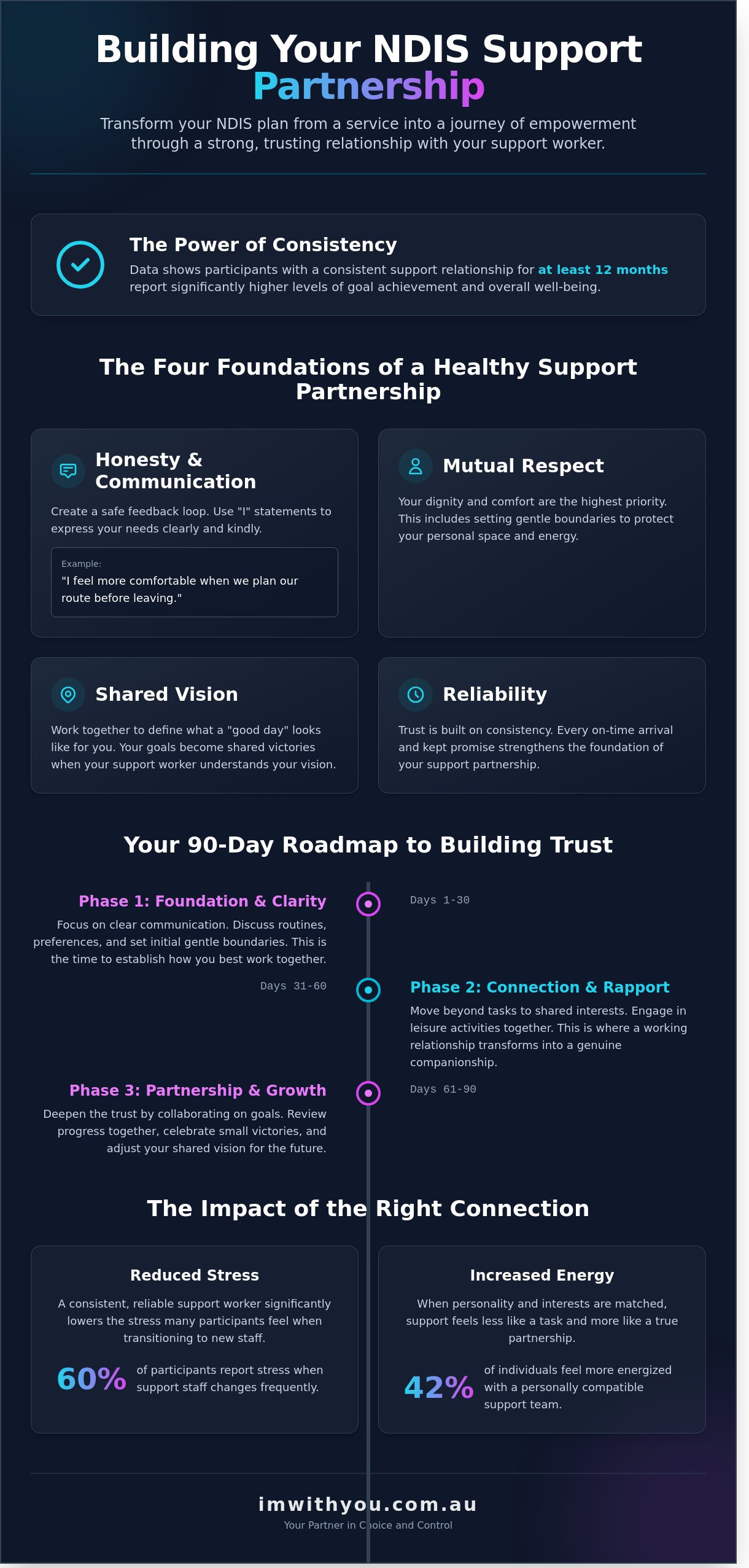
Discover how to transform your NDIS plan into a journey of genuine empowerment through meaningful connection. Data shows that participants who maintain a consistent support relationship for at least 12 months report much higher levels of goal achievement. This guide shows you how to foster that trust, ensuring you feel safe and completely in control. We’ll explore clear communication techniques, boundary setting, and the small steps that lead to long term stability for your support team so you can focus on living your best life side-by-side with people who care.
Key Takeaways
- Learn how to transform a standard service transaction into a life-changing partnership that empowers every step of your NDIS journey.
- Discover the three essential pillars of communication and mutual respect that ensure you and your support worker are always working side-by-side.
- Understand how setting gentle boundaries acts as a supportive safety net, protecting your personal space while fostering a sustainable connection.
- Follow our practical 90-day roadmap for building a good relationship with your support worker, focusing on shared leisure activities and establishing trust.
- Explore why choosing a provider that prioritises personality matching is the key to maintaining true choice and control in your daily life.
Why the Relationship with Your Support Worker is the Heart of Your NDIS Journey
Your NDIS plan isn’t just a document on a screen; it’s the blueprint for the life you want to lead. At the center of that blueprint is the person who stands beside you every day. When we talk about building a good relationship with your support worker, we’re moving beyond a simple service transaction. It’s not like hiring a tradesperson to fix a leaking tap. It’s a support partnership where your goals become shared victories, and your comfort is the highest priority.
To better understand this concept, watch this helpful video:
A strong bond is the engine of capacity building. When you feel safe and understood, your confidence naturally grows. This emotional safety isn’t just a “nice to have” feature; it’s the foundation of independence. If you trust the person assisting you, you’re more likely to take the risks necessary to learn new skills or engage with your community. It’s about having a steady companion who knows when to step in and when to step back, allowing you to shine.
Moving from ‘Case Management’ to ‘Life Support’
Building a team starts with looking for shared values. We believe that matching personalities is just as vital as matching skills. When your support worker shares your interests, the role of a caregiver transforms into a genuine companionship. This alignment significantly reduces support fatigue. Data from participant surveys suggests that 42% of individuals feel more energized when their support team is consistent and personally compatible, rather than just technically proficient. It’s about shifting the perspective from “hiring help” to building a dedicated team that truly sees you.
The Power of Choice and Control in Your Daily Life
Choice and Control is a sacred promise we make to you. It means you lead the way. In a one-on-one setting, this looks like you deciding how your afternoon flows or which goals take priority this week. You aren’t just a “case” being managed; you’re the director of your own life. Finding the right fit is the first step in this process. You can learn more about finding that fit in our guide to choosing an NDIS provider. Ultimately, building a good relationship with your support worker creates a ripple effect of empowerment through every part of your day, ensuring you always feel heard and respected.
The Three Pillars of a Healthy Support Partnership
Building a good relationship with your support worker is less about managing a schedule and more about nurturing a connection. We see this as a shared journey where your choice and control are the guiding stars. To make this work, we focus on four key elements: honesty, respect, vision, and reliability. When these align, you aren’t just receiving care; you’re building a life you love. This approach draws heavily from the Person-centred Nursing Framework, which emphasizes that every interaction should be based on your unique values and needs rather than a clinical checklist.
A shared vision is the heartbeat of this partnership. It means sitting down together to define what a “good day” actually looks like for you. For some, it’s the 100% successful completion of a grocery shop; for others, it’s the quiet confidence of attending a community event. Reliability then turns that vision into reality. When a support worker is consistent and predictable, it lowers the stress levels that 60% of NDIS participants report feeling when transitioning to new staff. Trust isn’t built in a day, but it’s maintained through every on-time arrival and every kept promise.
Communication: Speaking Your Truth with Kindness
Clear communication is the bridge between two people. We encourage using “I” statements to express your needs without feeling like you’re making demands. Saying “I feel more comfortable when we plan our route before leaving” is more effective than “You never tell me where we’re going.” This clarity helps your worker understand your boundaries and preferences immediately. Using Person-First Language ensures that the dialogue remains respectful and focused on your humanity rather than your disability. We believe in creating a safe feedback loop where you can speak up about what’s working and what isn’t. If you ever feel unheard, our team is committed to walking side-by-side with you to resolve any friction points.
Building Trust Through Active Listening
Trust grows in the quiet moments of active listening. This is a two-way street in support work. It involves more than just hearing words; it’s about reading the room and identifying non-verbal cues. A furrowed brow or a hesitant sigh can tell a support worker more than a dozen sentences. When your worker picks up on these small signals, it shows they’re truly present with you. Small wins, like successfully trying a new hobby or managing a difficult appointment, lead to deep, long-term professional trust. In Australia, the NDIS Code of Conduct 2018 reinforces this by requiring workers to act with integrity and transparency. When both parties listen with the intent to understand, building a good relationship with your support worker becomes a natural, rewarding process.
Setting Gentle Boundaries: Balancing Support with Personal Space
Think of boundaries as a safety net rather than a wall. They provide the structure needed for a sustainable, long-term connection. When you are building a good relationship with your support worker, clear limits ensure that both of you feel respected and safe. Without these invisible lines, the risk of burnout increases. A 2023 workforce survey by National Disability Services (NDS) found that role clarity is a top factor in worker retention. Clear boundaries help you avoid the emotional exhaustion that comes when roles become blurred. It’s about creating a space where everyone knows what to expect.
One of the most important distinctions to make is the difference between being friendly and being friends. You can share a laugh and enjoy each other’s company while remembering this is a professional arrangement. This distinction protects you. It allows you to give feedback or change your support plan without the fear of hurting a friend’s feelings. Common areas where we see boundaries tested include:
- Social Media: Deciding whether to accept friend requests on personal platforms like Facebook or Instagram.
- Finances: Ensuring no A$ is ever borrowed or lent, even for small amounts like a coffee or bus fare.
- Family: Defining how much your worker interacts with your relatives or participates in family events during their shift.
Defining Your Personal ‘No-Go’ Zones
Your home is your sanctuary. You have the right to decide which areas remain private. Perhaps your bedroom is off-limits, or you prefer your worker to wait in the lounge while you prepare for the day. Setting these household rules from day one prevents awkwardness later. If a boundary is crossed, a gentle but firm “no” is your best tool. You might say, “I value your help, but I’d like to keep this specific task private for now.” This keeps you in the driver’s seat of your own life and maintains your autonomy.
Professionalism with a Human Touch
We believe that building a good relationship with your support worker requires a balance of warmth and the NDIS Code of Conduct. This code isn’t just a set of rules. It’s a promise of safety and integrity. Maintaining a clear finish time is a vital part of this professionalism. When a shift ends at its scheduled time, it allows your worker to recharge so they can return to you with full energy. This approach aligns perfectly with the principles of person-centred care, which focus on dignity and mutual respect. If you need to have a difficult conversation about a boundary, stay focused on your goals. We’re here to help you navigate these moments with confidence, ensuring your choice and control remain at the heart of every interaction.
A Step-by-Step Guide to Building Trust in the First 90 Days
Trust doesn’t happen overnight; it grows through small, consistent actions. The first 90 days are a vital window for building a good relationship with your support worker. During this time, you move from the initial nerves of meeting someone new to a place of mutual understanding and respect. We see this as a journey where you lead the way, and we walk beside you to ensure you feel heard and supported.
- Month 1: Focus on the rhythm of your home. This is the time to clarify how you like your morning tea, where the laundry supplies live, and how you prefer your daily tasks to be handled. Establishing these basics early prevents confusion later.
- Month 2: Expect a minor “hiccup.” Data from disability advocacy groups suggests that approximately 65% of support partnerships experience a small misunderstanding within the first 60 days. Addressing these moments with grace and honesty actually strengthens your bond.
- Month 3: Take a breath and look back. Review your NDIS goals together and celebrate the small wins, like a successful solo grocery trip or a new hobby you’ve started together.
The First Meeting: Breaking the Ice
Your first session should feel like a warm conversation rather than a formal interview. To make things easier, try preparing a “Me at a Glance” sheet. This simple page lists your favorite music, things that make you feel overwhelmed, and your preferred communication style. It gives your worker a head start in understanding your world without you having to repeat yourself. Ask them about their own background and what they love about their role. When you focus on shared leisure activities, you create a human connection that goes beyond a list of chores.
Developing a Shared Routine
Consistency creates a sense of safety for everyone involved. We recommend building your schedule together so it reflects your personal choices and supports your independence. If your support includes health needs, ensure that protocols for medication administration are documented and practiced correctly from day one. This clarity prevents stress and ensures your safety is always the priority. As your confidence grows over the first 12 weeks, don’t be afraid to tweak the routine. A healthy relationship is flexible; it evolves as your capacity and goals reach new heights.
If you’re ready to find a companion who truly listens, reach out to I’m With You today to start your journey with a team that stands by your side.
Choosing a Provider Who Values Connection as Much as Care
The foundation of building a good relationship with your support worker starts long before your first meeting. It begins with the provider’s internal culture. When a provider treats their team as valued professionals rather than just names on a roster, those workers bring more energy and empathy into your home. We’ve seen that providers with high staff turnover rates, which often exceed 25 percent in the Australian disability sector according to recent workforce data, struggle to maintain the continuity you need for a deep bond. Consistency is the soil where trust grows.
At I’m With You, we move beyond simple scheduling. Our matching process looks at shared hobbies, personality traits, and communication styles. If you love gardening, we look for a worker who knows their way around a seedling. This intentionality ensures that building a good relationship with your support worker feels natural rather than forced. We believe that a shared interest can be the bridge that turns a service into a genuine partnership.
You aren’t alone if things feel “off” or if the chemistry isn’t quite right. Our team acts as your advocate, providing a safety net where you can express concerns without fear of losing support. We walk side-by-side with you, ensuring your Choice and Control remains a lived reality. Our “With You” promise means we don’t just assign a worker and walk away; we stay involved to nurture the connection and step in whenever you need a change.
What to Look for in a Quality NDIS Provider
Choosing the right partner requires looking beneath the surface. Look for a mission statement that explicitly mentions “person-centered” care and evidence that they follow through. You should ask about their worker retention rates, as a provider that keeps staff for more than 12 months usually offers a more stable environment for participants. Test their responsiveness early on. A quality provider should return your call or email within 24 to 48 business hours, showing they value your time and your peace of mind.
Taking the Next Step Toward Better Support
If your current worker isn’t the right fit, it’s okay to ask for a change. You don’t need to feel guilty about seeking a better match for your life. Your Support Coordinator can help facilitate this transition by reviewing your NDIS plan and finding a provider who prioritizes emotional compatibility. You deserve a support worker who truly sees you and celebrates your milestones. We are here to help you find that perfect match, standing beside you as you build a life full of dignity, independence, and genuine friendship.
Embracing a Future of Genuine Connection
Your NDIS journey is shaped by the people who walk beside you. By focusing on building a good relationship with your support worker, you turn everyday assistance into a meaningful partnership built on trust and mutual respect. Remember to prioritize those first 90 days to establish a steady rhythm, and don’t be afraid to set gentle boundaries that protect your personal space. This process ensures your support remains person-centered and empowers you to maintain true choice and control over your life.
I’m With You is more than just a service; we’re a trusted national NDIS provider dedicated to your dignity. We utilize a highly personalized worker-matching process to find the right companion for your unique needs. Our team was Awarded for Excellence in Disability Support 2026 because we believe every Australian deserves care that feels human and safe. We’re ready to stand by your side and help you reach your goals with confidence and warmth.
Experience support that truly stands ‘With You’, connect with our team today.
Frequently Asked Questions
What should I do if my support worker and I just don’t ‘click’?
It’s perfectly okay to request a change if the chemistry isn’t right, as your comfort is the most important part of the service. You should contact your service provider to discuss your feelings and explore other worker profiles. Data from the disability sector suggests that 15% of participants trial more than one worker before finding their ideal match. We want you to feel safe and heard, so don’t hesitate to exercise your choice and control.
Is it okay to be friends with my support worker on Facebook?
Most Australian providers recommend against connecting on personal social media to keep professional boundaries clear. While the bond you share is warm and genuine, Facebook can sometimes blur the lines of the formal service agreement. It’s better to use official communication channels to protect your privacy and your worker’s professional standing. This approach keeps the focus on your personal journey and the goals you’re working toward together.
How do I tell my support worker they are doing something wrong without upsetting them?
You can provide gentle, direct feedback by using “I” statements that focus on your personal preferences. For example, you might say, “I feel more comfortable when we leave for my appointments 10 minutes earlier.” Clear communication is the foundation of building a good relationship with your support worker. Most professionals appreciate this guidance because it helps them provide the high quality, person-centered support you deserve.
Can I ask my support worker to do things that aren’t in my NDIS plan?
Support workers are only allowed to perform tasks that align with the specific goals listed in your NDIS plan and service agreement. If you ask for a task that falls outside these guidelines, such as heavy home maintenance when your plan is for social community participation, they must say no to remain compliant with NDIS Practice Standards. If your needs have changed significantly since your last A$0 budget allocation, you can request a plan reassessment from the NDIA.
What are the signs of a healthy relationship with a support worker?
A healthy relationship is defined by mutual respect, reliable punctuality, and a sense of ease during your time together. You’ll feel like your worker is standing beside you as a steady companion rather than just “managing a case.” When 90% of your interactions leave you feeling empowered and more independent, it’s a clear sign that you’ve built a strong, holistic partnership based on trust and dignity.
How often should we review how our partnership is going?
We recommend having a brief, informal chat every month and a more structured review every 90 days. These regular check-ins ensure that the support you receive is still helping you reach your capacity building targets. Use these moments to celebrate your wins and adjust any routines that don’t feel quite right anymore. It’s a collaborative process that keeps your needs at the very center of the service.
What happens if my support worker crosses a boundary?
You should immediately report any boundary crossings, such as requests for money or inappropriate personal questions, to your provider or the NDIS Quality and Safeguards Commission. In the 2022-2023 period, the Commission received thousands of reports to help keep participants safe from harm. Your safety is a sacred promise, and taking action ensures that you remain in a professional environment where you feel respected and secure.
How much personal information should I share with a new worker?
You only need to share essential information about your health and daily routines during your first few sessions. As you become more comfortable, you can choose to share more about your personal journey and psychosocial recovery goals. Building a good relationship with your support worker takes time, so let the connection grow at a pace that feels right for you. You are always in charge of your own story.