
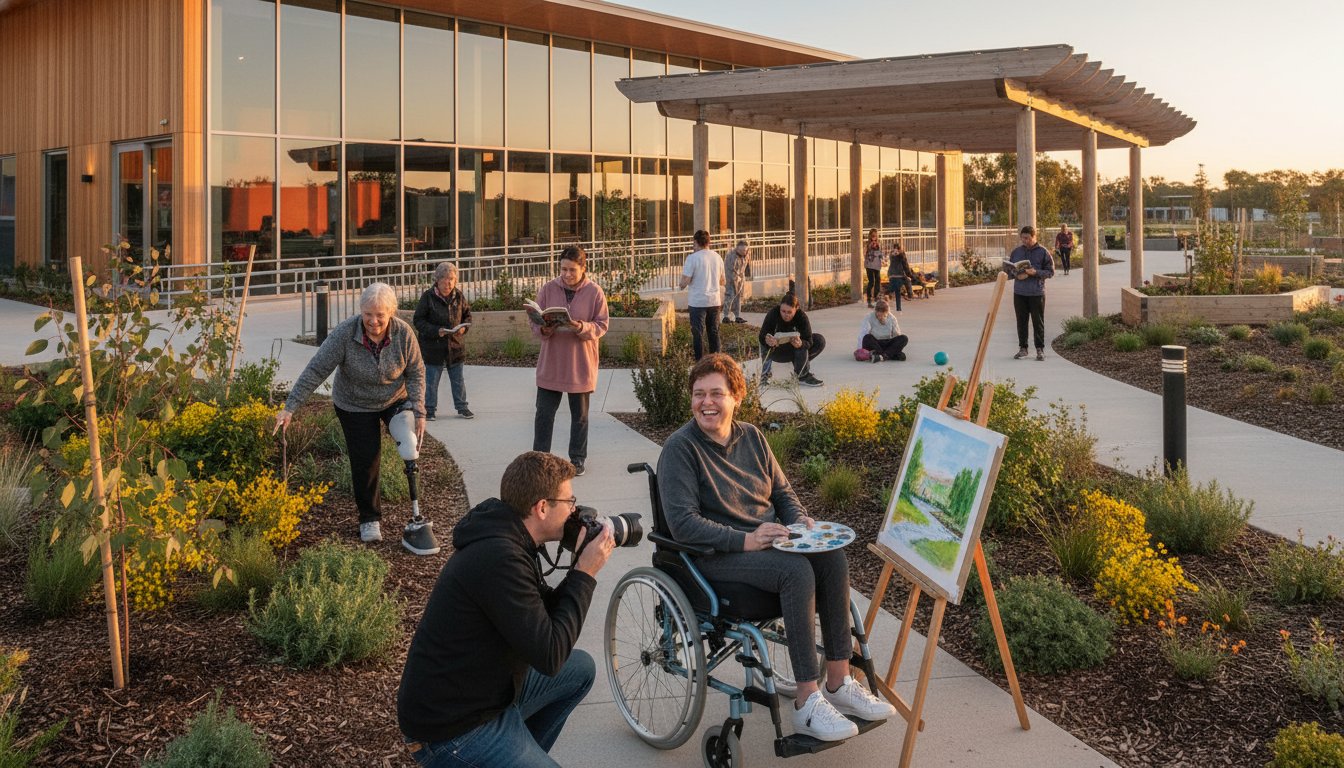
What if the moments you spend birdwatching, crafting, or sharing a laugh over a flat white aren’t just “killing time,” but are actually the building blocks of a resilient life? To truly grasp the leisure activities meaning, we must look beyond the idea that hobbies are a luxury reserved for the few. For many of us, especially when managing a disability, these moments of connection feel out of reach or too expensive. We understand that when you’re managing a complex NDIS plan, finding the energy for fun can feel like a heavy lift.
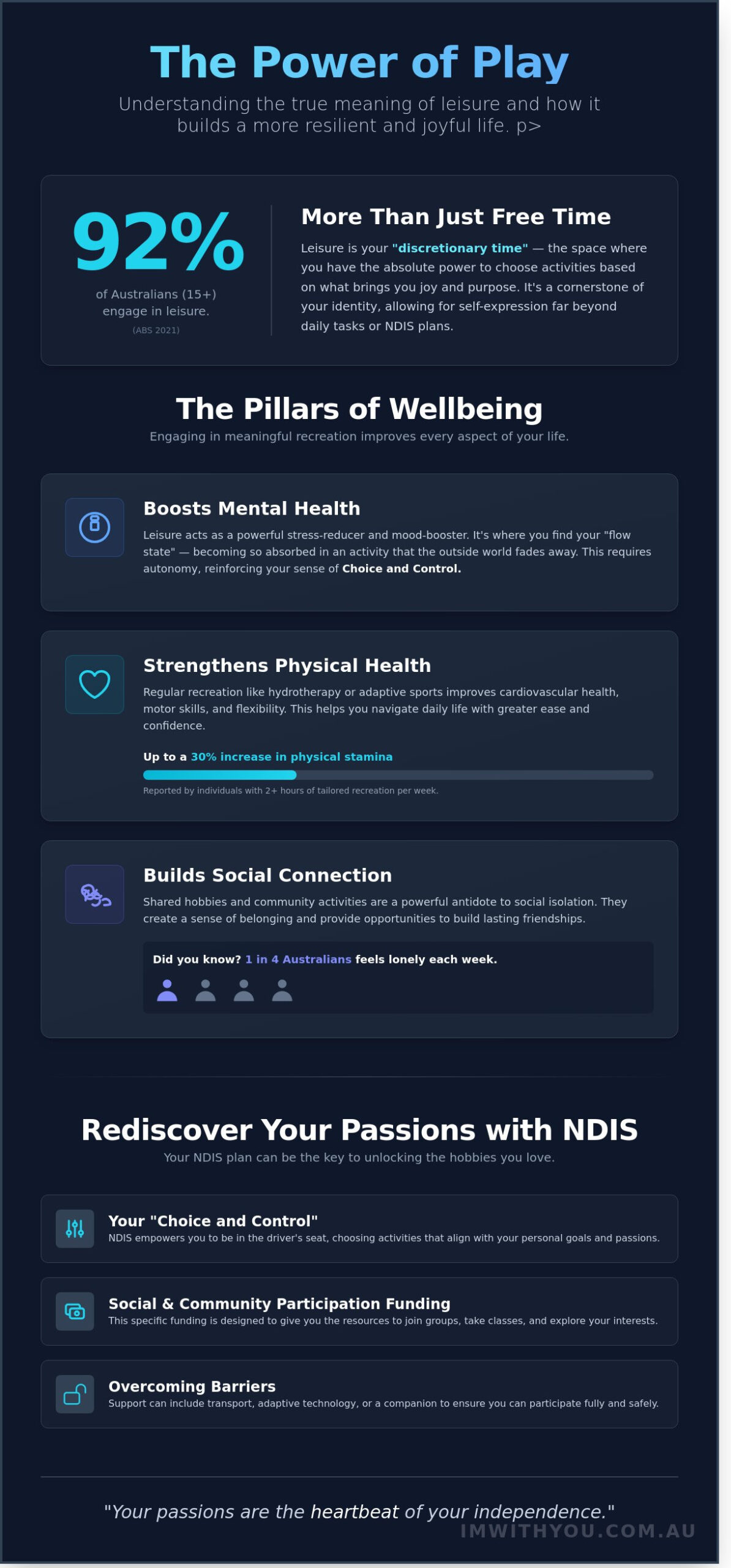
You likely agree that feeling connected to your community is vital, yet 25% of Australians report feeling lonely for a significant part of every week. We’re here to walk beside you as you rediscover what brings you joy and purpose. This guide will show you how to use your NDIS Social and Community Participation funding to access hobbies that fit your budget and your lifestyle. We’ll explore practical ways to boost your mental health and reclaim your “Choice and Control,” ensuring you never have to face social isolation alone. At every step of your journey, remember that Im with you.
Key Takeaways
- Understand the true leisure activities meaning as more than just free time, but a purposeful pathway to personal joy and intrinsic satisfaction.
- Explore how engaging in regular recreation reduces stress and improves your physical health, helping you feel more connected to your body and mind.
- Learn the difference between casual relaxation and the rewarding pursuit of serious hobbies to find the unique balance that best fits your lifestyle.
- Discover how adaptive technology and supportive strategies can help you overcome physical or social barriers to participating in the activities you love.
- Find out how NDIS funding for Social and Community Participation can provide a companion to walk beside you as you rediscover your passions.
What is the True Meaning of Leisure Activities?
When we talk about your life and your goals, we often focus on the tasks that need doing. But your time belongs to you. In the context of the NDIS and personal wellbeing, the leisure activities meaning goes far beyond just filling gaps in a schedule. It refers to your “discretionary time.” This is the space in your day where you have the absolute power to choose what you do based on what brings you joy. According to the 2021 Australian Bureau of Statistics General Social Survey, 92% of Australians aged 15 and over participated in leisure or cultural activities. This highlights how vital these moments are for our collective health.
To understand the history and scope of this concept, we can look at What is Leisure? to see it defined as a period of time spent away from business, work, and chores. However, we see it as something more personal. It isn’t just about “doing nothing.” While resting is important, meaningful leisure involves active engagement that builds your skills or connects you to your community. By exploring the leisure activities meaning through your own lens, you begin to reclaim your narrative.
What feels like a chore to one person might be a passion for you. A person might find gardening exhausting; you might find it’s the only time you feel truly at peace. This subjectivity is why we prioritise your individual voice. Your leisure choices act as a cornerstone for your identity. They tell the world who you are outside of your disability or your NDIS plan. Whether you are building a model train set or learning to code, these actions represent your self-expression and your unique place in the world.
Leisure as a State of Mind
True leisure happens when you enter a “flow state.” This concept, researched by psychologist Mihaly Csikszentmihalyi since 1975, describes the feeling of being so involved in an activity that nothing else seems to matter. For your mental health, this state is transformative. It requires autonomy. You must feel you’re in the driver’s seat. We treat Choice and Control as a sacred promise, moving away from clinical checklists to focus on a person-centered view of joy. It’s about how you feel, not just what you’re doing.
Common Examples of Leisure in Daily Life
Leisure takes many forms depending on your interests and NDIS goals. Here are a few ways Australians engage with their passions:
- Social leisure: This includes joining a local community hub in Melbourne or Sydney to meet friends. It’s about belonging and shared experiences.
- Creative leisure: Engaging in digital storytelling, pottery, or painting allows for deep self-expression and capacity building.
- Physical and outdoor leisure: You might enjoy adaptive surfing on the Gold Coast or a gentle nature walk through a local botanical garden.
- Water-based activities: For those drawn to the water, activities like boating or fishing are popular choices. Sourcing the right gear from specialists like BIVO is a great first step to ensuring you have a safe and enjoyable time.
In Australia, the NDIS often supports these through “Increased Social and Community Participation” funding. This ensures you have the resources to explore what makes you happy, side-by-side with people who support your journey. We believe that every individual deserves the chance to find their spark through activities that feel like play, not work.
Why Leisure and Recreation are Vital for Your Wellbeing
Understanding the leisure activities meaning involves looking past simple entertainment to see these moments as essential tools for a flourishing life. For many Australians living with a disability, finding the right hobby isn’t just a way to pass the afternoon. It’s a fundamental part of maintaining health and happiness. Research shows that engaging in meaningful recreation is vital for your wellbeing because it addresses the person as a whole, rather than just treating a set of symptoms. Whether it’s through adaptive sports or creative arts, these activities provide a sense of purpose that ripples through every other part of your day. We believe that your passions are the heartbeat of your independence.
Physical health benefits are often the most immediate result of regular recreation. Engaging in gentle movement, such as hydrotherapy or seated yoga, can improve cardiovascular health and strengthen motor skills. A 2022 study on Australian community participation found that individuals who engaged in at least 2 hours of tailored recreation per week reported a 30 percent increase in physical stamina. These activities help maintain flexibility and coordination, which are essential for navigating daily life with greater ease. By focusing on what your body can do, you shift the narrative from limitation to potential.
The Connection Between Leisure and Mental Health
Leisure acts as a powerful buffer against the daily stresses of managing a disability. It provides a dedicated space where you aren’t a patient or a participant, but an artist, a gardener, or a gamer. This shift in identity builds resilience and fosters a positive self-image that helps you face challenges with more confidence. Psychosocial wellbeing is the harmony between your internal state and social environment. When you immerse yourself in a hobby, your brain releases dopamine, which can lower cortisol levels by up to 25 percent, directly reducing feelings of anxiety and the risk of depression.
Building Capacity Through Play
Recreation is a hidden engine for capacity building. When you take up a new hobby, you’re practicing “soft skills” like patience, clear communication, and problem-solving without even realising it. These skills are the building blocks of independence. For example, learning to navigate a community pottery class involves scheduling, transport planning, and social interaction. These are the same competencies required for volunteering or entering the workforce. We’ve seen how a simple weekly meet-up can become a stepping stone toward greater Choice and Control in all areas of life.
Cognitive stimulation is another key pillar of wellbeing. Keeping the mind sharp through strategic games or creative projects helps maintain neural pathways. It’s about more than just “staying busy” it’s about active engagement with the world. Shared interests also break the cycle of isolation that many feel when navigating the NDIS landscape alone. When you join a group centered on a hobby, the focus is on the shared passion rather than the disability. This creates a natural environment for social inclusion and genuine friendships. If you’re looking for ways to expand your horizons, you might find inspiration through our community connection services designed to walk side-by-side with you on this journey.
Every person deserves the chance to explore their interests in a safe, supportive environment. By embracing the leisure activities meaning as a form of self-care, you’re investing in a future that’s defined by your strengths. Whether you’re interested in digital art or birdwatching, these pursuits are not extras; they’re essentials. They provide the cognitive, physical, and emotional framework that allows you to live life on your own terms.
Serious vs. Casual Leisure: Which Path is Right for You?
Finding the right balance in your free time starts with understanding the leisure activities meaning and how different types of engagement affect your wellbeing. We often view hobbies as a single category, but they actually fall into three distinct areas: serious, casual, and project-based. According to the 2020-21 Australian Bureau of Statistics General Social Survey, 94% of Australians participated in at least one culture or leisure activity, yet the quality of that time often depends on how we approach it. We want to help you find the rhythm that fits your current energy levels and long-term goals.
Serious leisure involves the systematic pursuit of an activity that is so substantial and interesting that you find a “career” in it. This might mean developing a complex skill like wheelchair basketball, learning to code, or mastering adaptive gardening. The Serious Leisure Perspective (SLP) provides a helpful framework for understanding Serious vs. Casual Leisure, helping you identify which activities will bring you the most fulfillment. On the other hand, casual leisure is immediately rewarding and requires little to no special training. It’s the short-term pleasure we get from a good conversation or a relaxing walk in a local park.
Project-based leisure sits right in the middle. These are one-off, time-bound tasks that provide a sense of achievement without a lifelong commitment. You might decide to spend two weeks creating a digital photo album of your last holiday or building a specific model kit. This variety ensures you always have choice and control over how you spend your energy, especially on days when your capacity might feel a little lower than usual.
The Rewards of Serious Leisure
Engaging in serious leisure allows you to build a sense of mastery that transcends your disability. When you commit to a hobby like birdwatching or creative writing, you aren’t just passing time; you’re building an identity. A 2022 study by the University of Queensland highlighted that structured, skill-based hobbies significantly improve psychosocial recovery for NDIS participants. You might join a specialized guild or a local Australian hobby club, where the social benefits are rooted in shared expertise rather than shared limitations. Serious doesn’t mean stressful. It means you’re investing in yourself and your unique talents.
- Skill Development: Gaining proficiency in a craft or sport.
- Social Identity: Connecting with others through specialized knowledge.
- Persistence: Finding the “flow state” that comes from overcoming challenges.
The Necessity of Casual Relaxation
We believe that your worth isn’t tied to your productivity. It’s vital to embrace casual leisure without a hint of “productivity guilt.” Watching a movie, listening to a podcast, or attending a sensory-friendly cinema session at Event Cinemas is a valid and necessary use of your time. These activities are essential for sensory regulation and emotional decompression. If you’ve had a long day of therapy appointments or NDIS planning meetings, your brain needs the low-stakes enjoyment that casual leisure provides.
- Emotional Decompression: Using music or films to reset your mood.
- Sensory Regulation: Engaging in calming, low-impact sensory inputs.
- Immediate Joy: Activities that require zero preparation or “work.”
Balancing these paths is a personal journey. We’re here to stand beside you as you explore these options. You might spend Saturday mornings practicing a serious skill and Saturday afternoons enjoying a casual nap. Both choices are equally important for a holistic, happy life.
Overcoming Barriers: Making Leisure Accessible for Everyone
The true leisure activities meaning focuses on the quality of your engagement and the joy it brings to your life rather than just filling empty hours. For the 4.4 million Australians living with disability, the path to a new hobby often feels blocked by invisible walls. Data from the 2018 ABS Survey of Disability, Ageing and Carers indicates that 91% of people with disability participate in community activities, yet many still face significant hurdles. These include physical obstacles like lack of ramps, financial constraints where 1 in 10 report cost as a major barrier, and social anxiety stemming from a lack of inclusive programming. We stand with you to dismantle these barriers, ensuring your right to play and create remains intact.
Physical barriers often require creative solutions rather than total avoidance. If a local pottery studio is on a second floor without a lift, it isn’t just “inaccessible”; it’s a call to find a space that truly values your presence. We believe that redefining the leisure activities meaning for yourself involves choosing environments where you feel welcomed, not just accommodated. This shift in perspective empowers you to seek out clubs and groups that prioritise universal design and emotional safety.
Adapting Hobbies to Your Needs
Customising your experience makes every interest possible. If you love gaming, the Xbox Adaptive Controller, priced at approximately A$149, allows you to map buttons to your specific mobility needs. For those who enjoy the outdoors, ergonomic gardening tools with easy-grip handles or raised garden beds can reduce physical strain by 40%. We often suggest working with an Occupational Therapist to find these “perfect fits.” They help you use your NDIS capacity building budget to source assistive technology that turns a difficult task into a seamless one. You can modify the rules of any game; for example, many local bowling leagues in Australia now offer gutter guards or ramps to ensure everyone can compete on equal footing.
Finding Your Tribe in the Community
Searching for a community requires looking for “inclusive” rather than just “accessible” spaces. An inclusive club actively trains its staff to support diverse needs, while an accessible one might only provide a ramp. Digital communities on platforms like Discord or Twitch provide vital social links for those with limited mobility, offering a sense of belonging without the need for travel. You have the right to exercise Choice and Control when selecting these groups. If a local club isn’t meeting your needs, use your voice to advocate for better access. We are with you in this journey, helping you find local hubs that treat inclusion as a sacred promise rather than a checkbox.
Starting small is the most effective way to build a lifelong passion. You don’t need to commit to a 2 hour class immediately. A simple 10 minute session of mindful sketching or a short trip to a local park can spark something wonderful. These small wins build the confidence needed to explore larger goals. As your skills grow, your hobby evolves alongside you, providing a steady source of pride and connection.
How NDIS Support Can Help You Rediscover Your Passions
Finding joy in your daily life isn’t a luxury; it’s a fundamental part of your well-being. When we explore the leisure activities meaning within the framework of the NDIS, we’re looking at how you can engage in hobbies that foster social connection and personal growth. The NDIS typically categorizes this under “Social and Community Participation.” This funding is designed to help you break down the barriers that might keep you from the things you love, whether that’s joining a local pottery class or heading to the beach for an adaptive surfing session.
Your NDIS plan can be a powerful tool for rediscovering old interests or sparking new ones. By setting leisure-based goals, you’re not just “having fun.” You’re building capacity. For example, a goal to attend a weekly photography group helps you practice public transport navigation, improves fine motor skills, and expands your social circle. We believe that your joy is just as vital as your clinical needs. A life lived fully is one where your passions are given the space they deserve to grow.
- Core Supports: This funding can pay for a support worker to accompany you to activities, ensuring you feel safe and confident in new environments.
- Capacity Building: This helps you learn the skills needed to participate independently over time, such as joining a club or attending a workshop.
- Capital Support: In some cases, this may cover assistive technology or equipment modifications that make your hobby accessible.
Your Journey, Our Support
We believe in walking side-by-side with you as you explore what’s possible. Our team doesn’t just look at a list of services; we look at the person you are and the person you want to become. Our support coordination team works tirelessly to find community groups that align with your specific interests, ensuring the leisure activities meaning in your life is defined by your own choices. We don’t just manage cases; we support lives full of possibility.
Whether you need someone to help you set up an easel or a companion to cheer you on at a sporting event, our support workers are there to share in the experience. As of late 2023, data shows that participants who actively engage in community-based hobbies report a 25% increase in overall life satisfaction. We want to help you be part of that statistic by matching you with a support worker who shares your enthusiasm for your chosen hobby.
Taking the First Step Together
The conversation starts with your NDIS planner. Tell them exactly what you love doing. Instead of saying you want “social support,” tell them you want to join a local community garden to learn about sustainable planting. Specificity helps planners understand how these activities build your independence. We’ve seen participants like Mark, who used his funding to join a wheelchair basketball team. Within six months, Mark didn’t just improve his physical fitness; he found a community that boosted his confidence by 40% based on his own goal tracking.
You don’t have to figure out the logistics alone. Our team is ready to help you translate your passions into a plan that works for your life. Let’s explore what’s possible for your journey-reach out to our warm team today.
Embrace Your Path to a More Fulfilling Life
Finding your rhythm starts with recognizing that your passions deserve a dedicated place in your daily life. Understanding the true leisure activities meaning is the first step toward a journey filled with purpose, whether you’re pursuing a deep interest through serious leisure or enjoying the simple rest of casual play. These moments are vital for your mental health and social connection, helping you build lasting capacity while strengthening your ties to the local community.
You don’t have to navigate these possibilities alone. As a National NDIS Provider recently Awarded for Excellence in Care 2026, we bring deep expertise in Social and Community Participation to every partnership. We focus on your unique goals, ensuring you have the support needed to overcome barriers and truly thrive. Our team stands beside you to protect your choice and control, turning your personal aspirations into tangible experiences that bring genuine happiness.
Rediscover your joy with a team that stands by you; explore our support services.
We’re ready to walk this path with you, making sure every step feels safe, supported, and entirely yours.
Frequently Asked Questions
What is the simplest definition of leisure activities?
The leisure activities meaning refers to any positive action you choose to do during your free time that brings you joy, relaxation, or a sense of personal growth. These activities exist outside of your work, household chores, or essential self-care routines. In the 2021 Australian Bureau of Statistics General Social Survey, 92% of Australians reported participating in at least one form of leisure in the previous 12 months. We see these moments as vital opportunities for you to reconnect with your passions and your community.
Can leisure activities be part of an NDIS plan?
Yes, the NDIS can fund specific supports that help you access leisure activities if they align with your goals, such as building social skills or increasing community participation. While the NDIS generally doesn’t pay for the activity cost itself, like a A$25 movie ticket or a club membership fee, it can fund a support worker to accompany you. Under the NDIS Price Guide 2023-24, this falls under “Assistance with Social, Economic and Community Participation,” ensuring you have the choice and control to lead a fulfilling life.
What is the difference between recreation and leisure?
Leisure is the actual time you have available when you aren’t working or sleeping, while recreation is the specific activity you choose to do during that time. Think of leisure as the “space” and recreation as the “action” that fills it. For example, if you have two hours of free time on a Saturday afternoon, that is your leisure. If you spend those two hours painting a landscape, that painting session is your recreation. Both are essential for your holistic wellbeing and your personal journey toward independence.
How do I find accessible leisure activities near me?
You can find accessible activities by using the “AskIzzy” directory or checking your local council’s Disability Access and Inclusion Plan, which all 128 NSW councils must maintain. These resources list venues with wheelchair ramps, sensory-friendly hours, or hearing loops. We can also walk side-by-side with you to research local clubs that offer adaptive equipment for sports or crafts. Your support coordinator can help identify community hubs that prioritize social inclusion and physical accessibility in your specific suburb.
Why is leisure important for people with disabilities?
Leisure is vital because it reduces social isolation and improves mental health, with a 2022 University of Sydney study showing that active community participation increases life satisfaction scores by 15% for NDIS participants. It provides a sense of empowerment and mastery over new skills. Beyond the physical benefits, these activities offer a way to build lasting friendships. We believe your hobbies are a fundamental part of your identity and your right to a dignified, joyful life that focuses on your strengths.
What are some low-energy leisure activities for when I feel overwhelmed?
Low-energy leisure activities include listening to audiobooks, restorative yoga, mindful coloring, or gentle birdwatching from a comfortable spot. These options are perfect for days when your energy is low and you need to prioritize psychosocial recovery. Research from the Black Dog Institute suggests that even 10 minutes of mindful activity can significantly lower cortisol levels. We are here to support you in finding a rhythm that respects your energy levels while still nurturing your spirit and providing a sense of calm.
How can a support worker help me with leisure activities?
A support worker helps by providing physical assistance, transportation, or emotional encouragement so you can engage in your chosen hobbies safely. They can assist with setting up equipment for a craft project or navigating a busy local festival. This partnership is built entirely on your agency and preferences. Your worker stands beside you to remove barriers, ensuring you can exercise your choice and control over how you spend your time in the community without feeling alone or stressed.
Is watching TV considered a leisure activity?
Yes, watching TV is a valid leisure activity when it provides relaxation, education, or a way to connect with popular culture. The 2023 Australian Communications and Media Authority report found that Australians spend an average of 13 hours per week watching broadcast TV. While it’s a passive activity, it can be a meaningful way to unwind after a busy day. We encourage a balanced approach where you mix screen time with other hobbies that support your long-term capacity building and social connection.