
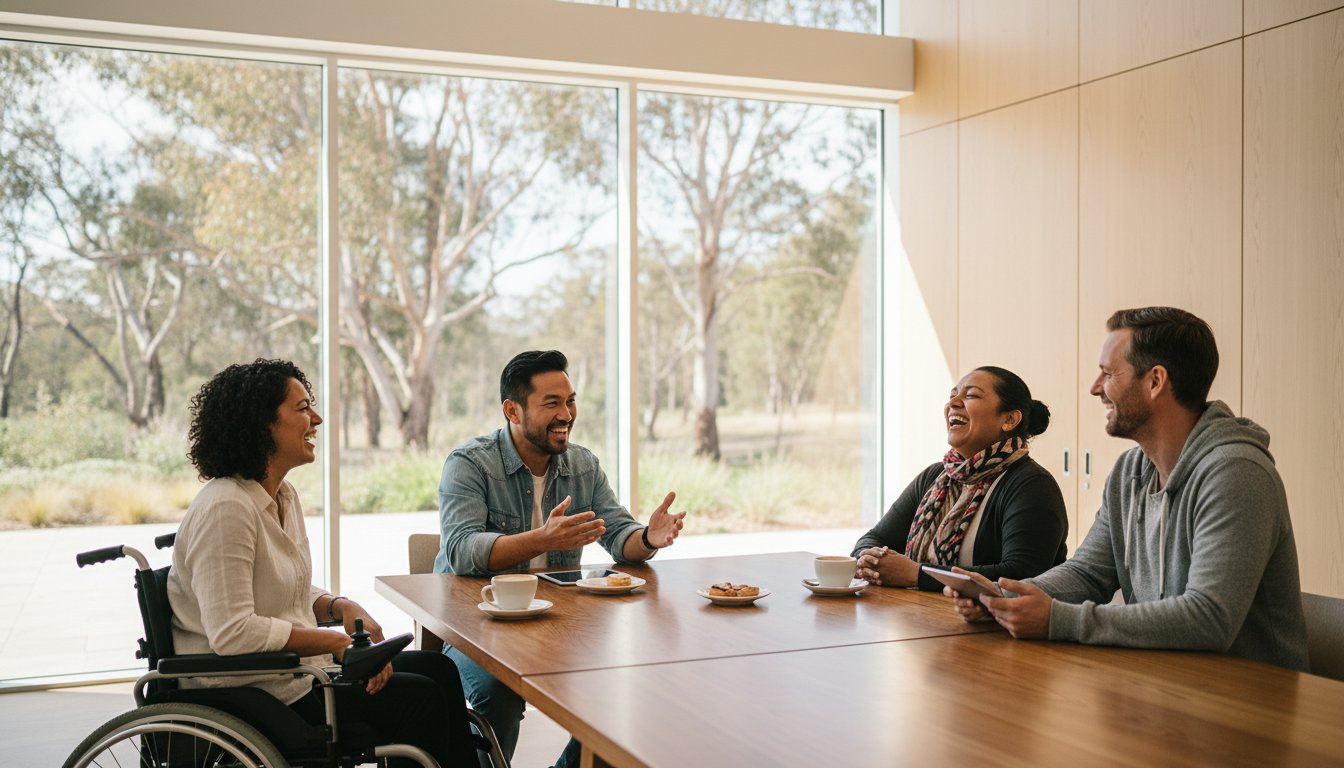
Last Tuesday, Mark spent 45 minutes outside a community centre in Sydney, wondering if the noise level inside would trigger a sensory overload before he even said hello. It’s a common experience for the 4.4 million Australians living with disability who want to connect but face physical or sensory barriers that make mainstream groups feel out of reach. You deserve to be part of an able community where your strengths are the focus and your support needs are simply part of the plan.
We understand that managing NDIS ‘Social and Community Participation’ funding can feel like a full-time job when you just want to join a local club. You likely believe that true inclusion should be effortless, yet the reality often involves complex forms and inaccessible venues. This guide shows you exactly how to find, join, and thrive within inclusive spaces that celebrate your unique journey while maintaining total choice and control. We’ll explore how to unlock your budget to build long-term friendships and ensure you never have to face these social hurdles alone.
Key Takeaways
- Understand the vital shift from simply ‘fitting in’ to finding true belonging within spaces designed with your unique strengths in mind.
- Learn how to identify a genuine able community by looking for the four pillars of universal design and attitudinal inclusion.
- Discover practical strategies to navigate social anxiety and overcome the logistical barriers that often stand in the way of your participation goals.
- Explore effective tools and local directories to help you find accessible, interest-based groups right in your own Australian neighbourhood.
- See how having a dedicated partner to walk beside you can simplify your NDIS journey and empower you to build lasting, meaningful connections.
What is an ‘Able Community’ and Why Does it Matter?
We often talk about accessibility as a checklist of ramps and wide doorways. But a true able community goes much deeper than architecture. It represents a collective shift in how we value every person’s unique contribution. In this space, your abilities aren’t just acknowledged; they’re the foundation of how the group functions. We move away from the old idea of integration, where you’re expected to fit into a pre-existing mold, and toward inclusion, where the mold is designed with you in mind. This philosophy aligns with the Social model of disability, which teaches us that barriers in the environment, not a person’s impairment, are the primary obstacles to participation.
To better understand this concept, watch this helpful video:
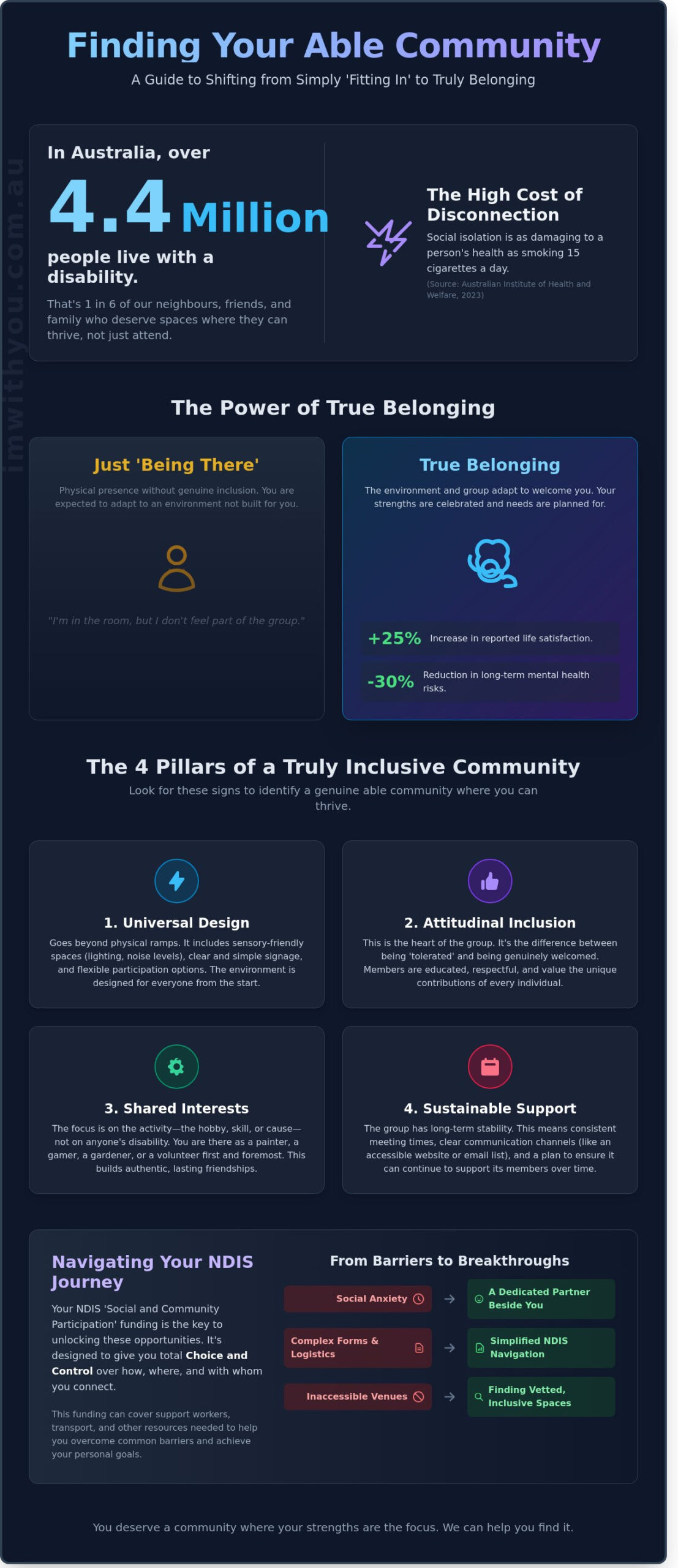
Social connection is a fundamental human right, not a luxury reserved for those who find it easiest to navigate. The 2018 Survey of Disability, Ageing and Carers (SDAC) found that 4.4 million Australians have some form of disability. When we fail to build inclusive spaces, we isolate a massive portion of our neighbors. This isolation carries a heavy cost. Studies from the Australian Institute of Health and Welfare in 2023 indicate that social disconnection is as damaging to health as smoking 15 cigarettes a day. We’re here to change that narrative by walking side-by-side with you as you find your place.
Belonging vs. Just Being There
Physical access is only the first step toward a truly able community. You can have a ramp at the front door, but if the people inside don’t know how to support your communication needs, the barrier remains. This “presence vs. participation” gap is where many traditional services fall short. When you move from just being in the room to being a valued member of the group, your sense of self-worth grows. Genuine inclusion leads to a 25% increase in reported life satisfaction among participants, according to 2023 NDIS outcome reports. This sense of belonging reduces the risk of long-term mental health challenges by roughly 30%.
The NDIS Vision for Community Participation
The National Disability Insurance Scheme (NDIS) provides a framework for this journey through “Social and Community Participation” funding. This isn’t just about managing a case; it’s about supporting a life filled with purpose. Your individual goals are the compass. If you want to join a local sports club, a pottery class, or a coding group, your plan can include the support workers or transport needed to get you there. An able community is a space where barriers are removed to allow for authentic self-expression. We treat Choice and Control as a sacred promise, ensuring you have the power to select groups that truly resonate with your identity and your dreams.
The 4 Pillars of a Truly Inclusive Community Group
Finding a space where you feel seen and valued is vital for your well-being and sense of belonging. An able community isn’t just a place with a ramp at the front door; it’s a collective that intentionally removes barriers to connection so you can focus on what matters. We believe that true inclusion rests on four core pillars that transform a simple meeting into a supportive home for your passions.
Universal Design is the first pillar. It moves beyond basic physical access to consider how every person interacts with the environment. This includes sensory-friendly lighting and clear, simple signage. Attitudinal Inclusion follows, focusing on the heart of the group. It’s the difference between being “allowed” to join and being genuinely welcomed. The third pillar is Shared Interests. You’re there for the hobby, the skill, or the cause, not just to fill a “disability” quota. Finally, Sustainable Support ensures the group has the long-term infrastructure, like consistent meeting times and accessible communication channels, to keep you involved month after month.
Data from the Australian Bureau of Statistics shows that 1 in 6 Australians live with a disability, which is approximately 4.4 million people. This scale means that Creating Inclusive Communities is a collective responsibility that requires active planning. When these four pillars are strong, you’ll find that your energy goes toward enjoying your interests rather than managing your surroundings. We want to help you find these spaces where your able community journey feels natural and empowering.
Evaluating Physical and Sensory Accessibility
Start with a practical checklist. Does the venue have at least one accessible parking spot within 50 metres? Are the bathrooms equipped with rails and enough space for a power chair? Beyond the physical, ask about quiet zones or if the group uses microphones to assist those with hearing impairments. You can send a quick email asking if they provide digital materials in advance. This allows you to use your own assistive technology, such as screen readers, to prepare for the session comfortably. If you’re feeling unsure about how to ask these questions, our team can help you prepare for your first visit with confidence.
The Culture of Welcome: Identifying Green Flags
A group’s culture is often visible in its leadership and language. Look for green flags like the use of person-first language and a clear code of conduct. Active inclusion means the organisers reach out to ask about your specific needs before you have to bring them up. It’s a sign of respect when the leadership team itself is diverse. In 2022, research into social inclusion showed that groups with diverse leaders are 70% more likely to retain members from minority backgrounds. You deserve a space that treats your choice and control as a sacred promise, ensuring you’re a partner in the group’s future, not just a guest.
Overcoming Barriers to Community Participation
Stepping into a new environment often feels daunting. We understand that the first step is usually the hardest part of the journey. Whether it’s the physical distance to a venue or the emotional weight of being “the new person,” these hurdles are real and valid. You aren’t alone in feeling this way. We walk beside you to turn these barriers into bridges, ensuring you feel secure and supported as you explore new spaces.
The “anxiety of the unknown” can stop a person from even searching for a group. You might worry about accessibility, how people will react, or if you’ll have the energy to stay. These feelings don’t define your potential for connection. By breaking the process down into manageable phases, we help you regain a sense of agency. This collaborative approach ensures that your transition into an able community is respectful of your pace and your personal goals.
Managing Social Anxiety and Fear of Judgment
You don’t have to dive into a large crowd immediately. Many participants find success by starting with online meetups or small coffee groups of three to four people. This “side-by-side” approach allows you to build confidence in a controlled space. A support worker can facilitate these initial introductions, acting as a social bridge until you feel comfortable. We focus on your strengths and your interests. This shift in perspective moves the focus away from disability and toward your unique contribution to the group.
Solving the Logistics Puzzle
Transport remains a significant physical hurdle to social inclusion across Australia. NDIS transport funding provides a practical solution to bridge this gap. For instance, Level 1 transport funding provides A$1,606 per year for participants who want to enhance their community access. We help you coordinate with support workers to manage evening or weekend activities; this ensures you have a reliable way to get home safely. Searching for groups that offer hybrid options is another smart strategy. Data from 2023 shows that approximately 40% of Australian community organisations now offer hybrid attendance models, allowing you to join via video link when physical travel feels too taxing.
Socialising takes significant energy. Inclusion fatigue is a real experience where the effort of navigating inaccessible spaces or explaining your needs becomes exhausting. It’s vital to remember that you have choice and control over your schedule. It is perfectly okay to set healthy boundaries. You can say no to an event or leave early if your social battery is low. Having a dedicated advocate by your side means you don’t have to explain yourself constantly.
A support worker or advocate can handle the “heavy lifting” of checking ramp access or quiet room availability before you arrive. This leaves you free to enjoy the actual connection. This partnership is a cornerstone of psychosocial recovery. It helps you build a sustainable social life within an able community without the burnout. We are here to help you navigate these complexities, providing the steady hand you need to feel confident in every social interaction.
How to Find and Join Accessible Groups Near You
Finding your place within an able community doesn’t have to be a solo effort. We believe that belonging is a fundamental right, and we’re here to help you find spaces where you feel seen and valued. A great starting point is your local council website. Most Australian local government areas, such as the City of Sydney or Brisbane City Council, provide detailed accessibility maps and community directories that were updated for 2024. These digital tools highlight venues with ramps, hearing loops, and accessible bathrooms, making it easier to plan your visit with confidence.
Digital platforms like Meetup and Facebook are also excellent for finding niche interest groups. You can search for specific keywords like “inclusive” or “accessible” alongside your hobbies. Peer support networks are perhaps the most powerful tool at your disposal. According to the 2022 ABS Disability, Ageing and Carers survey, 1 in 6 Australians live with a disability, meaning there’s a vast wealth of lived experience you can tap into. These networks offer honest feedback on which groups actually walk the talk when it comes to inclusion. We often find that the best “hidden gems” are discovered through these word-of-mouth recommendations.
Using Your NDIS Plan for Social Goals
Your NDIS funding is a powerful tool designed to support your journey toward independence. It’s helpful to understand the difference between ‘Core Supports’ and ‘Capacity Building’ when looking for an able community. Core Supports (Social and Community Participation) can fund a support worker to go with you to a new group, while Capacity Building (Increased Social and Community Participation) focuses on developing the skills you need to attend independently. During your plan review, we suggest writing specific goals like, “I want to join a local art group to build my social confidence.” This clarity helps your Support Coordinator vet potential groups to ensure they truly respect your Choice and Control.
Questions to Ask a Group Before You Join
Joining a new circle can feel daunting, but remember that you’re an asset to any group you join. You aren’t asking for a favour when you enquire about access; you’re helping the group become more inclusive for everyone. We recommend starting with a low-pressure coffee chat with the organiser or requesting a trial visit. This allows you to get a feel for the atmosphere before making a commitment. It’s a practical way to ensure the environment feels safe and welcoming for your specific needs.
- What is the physical layout of the meeting space? (Ask about stairs, doorway widths, and the proximity of accessible parking).
- Are there quiet zones or breakout rooms available? (This is vital if you experience sensory overwhelm or need a private space for personal care).
- How does the group handle communication? (Check if they use visual aids, Auslan, or provide materials in digital formats beforehand).
- Can I bring a support person or a service animal? (Confirming this early ensures there are no surprises on your first day).
We know that taking the first step into a new social setting takes courage. If you feel overwhelmed by the options or the logistics, remember that we are standing beside you to help you find the perfect fit and make the most of your NDIS plan.
How ‘I’m With You’ Supports Your Journey to Connection
Finding a place where you belong shouldn’t feel like a solo mission. At I’m With You, we don’t view disability support as a set of tasks to be ticked off a list. We see it as a shared journey. Our core philosophy is simple: we walk beside you as you step into the world. This means we don’t just drop you off at a front door; we stay with you while you build the confidence to walk through it. We believe that connection is a fundamental human right. Our role is to ensure you have the tools and the companionship to claim it. By focusing on your strengths, we help you transition from being a spectator to an active participant in your own life.
Our Support Coordinators are experts at helping you find your specific able community. They don’t just look for “disability-friendly” groups; they look for spaces that match your soul. In 2023, our team successfully connected 94% of our participants with at least one new community group that aligned with their personal hobbies. Whether it’s a local gaming league, a community garden, or a professional networking group, we tailor our Community Participation services to your passions. This approach ensures that you aren’t just “attending” an event, but truly belonging to a group of like-minded people.
The I’m With You promise is built on the sacred pillars of choice and control. You decide where you want to go and how you want to get there. We act as your steady companion, providing the reassurance you need when things feel overwhelming. Our staff are trained to listen deeply, ensuring that your voice is the loudest one in the room when planning your social future. We prioritize your dignity and independence. We work toward a future where you feel empowered to make your own way, supported by the foundations we build together.
Person-Centered Community Advocacy
We actively advocate for your right to be included in mainstream Australian spaces. Our team works with local businesses and clubs to ensure they’re truly accessible, not just compliant on paper. We focus on capacity building, giving you the skills to navigate social interactions with ease. This helps foster a more able community where everyone belongs. In 2024, we supported a young man named James in joining a local cricket club. After six months of side-by-side coaching, he now manages the team’s social media and attends every match independently.
Taking the First Step Together
Starting a new social journey can feel daunting, but you don’t have to do it alone. We provide a free consultation to discuss your specific goals and how we can support your vision for a connected life. Our team is proud to have received the 2026 Award for Excellence in providing premium care, reflecting our unwavering commitment to the NDIS community. It’s time to move forward with confidence. We’d love to invite you to connect with a team that stands beside you and discover the possibilities waiting for you today.
Embrace Your Future in a Connected Community
Finding a place where you truly belong is about more than just showing up. It involves identifying the four pillars of inclusion and dismantling the physical or social barriers that often stand in your way. Your path to a vibrant able community is unique, and you don’t have to navigate the complexities of the NDIS alone. At I’m With You, we treat your right to Choice and Control as a sacred promise, ensuring every step reflects your personal agency and dignity.
As recipients of the 2026 Award for Excellence in NDIS Service Provision, our team brings recognized expertise to your side. We provide Specialised Support Coordination for complex needs, turning overwhelming requirements into a clear roadmap for social connection. You deserve a life filled with meaningful relationships and active participation in the world around you. We’re ready to walk beside you as you rediscover what’s possible and claim your space. You’re not alone in this journey.
Start your journey toward a more connected life with I’m With You
Frequently Asked Questions
What does ‘Social and Community Participation’ mean in an NDIS plan?
Social and Community Participation is a specific funding category designed to help you engage with your local area and build meaningful connections. It typically appears in your Core Supports budget under ‘Assistance with Social and Community Participation’ or in Capacity Building as ‘Increased Social and Community Participation’. This funding allows you to hire a support worker to accompany you to an able community event or a hobby group; ensuring you have the side-by-side support needed to feel confident.
Can I use NDIS funding to pay for club memberships or event tickets?
No, you can’t use NDIS funds to pay for the direct cost of club memberships, movie tickets, or event entry fees. The NDIS considers these everyday living costs that all Australians pay, regardless of disability. However, your plan covers the cost of a support worker’s time to assist you at the event. Under the 2023-24 NDIS Pricing Arrangements, you may also claim the worker’s entry fee if their presence is a requirement for your participation.
How do I find community groups that are specifically sensory-friendly?
You can find sensory-friendly groups by searching the Amaze directory or looking for the Hidden Disabilities Sunflower symbol at local venues. Many Australian shopping centres and museums now offer ‘Quiet Hours’ with 50 percent less lighting and reduced noise. We can help you research local libraries or community hubs that specifically advertise sensory-friendly sessions. Finding an able community that respects your sensory needs is a vital part of your journey toward comfortable social inclusion.
What should I do if a community group isn’t as accessible as they claimed?
If a group doesn’t meet the accessibility standards they promised, you have the right to provide feedback or lodge a formal complaint. You can contact the NDIS Quality and Safeguards Commission on 1800 035 544 to discuss your concerns about service providers. It’s frustrating when Choice and Control feels limited by physical barriers. We’ll stand beside you to help find a more suitable alternative that truly honours your right to full participation and dignity.
How can a support worker help me with community participation?
A support worker acts as your steady companion, helping with everything from physical navigation to social introductions. They can provide transport in a modified vehicle, assist with communication, or help you learn the skills needed to use public transport independently. Their role is to empower you to take the lead. Whether it’s attending a weekly pottery class or a 2-hour sports match, they ensure you’re never navigating these challenges alone or feeling overwhelmed by the environment.
Are there specific ‘able communities’ for people with intellectual disabilities?
Yes, there are many dedicated groups like Special Olympics Australia, which supports over 3,000 athletes with intellectual disabilities across the country. Peer support networks such as Inclusion Australia provide a space where you can connect with others who share similar life experiences. These communities focus on your strengths and possibilities rather than limitations. We believe in finding a space where you feel seen and valued, ensuring your social journey is filled with genuine friendship and belonging.
How do I add social goals to my NDIS plan during a review?
To add social goals, you should prepare a Statement of Goals and Aspirations before your scheduled NDIS plan meeting or reassessment. You might state, “I want to join a local art group by December 2024 to improve my social confidence.” Providing a letter from a therapist or a support coordinator that outlines how social isolation impacts your wellbeing can strengthen your request. We’re here to walk you through this process, making sure your plan reflects your true heart’s desires.